Dorozvidka #43: Fedorov as Defence Minister, a relocation roadmap for arms makers, plus Hrytseniuk, Atmaraksi and Helsing
A roundup of the most interesting videos and media publications on Ukrainian defence tech from the past week
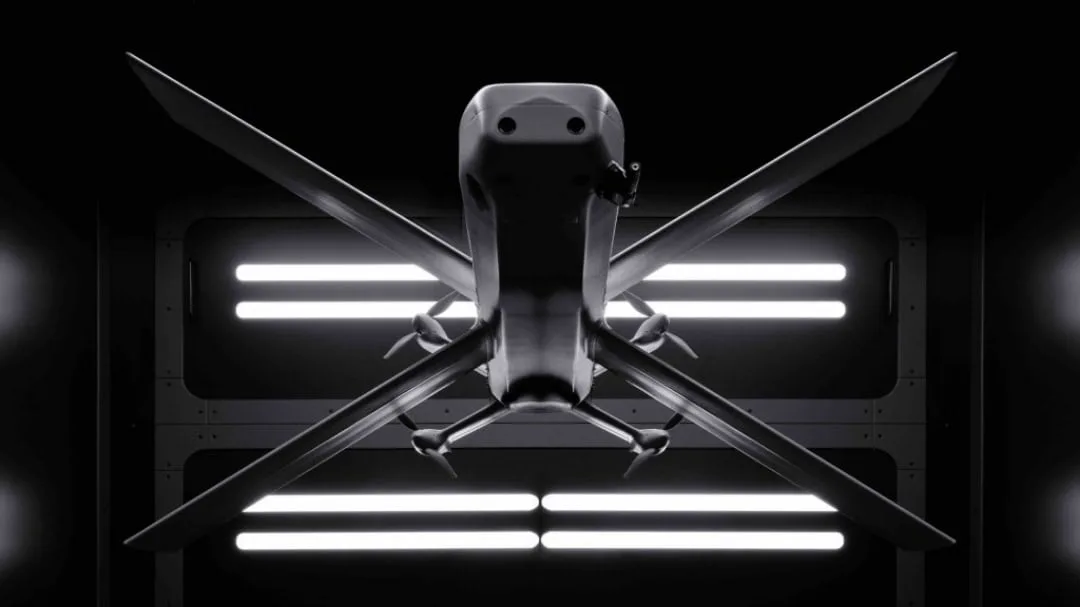
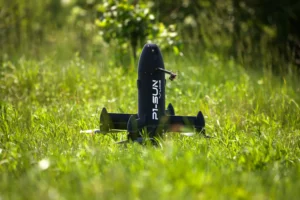
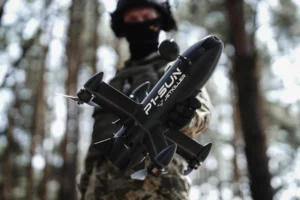
The effectiveness of Helsing’s HX-2 strike drones has been called into question. Photo: Helsing
In the new Dorozvidka:
- Mykhailo Fedorov on how he plans to make defence tech a key industry for Ukraine;
- Brave1 CEO Andrii Hrytseniuk on missiles, explosives and artificial intelligence;
- The founders of Atmaraksi on infantry training simulators;
- A relocation roadmap for arms manufacturers from the Ministry of Defence;
- How the EU’s massive loan to Ukraine will be spent;
- What’s wrong with Helsing’s HX-2 strike drones.
Mykhailo Fedorov becomes Ukraine’s new Minister of Defence
On 14 January, the Ukrainian parliament approved Mykhailo Fedorov as Minister of Defence with 277 votes in favour. He became the fourth head of the Ministry of Defence since the start of the full-scale invasion. Defender Media selected the points from Fedorov’s lengthy address to MPs that are most relevant to the defence tech sector.
- “I am taking on the role of Minister of Defence not as the minister who built a digital state and created Diia, but as someone whose team has been working for the war since 2022. Thanks to our team’s work and the President’s support, Starlink appeared in Ukraine, along with the Army of Drones, the Line of Drones, Brave1, the ePoints motivation system, UNITED24, and the world’s first ‘Amazon for war’ — Brave1 Market. We helped carry out a series of asymmetric operations against the enemy conducted by the Defence Intelligence of Ukraine and the SBU. But we weren’t just delivering individual projects. Over this time, we created innovative markets from scratch that had not existed before. At the start of the invasion, there were seven companies in Ukraine making drones. Today there are more than 500. In electronic warfare, there were two companies — today there are 200. There were no private companies producing missiles at all; today there are more than 20. Ground robotic systems — zero companies before, more than 100 now.”
- “Artificial intelligence has already become Ukraine’s ally in the war: hundreds of AI solutions are operating on the front line and are used at all levels of military operations. We are moving towards full autonomy on the battlefield — from machine vision and data analytics to drone swarms. Our ambitious goal is to make Ukraine the first country in the world capable of predicting and neutralising enemy attacks using AI. And there is much more we cannot talk about publicly.”
- “We will take the development of Ukraine’s defence industry to a new level: defence tech will become a key industry for Ukraine on global markets and a driver of economic growth. We still need to do our homework to create a Ukrainian air defence system and our own laser-guided artillery round. This will allow artillery to operate more accurately, faster and more efficiently, reducing risks for our troops. This is a task set by the President. During the full-scale war, Ukrainian entrepreneurs have built top-tier military companies from scratch. I thank everyone who changed the trajectory of their business and committed everything to defending our independence. We have proven that if Ukrainians are given freedom and equal rules of the game, they achieve the impossible. Our task is to involve as many entrepreneurs as possible in defence production. More competition means higher quality and more affordable prices. Only by strictly calculating and following the mathematics of war can we outpace the enemy through asymmetry and efficiency.”
A new episode of “Zbroia” on Atmaraksi and infantry training simulators
The latest episode of the video project Zbroia, produced by Militarnyi together with the Ukrainian Council of Arms Manufacturers, features Atmaraksi CEO Anton Ponomarenko and clinical psychologist and co-founder of the project Olena Voitsekhivska. They discuss solutions for virtual infantry fire training — from using grenade launchers to intercept enemy drones with a shotgun — as well as VR-based rehabilitation methods for soldiers.
Relocation roadmap for arms manufacturers
The Ministry of Defence has published an explainer outlining how defence industry enterprises can use state support mechanisms within Defence City. One of the key tools to ensure business continuity for Defence City residents is relocation — a set of measures involving a change of location and the transfer of production facilities or individual units to another region of Ukraine.
€60 billion for weapons for Ukraine
Last week, the European Commission published a draft regulation on providing Ukraine with a €90 billion loan. Ukraine will only have to repay this loan if it receives reparations from Russia. Interest payments will also be covered by the EU.
Roksolana Pidlasa, Chair of the Verkhovna Rada Budget Committee, reviewed the European Commission’s proposals for the Ukraine Support Loan 2026–2027 and summarised the key points in a Facebook post.
According to Pidlasa, €60 billion will go towards supporting Ukraine’s defence industry and procuring weapons and military equipment from foreign partners.
Ukraine and Germany step back from Helsing’s HX-2 strike drones
Ukraine has suspended orders for the German-made HX-2 strike drones produced by Helsing due to critical shortcomings, according to Bloomberg sources. The outlet reports that the UAV had take-off issues during testing and was affected by Russian electronic warfare systems near the front line, repeatedly losing its link with operators.
Helsing has denied Bloomberg’s claims. In 2025, it was reported that Helsing was to manufacture 6,000 HX-2 strike drones for Ukraine.
Brave1 CEO Andrii Hrytseniuk: missiles, explosives, artificial intelligence
The head of the state defence tech cluster Brave1, Andrii Hrytseniuk, was a guest on the Do Zbroi! podcast. He spoke about:
- Brave1’s interaction with the military;
- Delivering innovations to the front;
- Brave1 Market and the “Army of Drones. Bonus” programme;
- Missile programmes, explosives and AI — how Brave1 competitions work;
- Who receives grants from Brave1 and how;
- How project implementation is monitored;
- The most common mistakes made by manufacturers;
- Grant programmes for component manufacturers;
- Attracting foreign investment;
- What kinds of solutions Brave1 is currently looking for.
Reading now
1
SkyFall officially unveils Thor Hammer mid-strike and announces 1,000+ km version
2

260+ vacancies in Ukrainian defence technology at BlueBird Tech, Sine Engineering, Buntar Aerospace and more
3
British-Ukrainian Occam Industries raises €3.8m. The funds will go towards scaling drone autonomy software
4
Terra Drone acquires 50% of Ukrainian Kurin Technologies for $3.5 million
5

Autonomous interceptor drones need radars to work. Why is there still a lack of them
By submitting this form, you give Defender Media consent to the processing of personal data.
Надсилаючи цю форму, ви надаєте Defender Media згоду на обробку персональних даних.

Latest news
1
Denmark to hold first-ever Danish Defense Tech Week in four cities: what to expect
2
Forbes: Airlogix plans to raise $100m at a $2bn valuation
3
Tencore launches an ecosystem to bring together UGVs and components from several manufacturers
4

Defense companies may see staff deferrals cut from 100% to 85%
5