On the light side #2: Germany’s TAURUS upgrade, Estonia-backed naval air defence, and a tracked minelaying drone in Poland
A review of new developments and tests in the defence industry of the free world during the first week of 2026

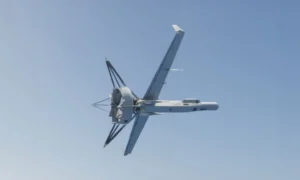
TAURUS NEO, photo by MBDA
At the end of 2025, Defender Media launched a new format — a roundup of defence tech news from the free world. The digest is titled “On the light side” and focuses primarily on military innovations developed by Ukraine’s allies.
The second edition features notable updates from MBDA Deutschland, Babcock International Group, Frankenburg Technologies, Huta Stalowa Wola, ASELSAN, Xer Tech, and Seraphim Defense Systems.
Babcock–Frankenburg naval counter-drone air defence
British company Babcock International Group and Estonia’s Frankenburg Technologies signed a memorandum on 7 January 2026 to jointly develop a low-cost naval system for countering attack drones. The project focuses on creating a containerised launcher for small guided missiles.
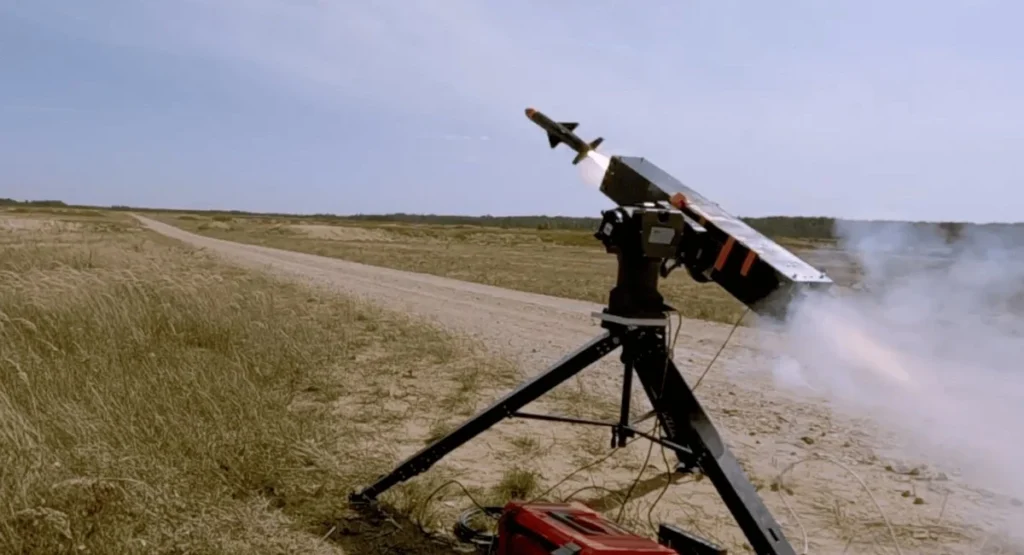
The system is to be based on the Frankenburg Mark 1 missile, which the company describes as the world’s smallest interceptor, measuring around 60 cm in length, and designed as a low-cost solution for countering FPV drones and other expendable UAVs. According to the developer, the missile has already demonstrated a full interception cycle during tests conducted at a NATO facility in Latvia.
The project is aimed at rapid integration on both naval platforms and coastal installations, with an emphasis on scalability, logistical simplicity, and shifting the cost balance between attack and defence in the maritime domain.
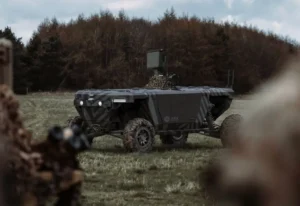
Tracked remote minelaying vehicle Baobab-G
Poland’s Ministry of National Defence has signed a €240 million contract with Huta Stalowa Wola for the production of Baobab-G tracked automated remote minelaying vehicles. Deliveries are scheduled to be completed by 2029.
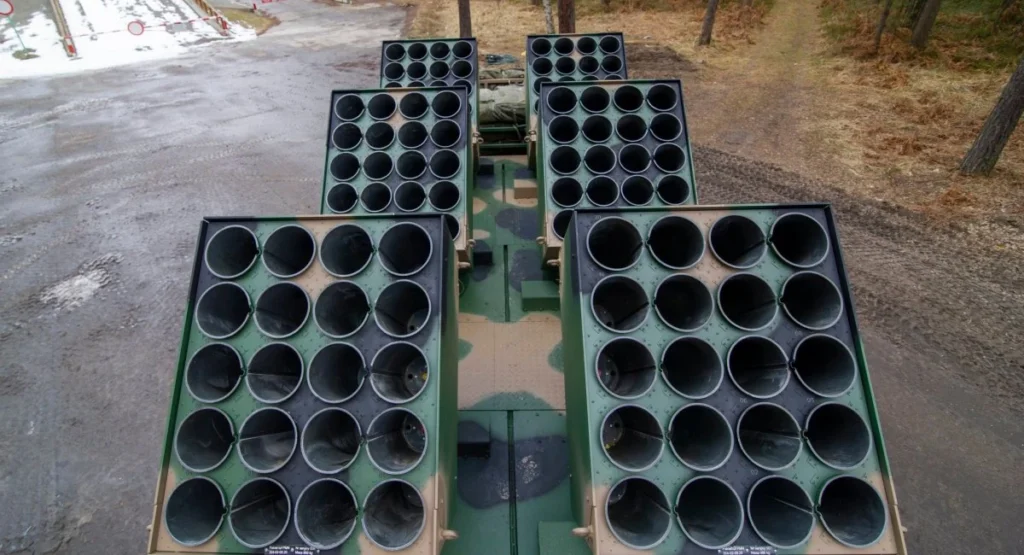
Baobab-G is the tracked variant of the Baobab-K system and is based on the chassis of the Krab self-propelled howitzer. It is designed for the rapid creation of minefields in complex terrain, using digital control systems and GPS-based positioning.
According to the manufacturer, the system can lay minefields of varying size and density, with programmable self-neutralisation times. The minelaying process is fully automated, from deployment of the launchers to transition from transport to combat configuration.
The system features six launch modules capable of carrying up to 600 MN-123 mines. The munitions are produced by Belma, also part of the PGZ group. Each container holds 100 mines, which can be deployed at distances between 30 and 90 metres, forming minefields up to 1.8 km in length.
TAURUS NEO cruise missile enters serial production
German company MBDA Deutschland has announced the transition of the TAURUS NEO cruise missile programme to the serial production phase. This followed the signing of a key contract with the Federal Office of Bundeswehr Equipment, Information Technology and In-Service Support. The agreement covers the preparation of production facilities, the rollout of supply chains, and the implementation of quality control systems for series manufacture.
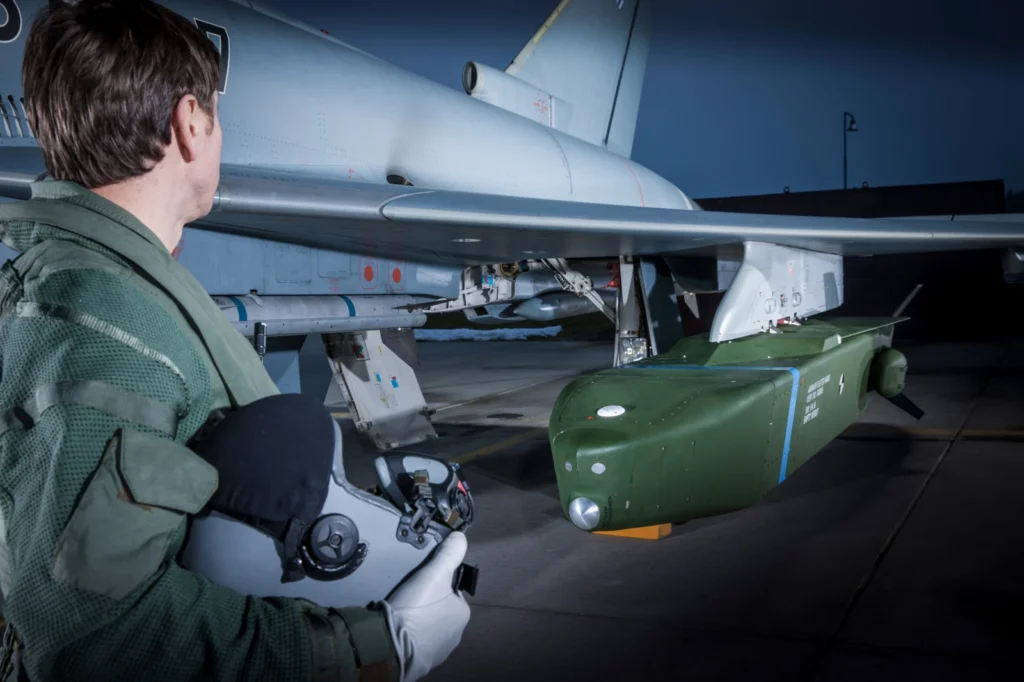
TAURUS NEO is an upgraded air-launched cruise missile based on the Taurus KEPD 350, developed jointly with Saab. The modernisation includes updated navigation, increased resistance to electronic warfare, enhanced air defence penetration capabilities, and retention of the Mephisto warhead. The missile is considered a key element of the Bundeswehr’s long-term long-range strike capability.
TAURUS NEO is set to be integrated not only on Eurofighter combat aircraft, but also on Remote Carrier-type unmanned platforms being developed under the Future Combat Air System (FCAS) programme, a joint project involving Germany, France and Spain.
Mobile air defence system KORKUT 140/35 downs FPV drone
Turkish manufacturer ASELSAN has released footage of tests of its KORKUT 140/35 mobile anti-aircraft artillery system, during which an FPV drone was destroyed. The interception took place during dynamic live-fire field trials.
The system is equipped with twin 35 mm cannons with a rate of fire of up to 1,100 rounds per minute and is capable of firing programmable airburst ammunition. Its stated effective engagement range is up to 4 km.
KORKUT is positioned as a short-range air defence system for the protection of mechanised units, with the ability to integrate radar, electro-optical sensors and electronic warfare systems within a unified command architecture.
Denmark conducts field trials of THeMIS and MFP-1 UGVs
Denmark’s Ministry of Defence is conducting large-scale field trials of robotic ground platforms, including the tracked THeMIS vehicle from Estonia’s Milrem Robotics and the lightweight reconnaissance MFP-1 from the UK-based XRC Robotics. Four vehicles of each type are involved in the trials.
The tracked THeMIS is being evaluated as a multi-role platform for logistics, surveillance and combat support, while the lighter MFP-1 is focused on tactical reconnaissance. The MFP-1 is electrically powered, capable of high speed, and can operate over distances of up to 30 km with a payload of up to 35 kg. The trials are focused on practical employment, integration into command structures, and reducing risks to personnel.
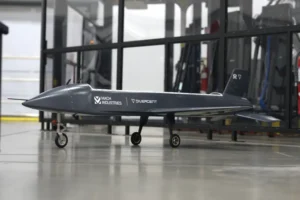
Türkiye integrates fighter radar into stealth strike UAV
ASELSAN has confirmed preparations to integrate the MURAD 100-A AESA radar into the ANKA III low-observable strike UAV. The move is intended to expand the platform’s role to include full beyond-visual-range air combat capabilities.
The MURAD 100-A radar is already in use on F-16 Özgür fighters, Bayraktar AKINCI and Kızılelma platforms, and is designed to provide target detection and tracking, threat prioritisation, and guidance for air-to-air missiles across a wide frequency range using an active electronically scanned array.
ANKA III is a fixed-wing unmanned aircraft capable of carrying up to 1,600 kg of payload, with a combat radius of up to 1,075 km in an air-to-air configuration or 750 km in a conventional strike profile.
Integrating the MURAD 100-A into ANKA III expands the platform’s capabilities, enabling long-endurance missions with high situational awareness, sustained SAR mapping, target designation for other platforms, and multi-role operations including air combat, reconnaissance and electronic warfare.
Swedish–Swiss company Xer Tech develops hybrid X8 UAV
The Swedish–Swiss company Xer Tech is preparing to bring hybrid-powered high-technology unmanned aerial vehicles to market, including the X8 platform.
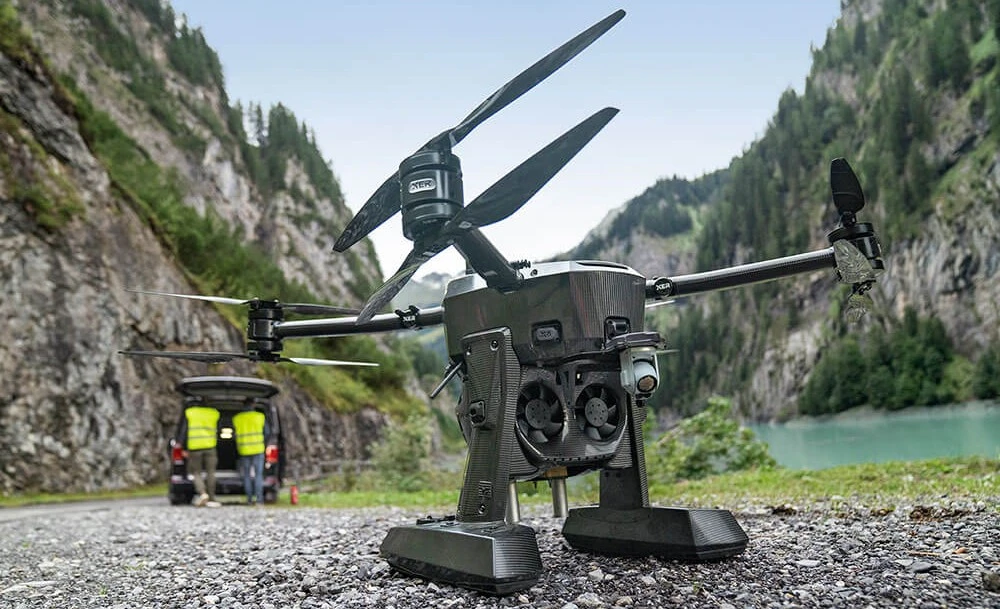
The X8 is a hybrid-propulsion UAV capable of flight durations exceeding 2.5 hours with a payload of up to 3 kg. Endurance decreases as payload increases. The system is designed for reconnaissance and surveillance missions, as well as for expanding ISR capabilities through a modular architecture and sensor integration.
The company reports that it is already supplying the X8 to customers in the UK, Switzerland and other partner countries, including defence and security organisations. Xer Tech is also developing software for autonomous control and onboard data processing.
Poland develops prototype interceptor for fibre-optic drones
Polish company Seraphim Defense Systems is developing the Mobile Autonomous Counter-UAV System (MACS), a mobile autonomous counter-drone complex. The project is currently in the development and testing phase, with a functional prototype already produced.
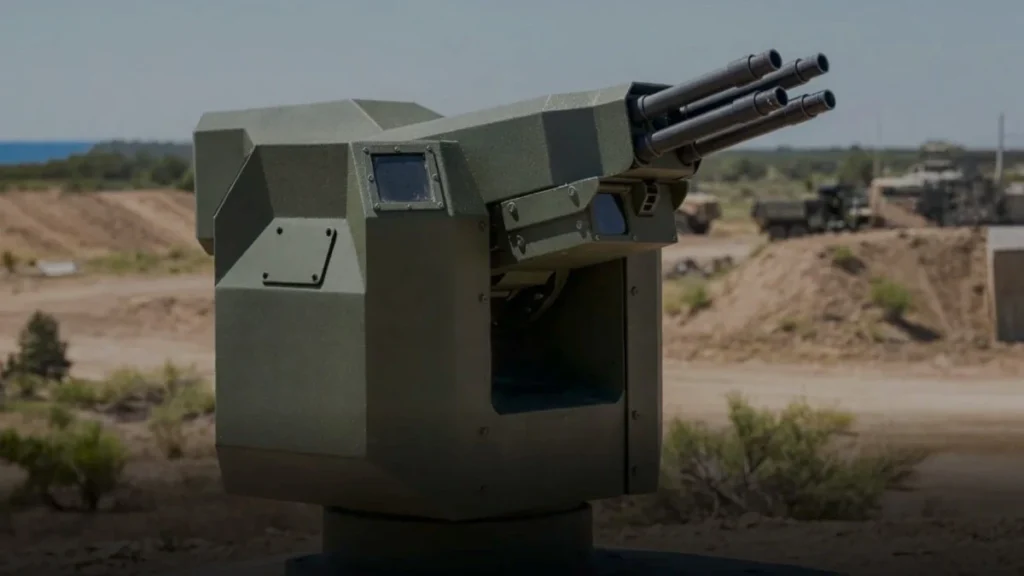
MACS is designed to detect and neutralise small unmanned aerial vehicles, including FPV drones, including those using fibre-optic control links. The system integrates multiple sensor types, including radar, electro-optical and infrared cameras, RF sensors and LiDAR, alongside automated data analysis algorithms.
According to the developer, a 1:2 scale model is currently being tested to refine target detection and classification algorithms. The project has been selected as a finalist in the NATO Innovation Challenge. The company states that following completion of development and testing, it plans to move to serial production of the system within approximately 12 months.
Reading now
1

400+ jobs in Ukrainian defence tech from BlueBird, Vyriy, The Fourth Law, Odd Systems and other sector leaders
2

8 top defence tech events in September
3

Former defence minister Mykhailo Fedorov launches fund to invest in defence tech
4
20 Ukrainian companies are working on jet-powered interceptor drones. Firebolt Engineering is among them
5

European defence giant Leonardo opens a subsidiary in Ukraine
By submitting this form, you give Defender Media consent to the processing of personal data.
Надсилаючи цю форму, ви надаєте Defender Media згоду на обробку персональних даних.

Latest news
1
Black Mirror #75: terminal-guidance for interceptors, mesh communications, a mini mine-layer and other Russian miltech developments
2
Ukraine’s Bars jet-powered drone to enter production in Germany, with range extended to 1,000 km and warhead payload to 60 kg
3

Ukrainian intelligence officers test new AI system to coordinate UGVs and naval drones
4
400+ jobs in Ukrainian defence tech from BlueBird, Vyriy, The Fourth Law, Odd Systems and other sector leaders
5