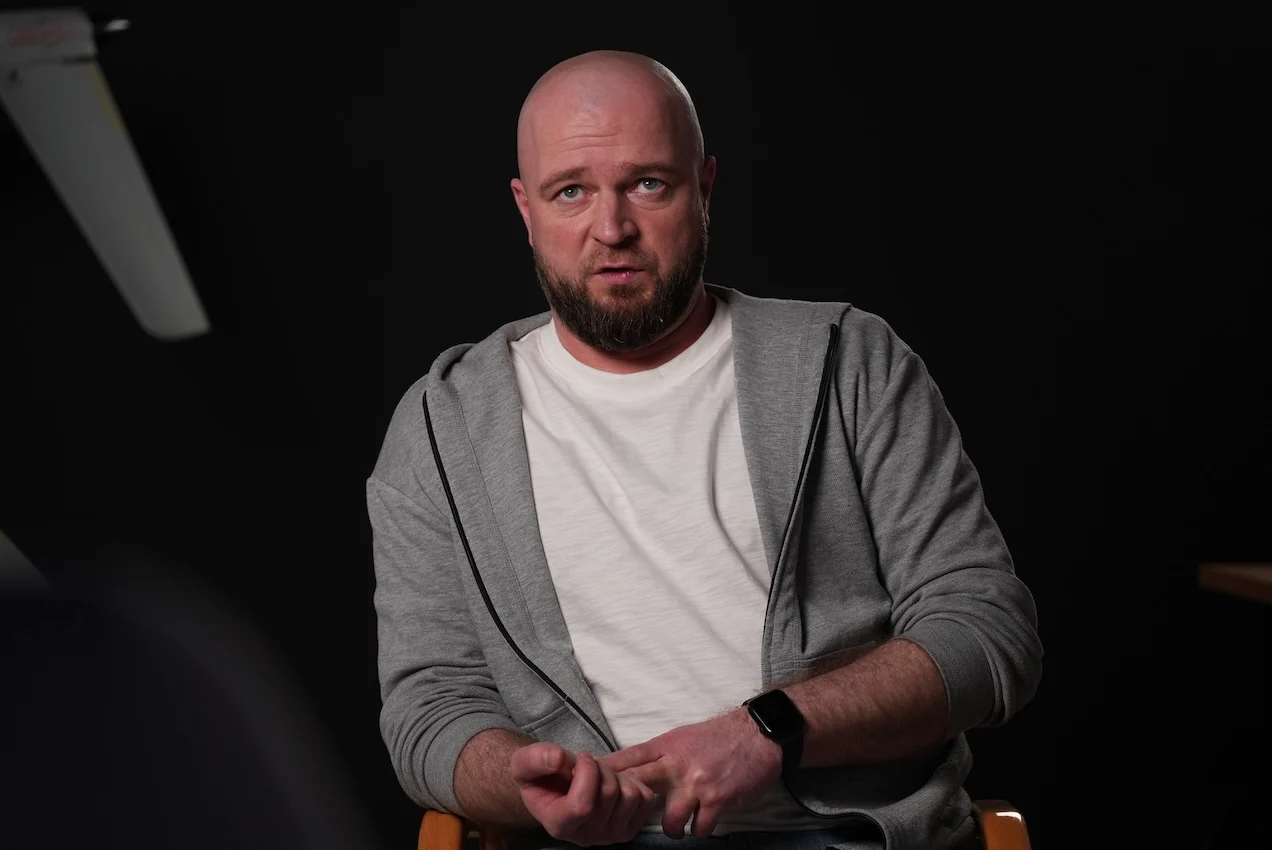
Co-founder and CEO of HIMERA Misha Rudominski: first interview after raising $2.5 million in a seed round
A conversation about HIMERA’s new vision, the fundraising process, competition with century-old market players, and much more

Last week, Defender Media reported that Ukrainian developer and manufacturer of tactical communications systems, HIMERA, raised $2.5 million in investment. In his first interview since closing the round, co-founder and CEO Misha Rudominski spoke with Defender Media about HIMERA’s new vision, the fundraising process, cooperation with the government and military, export plans, competition with century-old market players, and more.
On the investment round
The final size of our seed round is just over $2.5 million. In total, since the company’s founding, we have raised over $3.2 million. I know that one Ukrainian media outlet mentioned a figure of $5 million, but that is not accurate.
We raised the seed round in stages, and during the process, our plans regarding its size changed somewhat. There was a moment when we had already secured the originally planned amount—but it was precisely then that new, more ambitious plans took shape, and investors responded positively to them. As a result, we decided to increase the size of the round and continued raising capital. Compared to our very fast pre-seed round, which we closed in three weeks, the seed round took quite a long time: roughly a year passed between the first and the final “yes.”
This does not mean that we were fundraising continuously throughout that entire period. With each individual investor, I learned to work fairly efficiently. The amount of time spent per fund that ultimately joined the round was relatively limited: we have well-prepared answers to most standard questions, clear terms, and solid documentation.
Moreover, communication with investors has additional benefits — it helps to polish both vision and expectations. Sometimes our views do not align with those of potential investors. We are an attractive company for investors, and in cases of such misalignment, we can afford to walk away from a cheque — this happened during the seed round as well.
Perhaps the most difficult challenge for a defence startup is combining a bold but realistic vision for investors with a product that the military needs right now. The armed forces say, “We need to solve tasks today,” while investors ask where we will be in a few years.
The hardest part is switching between these modes. In the morning, you discuss real tactical radios, repeaters, and communications systems that operate in the field under challenging conditions. You move on to discussions with investors about a large-scale network that revolutionises tactical employment. At the same time, the military is conservative by nature, and changing its doctrines “from the outside” is almost impossible. What works best is an approach where you first solve their immediate problems, and only then, together with them, gradually change tactics and procedures.
What HIMERA’s new vision is about
When we started the HIMERA project, we focused on a specific, niche problem — tactical communications between military personnel for voice and data transmission in combat conditions. But over the past year, our vision has expanded significantly. We realised that the problem of tactical communications is only part of a much larger challenge: building the architecture of future warfare and defence, where automation and real-time data transmission are critical.
Imagine a hypothetical scenario in which an operator in a bunker connects to a tank or a combat robot and issues commands, or a soldier controls a turret or a drone above them from their personal device — all of this requires seamless, very high-quality connectivity. The problem is that this is not possible today, as existing communications systems are highly fragmented. The military uses one set of channels for voice communications, situational awareness systems (Kropyva, Delta, Combat Vision, ATAK, etc.) operate over others, UAVs use a third set, and ground robotic systems a fourth. This creates a “zoo” of systems that are difficult to integrate. Manufacturers are often not interested in interoperability, resulting in a significant interoperability problem.

We concluded that HIMERA’s greatest competitive advantage is the ability to create what we call a Comprehensive Resilient Network: a secure, unified network that allows all devices, robots, UAVs, military personnel, software, sensors — everything that can transmit or receive data and commands in combat conditions — to do so within a single communications system. No full-scale solution of this magnitude currently exists, especially not in a format suitable for mass deployment at the level of hundreds of thousands or millions of users and unmanned systems, including low-cost FPV drones.
Our current HIMERA 2.0 tactical communications network is one of the key components of the future Comprehensive Resilient Network. We are not yet disclosing the full details of the broader solution, as this architecture is still being designed and we are actively working on its capabilities.
A key point is that we appear to be the first to attempt, across every required vertical, to develop relevant, scalable, and systemic products designed to be interconnected within a single network. This direction — unifying product lines into a shared network architecture — is exactly what seed-round investors supported.
Today, if someone wants to deploy a sensor network on the battlefield — including audio sensors, RF sensors, and camera traps — they often have to build a separate communications channel: lay fibre, deploy Starlink, or set up a Wi-Fi bridge. These are parallel, isolated channels that complicate both deployment and maintenance.
We aim for a situation where, if HIMERA infrastructure is already operational in a given area — for example, at brigade or corps level — a sensor can simply connect to this existing network without the need to establish a separate communications system. Our focus is on strengthening existing infrastructure rather than multiplying fragmented channels.
The Comprehensive Resilient Network will combine hardware and software, with the foundation and core know-how being the hardware itself. If suitable hardware already existed on the market, someone would have built the software on top of it long ago.
We operate in a reality where much of traditional military hardware was designed for very expensive, limited, and highly advanced solutions — such as missiles and drones costing millions of dollars, and so on. By contrast, the Russia–Ukraine war has created demand for rethinking hardware for mass, relatively low-cost use, such as a notional five million FPV drones per year, which require advanced digital communications systems capable of enabling new combat capabilities. Hardware and network solutions of this class for mass use do not currently exist, and this is one of the key directions in which HIMERA is developing.
On interaction with the military and the state
For investors, our new vision serves as a direction we are moving towards; within the military, these ideas are also being gradually put into practice.
We have been working on this for three and a half years. Over that time, we have found decision-makers within Ukraine’s Security and Defence Forces who think progressively — people who are focused not only on today, but also on tomorrow. At the level of individual brigades we work with, the mindset is already changing: they are utilising functionality that is not available in any other system in the world, which has emerged through close cooperation and trust. For security reasons, we do not publicly disclose details of this functionality or the specific units involved.
In recent months, we have witnessed a notable shift in our communication with stakeholders. Several brigades have decided to gradually transition to our solutions for some of their core systems.
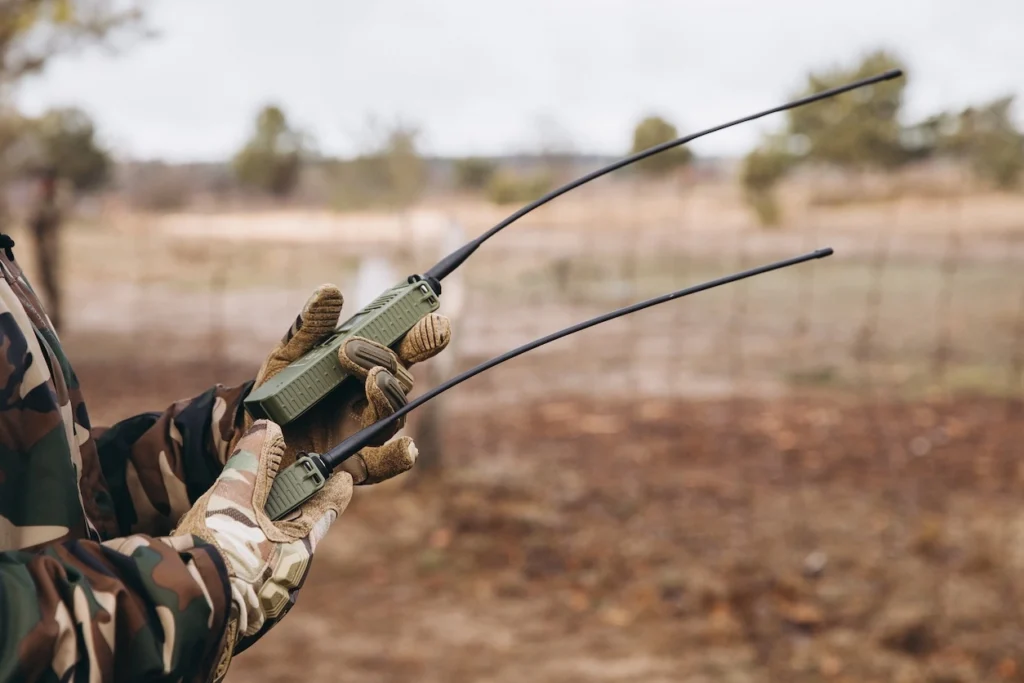
It is important to understand that, for the military, the emergence of a relatively young company in such a complex market is an unusual situation. Our closest competitor was founded in 2001; other players in the market have histories spanning 40–50 years, while Motorola has existed for over a century. It takes time to build trust and confidence that we are here for the long term, that we will provide support, repairs, training, and ensure repeat procurement.
Building this trust takes slightly longer than we would like. However, we now feel that the level of confidence has grown significantly, and we therefore expect a transition to more systematic and large-scale adoption of our solutions within the military.
There is still no centralised state procurement for our solutions, but we actively work with individual military units and brigades at a more “horizontal” level. The decentralisation of procurement, where larger budgets are allocated at the unit and brigade levels, works in our favour: it simplifies deployment and supply without requiring a large central contract.
Today, all products within our tactical communications system are being deployed in a fairly systematic way and already account for a significant share of our deliveries. Previously, we were perceived as a company that simply manufactures radios; now, we offer a full-fledged product line that diversifies our revenue streams.
About figures and patents
We are growing almost every quarter, and this growth matches both our internal expectations and the typical expectations for an innovative technology startup. In 2026, we plan to significantly accelerate this growth, as much of what we achieved in 2023–2025 lays the foundation for what we call “rocket” growth.
We do not disclose specific figures for security reasons. In defence tech, any details about production volumes, logistics, revenue structure, or customers can be used by the enemy to undermine the country’s defence capability. For the same reason, we are cautious about patenting: for a hypothetical American competitor, a patent makes sense, but for a Russian, Chinese, or Iranian manufacturer, it effectively becomes an instruction manual for our technology.
Our primary tool for IP protection is trade secrecy. From the very beginning, we designed our products with the understanding that they would eventually end up in the hands of the enemy, who would be able to disassemble and study them. The task is to have a technology that cannot be reproduced simply by having the physical device in hand. That is why our key know-how is protected architecturally and organisationally, rather than through public patent disclosures.
About international expansion
Publicly, we have announced one contract in the United States as well as another with a NATO country. However, this is not everything we have been doing on the international front — only what could be disclosed publicly. This is a long process: deals of this kind usually take several months to a year or more, so many negotiations are still ongoing.
International development is critically important for two reasons. The first is economic. Prices for HIMERA products in Ukraine and abroad differ significantly. It is international sales that allow us to keep prices in Ukraine as low as possible — proactively discounted, practically at the break-even point. HIMERA began as a volunteer project in 2022 to equip friends, relatives, and acquaintances serving in the military. That mindset has remained: we do everything we can to ensure Ukrainian units receive capabilities that would otherwise be inaccessible within existing budgets.
The second reason is experience. Every new international customer brings their own practices, tactics, mistakes, and solutions, which we can incorporate into the product and then apply in Ukraine. Ukraine has the best contemporary experience of warfare, but our paradigm in many ways began to form from scratch after 2014, without a deep layer of legacy expertise — such as specialists who have worked in military communications for 30–50 years.
By supplying products abroad, we effectively gain this body of knowledge for free: experienced military professionals from other countries can, within a few hours of testing, identify areas for improvement, drawing on cases dating back to the 1980s. Many of the features now operating on the Ukrainian battlefield emerged directly as a result of this interaction. Even before a contract is formally signed, we manage to exchange a significant amount of experience and receive feedback that is then reflected in the product.
How to compete with Motorola and other global players with decades of experience
When a niche is dominated by an oligopoly of a few large players that do not need to genuinely compete with one another, innovation inevitably slows down. Each of them has sufficiently large and growing markets, and their notional third of the market grows along with it — enough to live comfortably without radical change.
Ukraine is a different case. War has created an environment where innovation is a matter of survival rather than a marketing advantage. That is why Ukrainian solutions in UAVs, ground robotic systems, EW, SIGINT, communications and other areas are today often among the best in the world — not only in terms of price-to-performance, but also in absolute effectiveness, if we exclude the top five ultra-expensive programmes with decades of R&D behind them.
In this environment, we have developed a core technology that already competes on equal terms and, in some aspects, outperforms many international competitors with long-standing histories. Yes, there are baseline integration elements that we are still refining, but these are second-order tasks that can be solved. The technological core, meanwhile, is already delivering results that give us confidence in our competitiveness.
Reading now
1
SkyFall officially unveils Thor Hammer mid-strike and announces 1,000+ km version
2
Pentagon to hold Drone Dominance trials for bomber drones, with UFORCE, Gurzuf Defence, Grim Tech and others taking part
3
Terra Drone acquires 50% of Ukrainian Kurin Technologies for $3.5 million
4
British-Ukrainian Occam Industries raises €3.8m. The funds will go towards scaling drone autonomy software
5

Frontline Robotics CBDO Mykyta Rozhkov: Ukraine and Norway are working on an autonomous system to protect maritime infrastructure
By submitting this form, you give Defender Media consent to the processing of personal data.
Надсилаючи цю форму, ви надаєте Defender Media згоду на обробку персональних даних.

Latest insights
1
Everything about the RAM-2X mid-strike drone: interview with Ukrspecsystems deputy director Andrii Rymaruk
2

A demo is not demand: How to prove the value of a defence tech product. Column by Tekever Ukraine Director Kateryna Bezsudna
3
How to choose the right video link for an FPV drone: analogue, digital, or fibre-optic?
4

How a frontline signal becomes an engineering task. A column by Defence Builder Accelerator Director Yana Shkvarovska
5