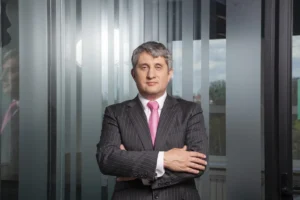
“One of our main goals is to build in Ukraine for Ukraine. We come to help”. Interview with Integrasys CEO Alvaro Sanchez
The company is actively developing its Ukrainian office, already collaborating with HUR, Infozahyst, and other domestic partners

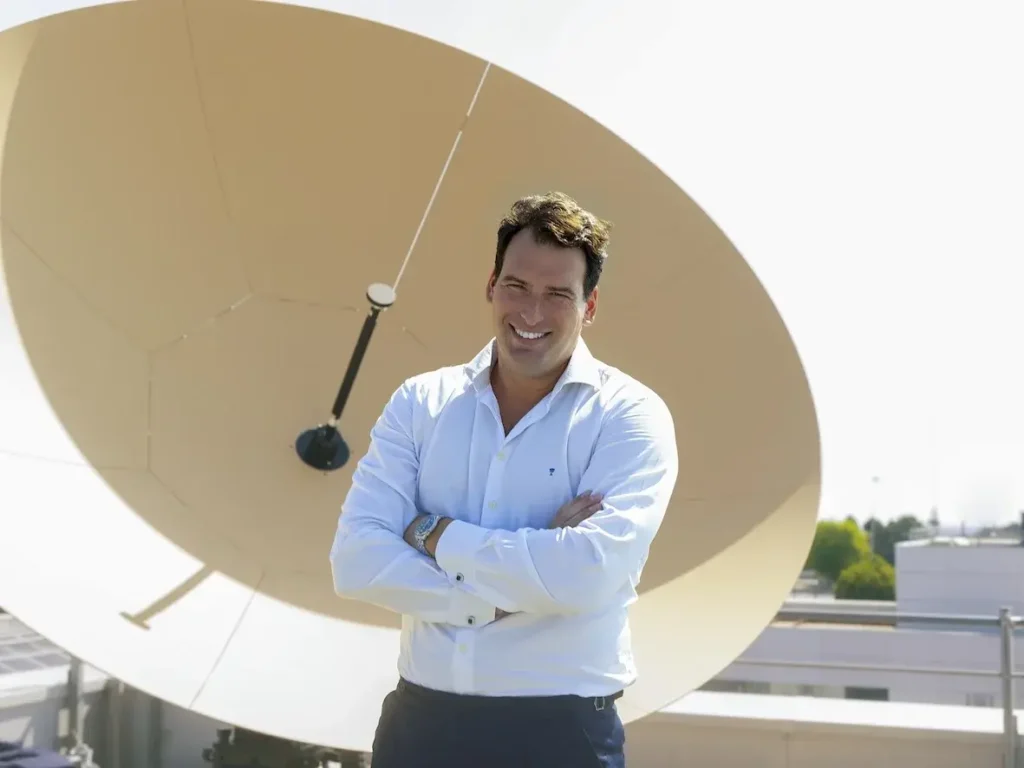
“We design complex systems to solve complex problems,” says Integrasys CEO Álvaro Sánchez, who was included in the “20 under 35” professionals ranking by Space and Satellite Professionals International.
Integrasys has been cooperating with Ukrainian special services and military units since 2023. The company’s software provides tools to enhance intelligence capabilities and counter jamming, although the defence domain is only one part of Integrasys’ overall business.
In a big partner interview with Defender Media, Álvaro Sánchez discussed the company’s history, its product portfolio, the work of Integrasys’ Ukrainian office, as well as the partnerships and collaborations the company is seeking in the Ukrainian market.
About the company
Integrasys was founded in 1990 by a team of former Hewlett-Packard engineers. We specialise in advanced software solutions for satellite communications, spectrum superiority, PNT, and intelligence.
I’m the owner of the company, and my parents were the co-founders. I hold two engineering degrees and a master’s degree, and I began my career at CERN, where I worked on signal measurements and timing, contributing to improvements in the PTP standard.
Personal reasons brought me back to Spain. I started working with my father, who was developing products, but I realised my strengths were in sales. I began selling our solutions globally, and today we have more than 150 defence customers – a significant number in this sector.
Our first major customer was L3Harris, a top U.S. defence contractor, which integrated our products for the Missile Defence Agency. That experience validated our technology and opened doors to other defence companies. Over the years, our product line has expanded steadily. We’ve been especially active in the U.S., where larger budgets allow for more complex projects and, naturally, more opportunities to provide solutions. We support the Space Force, Air Force, Navy, Army, National Guard, and Special Operations. Beyond the U.S., we also work with partners in France, Spain, Ukraine, Fiji, Japan, and Australia – our reach is truly global. Today, Integrasys operates 12 offices worldwide, with headquarters in Madrid and a Centre of Excellence in Ukraine, focusing on both commercial and defence sectors.
I’ve had the opportunity to speak at over 300 conferences worldwide as an expert in space and electronic warfare. The company has received 10 awards for its innovations. Personally, I received an award from the Space Satellite Professionals International when I was 35, recognising me as one of the most influential people in the space industry.
In December, the same organisation presented us with another award in recognition of our work supporting Ukraine and its allies. Better Satellite World Award recognises technology that not only performs well but also contributes positively to the world. For us, it’s significant because it highlights the impact of our technology beyond just technical achievement – it’s about doing good with what we create.
How Integrasys’s Ukrainian office was established
We design complex systems to solve complex problems. In 2021, we donated some of the systems to Ukraine and in 2023, we provided remote support as we established a local entity there. We also built a dedicated team focused on unmanned systems – working with drones – alongside teams tackling security services and space applications. Each unit develops tailored solutions because the challenges in one area are different from those in another.
The company has developed over 30 products. In Ukraine, the following are now represented:
- Jam CCS, a system for testing and countering RF threats in ground, air, and space environments;
- GNSS anti-jamming solutions for secure navigation in GPS-denied areas;
- CleanRF that efficiently cancels terrestrial interference for LEO, MEO, and GEO satellite constellations.
Customers come to us with a problem and say, “I need a solution.” We design and deliver those solutions quickly, which is critical today. Our work spans electronic warfare (EW), including anti-jamming and jamming capabilities.
On product range
Our core technology is software for communications and GPS-related positioning, but it needs hardware – such as antennas – to receive and transmit signals. That’s why we work closely with antenna specialists. For example, in Ukraine, we collaborate with Infozahyst and with systems like Kymeta, which are widely used there. Different operational needs require different hardware and software combinations, and we build solutions accordingly.
We also develop systems for signal monitoring, whether through satellite links or ground-based sensors. In defence environments, that can mean detecting, identifying, or analysing communications activity over long distances.
On the intelligence side, we support image analysis as well. If you have a satellite image, our tools can help characterise what’s visible: anything from vehicles and infrastructure to military assets. In short, we focus on extracting reliable insight from sensor data, both in communications and imagery, for authorised defence and security partners.
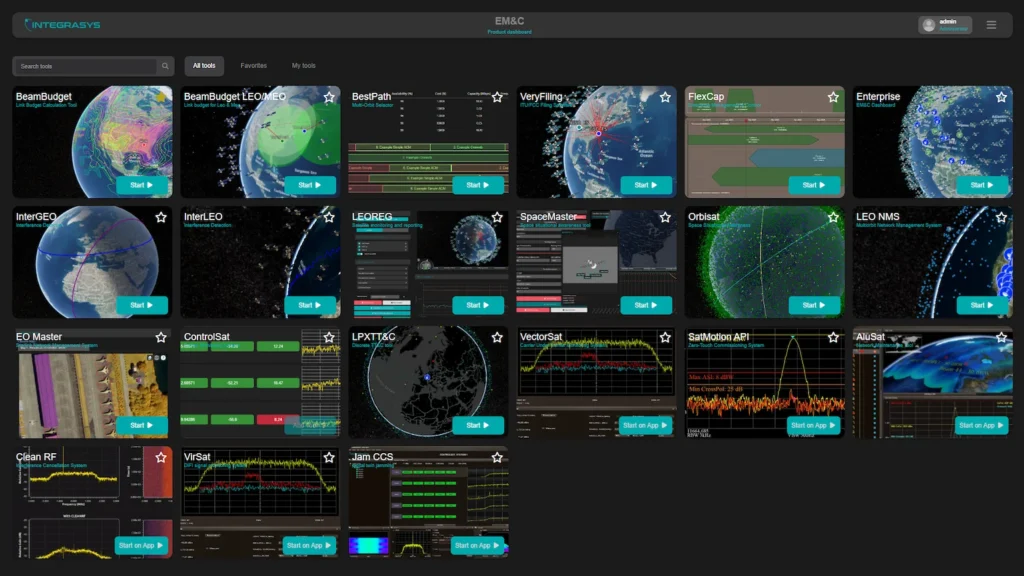
We’re also collaborating in Ukraine on advanced image analysis – in a general sense, helping teams extract meaningful information from satellite and aerial imagery. The goal is to support a faster and more precise understanding of what sensors capture, without delving into operational details.
When our software is added to a platform, it enhances its performance. When you combine our software with the onboard hardware of a famous Ukrainian USV, the drone can sense and interpret its environment far more effectively. That means better navigation, more reliable arrival at the target location, safe return routes, and overall more intelligent decision-making. That’s essentially what we do: we make platforms more intelligent and resilient.
Some of the largest NATO drones operating over Ukraine also use our tools. Their mission depends on clean, reliable signals so they can observe, listen, and operate without interference. That’s why NATO radios are another major user of our technology. Our signal-cleaning systems protect their communications from jamming, ensuring soldiers, vehicles, and other units can stay connected when it matters.
How Integrasys’ jamming and anti-jamming systems work
The systems we work with already come with their own software and hardware. What we add is a very specific layer that protects them from interference, cleans and strengthens the signal, and in some cases helps improve the quality of what they receive, whether it’s communications, sensing, or imagery.
I’ll give you an example of using jamming. Typically, you may have only one source of interference, such as one person shouting. But if you have many synchronised sources – like seven loudspeakers instead of one – you can overwhelm a hostile signal much more effectively, and you can direct that energy where it’s needed. Our jammers automate that process. No operator has to press anything; the system detects the signal and responds automatically. In Ukraine, for instance, the system can automatically jam even those Russian drones that attack civilians.
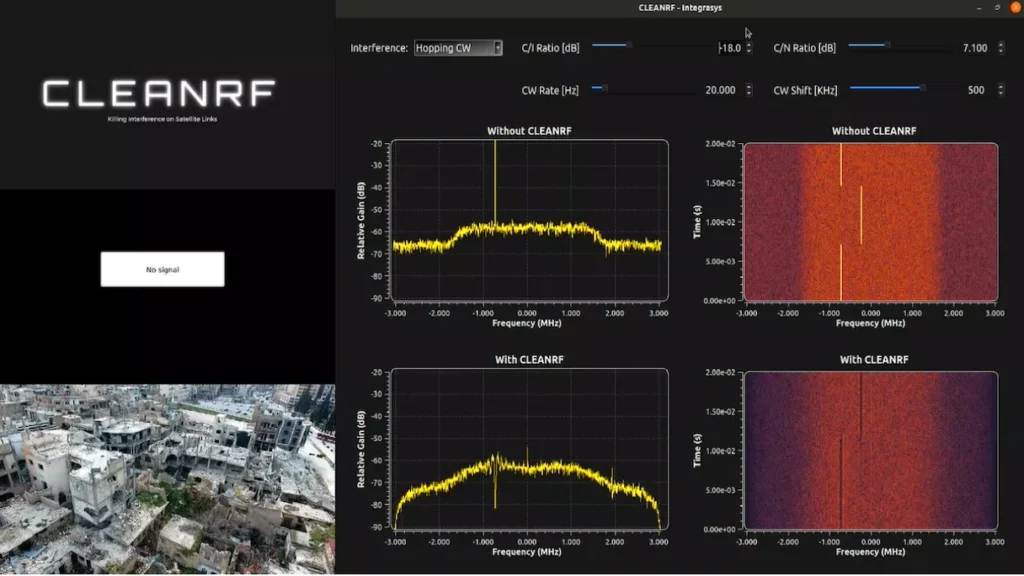
The second part is anti-jamming. This determines whether a platform receives a clean signal or nothing at all. We developed a very small one-kilogram unit that sits between the antenna and the receiver. It takes the incoming signal, processes it in real time, and improves it – similar to applying a digital filter to clean up a photo. Our filter removes noise, interference, and distortion so the platform receives only the useful information.
Think of it this way: if interference is like someone blasting heavy music directly into your ear with multiple speakers, our technology cancels that noise so you can actually hear the person talking to you. The system does this instantly, without manual input, and keeps the communication channel usable even under heavy electronic attack.
Our approach is simple: deliver solutions to real problems. Ukraine often comes with a clear need – “we need this now” – and if we have it, we deploy it immediately. Our delivery timelines are usually around two weeks, which is extremely fast in this industry and highly appreciated.
On business model
Our business model is straightforward because we adapt to our customers’ needs. The standard approach is to sell a license or a hardware unit for each location where the capability is deployed. But we’re flexible – we can structure it in different ways.
Some clients prefer a traditional capital expenditures (CapEx) model. Others want an OpEx model, and we can offer that as well. It really depends on how they want to finance and manage the capability.
Most of our solutions are designed to operate on-premises, which means they don’t rely on remote connections or external dependencies. That’s a significant advantage for defence users. The only external requirement is access, but everything else runs locally. And if a customer prefers a service-based model instead of a purchase, we can accommodate that too.
On relations with customers
We are initially targeting government institutions and subsequently local integrators. I don’t usually work directly with government units myself. There’s always someone on the ground who understands the specific brigade, unit, or operator much better, and who has that fast, day-to-day relationship. Those partners are essential for us because they open the doors. We’re not in Ukraine every day, we don’t have a huge team here, and we haven’t been present for decades, so strong local partners are crucial.
At the same time, we need end users to actually request our solutions. If they don’t know the capabilities exist, they can’t ask for them. That’s why communicating what we can deliver is so important – Ukraine faces real, urgent problems, and we already have technologies that can solve many of them.
We’re actively seeking partnerships with Ukrainian companies that serve customers in defence, specialising in electronic warfare, sensing, intelligence, and observation. The goal is to combine our technology with local expertise and provide solutions that are implemented inside Ukraine, by Ukrainian companies, for Ukrainian users. We can support both partners and end users in this process.
On global and local presence
Our presence in Ukraine is actually quite small. The team here is limited in size, but behind them stands more than 35 years of development and 30+ mature technologies. We’ve only talked about a few – but the portfolio is much broader.
For example, the Ministry of Foreign Affairs invited us as keynote speakers for a space-focused event. We have deep expertise in space systems, and we’re helping guide Ukraine on how to structure and develop its future space force. Sometimes, that means designing concepts with them, and sometimes it means providing existing capabilities that are ready to be deployed.
The Ukraine Centre of Excellence focuses on drone-related technologies and capabilities. That includes software and systems for protecting drones from interference, as well as tools for managing communications and navigation in challenging electronic environments. Our antijamming technologies, for example, help drones maintain stable GPS and communication links, while our jamming systems can disrupt hostile long-range platforms when legally authorised.
Solutions that Ukraine may need
We also develop emulation tools. These enable different platforms to train or test their systems using low-cost equipment, rather than relying on extremely expensive air defence assets. The idea is to replicate the general behaviour or “signal style” of a system, allowing operators to practice detection, tracking, and characterisation without deploying the real Patriot or similar systems.
All of this is aimed at giving practical, cost-effective ways to strengthen its drone operations, electronic protection, and training capabilities. These emulators are already in use, but not yet in Ukraine. We’d be glad to introduce them here.
Beyond emulation, we also work with signal geolocation, which helps determine the location of hostile transmissions on the battlefield. That ties directly into our imaging capabilities. Modern conflicts generate huge volumes of satellite and aerial images, and analysing them manually can take days. Our tools can process and interpret those images automatically in under a minute, extracting the key information.
This can reveal patterns such as activity around airfields, movements in industrial sites, what goes in and out, and where it goes next. It also helps identify specific objects or changes along the front line.
We can also deploy systems that collect signals intelligence from the air, from the ground, or even from maritime platforms. That information supports both immediate decision-making and planning for the next mission. If a mission runs into unexpected interference or obstacles, the data helps ensure that the follow-up mission is prepared and doesn’t repeat the same issue.
On the role of AI in Integrasys products
Artificial intelligence plays a significant role in our portfolio, primarily by automating complex tasks. When Integrasys was founded in 1990, we were part of Hewlett-Packard and focused on automating signal measurements. Today, automation has evolved into AI-driven systems.
We offer products that utilise AI for image processing, as well as those that leverage AI for signal processing. Those products are trained on real-world data, not synthetic datasets.
However, one important thing to note is that we don’t use AI to develop software. We do software ourselves. Because when you do software with AI, it’s just like everyone else’s. But we work in defence. We do software that no one else has.
For example, our CleanRF technology is the only NATO-certified solution of its kind that addresses certain electronic warfare challenges. It’s unique globally and in Ukraine.
On work in Ukraine
One of our main goals is to build in Ukraine for Ukraine. We’re not investing. We come to help. We develop local talent, strengthen the economy, and create long-term value. Our training teams return with deep knowledge, and that’s why we established our office in Ukraine as a centre of excellence focused on drone technology. We contract professionals aligned with current drone missions in Ukraine, including experienced military personnel from Spain who previously volunteered in Ukraine. They now work with us in a paid capacity, bringing years of practical experience and knowledge to our projects.
We’re actively involved in the Luxembourg-Ukraine Association and the IRON Cluster, and we’re in discussions with both Brave1 and Tech Force in UA as part of our ongoing integration efforts.
As for partnerships with Ukrainian drone manufacturers, we’re actively working on it. As I mentioned, one of our team members has collaborated with Ukrainian naval drone developers, embedding our solutions into certain systems, including logistical platforms. The main challenge is establishing the right contacts with Ukrainian manufacturers.
Our solutions are inherently high-end and designed for defence applications, which can make them expensive; however, we make efforts to make them more accessible to Ukraine. We focus on capabilities such as long-range jamming, extended communications, ISR, and other high-value missions that operate over distances of 100 km or more. Essentially, we work with platforms and assets that require advanced performance for critical operations.
Currently, we don’t have direct competition in Ukraine. Some of the companies we’re engaging with include UAC and others. Our approach is partnership-focused rather than purely commercial – we often secure funding from Spain, Luxembourg, the UK, the USA, and other sources, ensuring that Ukrainian companies don’t bear the full cost.
We are a small, agile company, which allows us to act quickly, partner with local industry, employ people, and adapt based on feedback. Over time, we’ve donated systems, provided equipment for the battlefield, and launched various initiatives to directly support Ukrainian needs. Our focus is on helping, improving, and contributing expertise where it can make the biggest difference.
One of the key messages I share is that we didn’t come to Ukraine to make money. Integrasys has been profitable for 35 years. Our goal here is to support Ukraine and provide solutions where they’re needed. We aren’t trying to extract value; we aim to bring resources, knowledge, and capabilities.
This material was created with the support of INTEGRASYS Group 
Reading now
1
Jobs at Alta Ares, 3DTech, Drone Space Labs, Wild Hornets and other companies in the defence innovation sector
2

British platform Grenadyr has invested in five Ukrainian defence tech startups. Defender is telling its story for the first time
3
Vyriy Industries becomes first Ukrainian defence tech company to issue corporate bonds: why does it need them?
4
Ukrainian company has developed a jet-powered interceptor drone that reaches speeds of over 600 km/h
5
60+ new job openings in Ukrainian defence tech: offers from Vyriy, TENCORE, Ukrspecsystems and others
By submitting this form, you give Defender Media consent to the processing of personal data.
Надсилаючи цю форму, ви надаєте Defender Media згоду на обробку персональних даних.

Latest insights
1
Can Europe afford a war of expensive platforms? DevDroid co-founder on the cost of modern warfare
2
UFORCE, Freedom Fund, 25,000 Starlinks for UAF: Interview with the CEO of Ukraine’s first defence tech unicorn
3

Codification mechanisms for defence products: What manufacturers should consider
4

How to prepare for searches and other investigative actions: a checklist for defence companies from lawyer Anastasiia Didenko
5