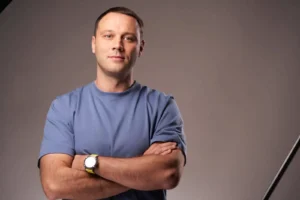
This fund is helping Ukrainian dual-use startups go global: interview with Green Flag Ventures co-founder Justin Zeefe
We speak with the founding partner of one of the most active investment funds on the Ukrainian defence tech market

American venture fund Green Flag Ventures is one of the most active investors in Ukraine’s defence tech market. The company has participated in several significant deals over the past two years. Its portfolio includes Swarmer, HIMERA, Teletactica, Falcons, and Karadag Technologies. On the train from Lviv to Warsaw, Defender Media columnist Bojan Stojkovski recorded an interview with Green Flag Ventures founding partner Justin Zeefe.
Justin Zeefe is the founding partner of Green Flag Ventures, a $20 million US-based VC fund backing early-stage Ukrainian startups developing AI and dual-use technologies – solutions with both civilian and defenсe applications.
Before founding Green Flag, Zeefe co-founded Nisos, a managed intelligence company that protects against cyber threats, disinformation, and digital platform abuse. His deep background in national security and enterprise strategy now fuels Green Flag’s mission to bridge Ukraine’s tech talent with Western markets.
Zeefe’s co-founding partner, Deborah Fairlamb, had already spent years in Ukraine helping to build the country’s innovation ecosystem from within. She held senior leadership positions at UkraineInvest, the Ukrainian Startup Fund, and TechUkraine, where she helped lay the foundations for the country’s startup scene.
On the way back from the IT Arena to Warsaw, Justin and I spoke about the energy of Ukraine’s defence tech scene – the optimism, the speed of innovation, and how Ukrainian founders are building real solutions in real-time, often under fire.
Ukraine today functions as the world’s largest open-air laboratory for AI, autonomy, cybersecurity, communications, and resilient systems, where startups are tested under real conditions of conflict – and that crucible has created an innovation ecosystem unlike any other – highly skilled, mission-driven, and rapidly adaptive. Now, Green Flag Ventures leverages this advantage and has already made five investments, while offering Ukrainian founders not only funding but also access to US and NATO procurement channels, export compliance guidance, and strategic partnerships across the defence-tech landscape.
Defender Media: How did you venture into defence tech, and what led you to become a founding partner at Green Flag Ventures?
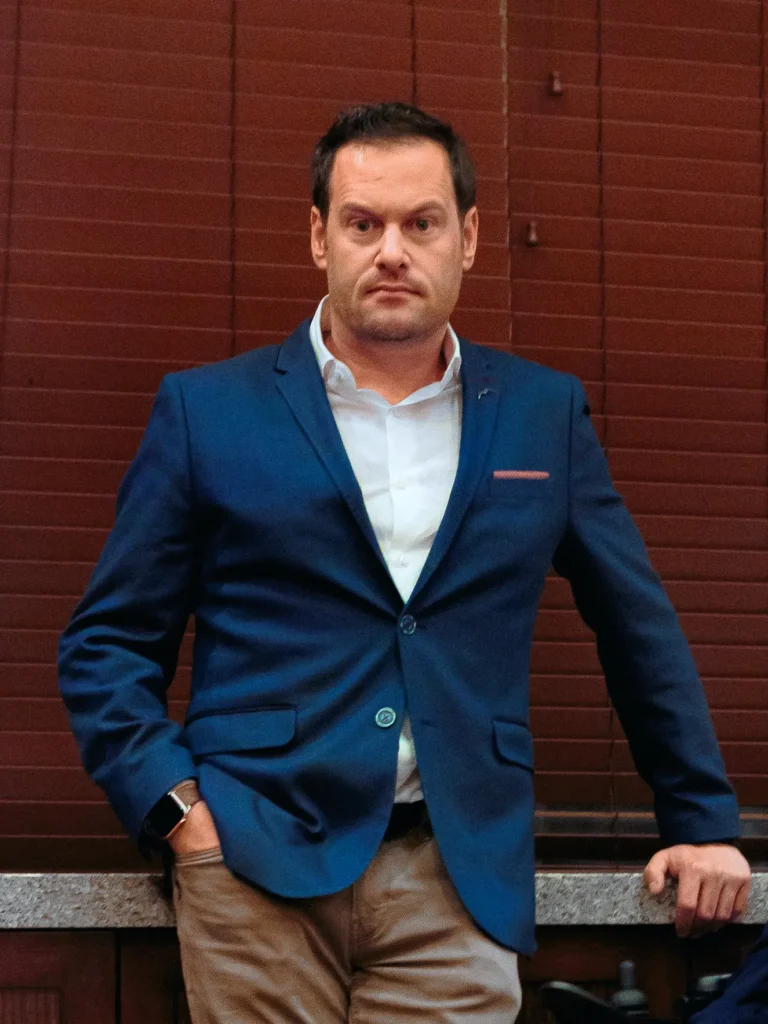
Justin Zeefe: I came here as a volunteer in early 2022, right after the war started. I was moving around, driving medical supplies, when I met some founders who were pivoting from fintech and agritech into defence tech. They knew I was a founder and asked for advice. I didn’t have any money to invest since I wasn’t a VC at the time, but I did have valuable connections, so I started making introductions.
When I went back home, I couldn’t stop thinking about the opportunities I’d seen. I began researching the ecosystem and discovered it had been growing 30% year over year even before the war. It seemed to be on track to become the next Israel in terms of frontier markets developing advanced technology.
As more companies began shifting toward dual-use innovation, it became clear within a month that this was a rare early opportunity – if executed well. So I found a partner who shared that vision, and together we launched the firm. From there, we were off to the races.
The VC has a clear focus on dual-use technologies. How did you come up with that strategy?
We have a very clear definition of dual-use, though others define it differently. For us, dual-use technology is any innovation with current or near-term applications across both civil defence and commercial markets.
The advantage is significant: you face a lower regulatory burden, less risk of export or import bans, and a much larger addressable market. That means more potential customers for your products — and more potential acquirers for your company.
You’ve been here since shortly after the war began. How has the conflict shaped your perspective on defence technology?
I arrived in April 2022, just a couple of months after the war started, and it quickly became clear that we’re witnessing an evolutionary — not iterative — shift in how wars are fought. We’re moving away from a model where a handful of $100 million systems sit safely in the rear, supporting operations at the front.
Now, the battlefield is dominated by inexpensive, software-defined devices deployed in massive numbers. An $800 drone can destroy a $90 million asset. That’s a fundamental change—and one that many defence procurement systems and large defence primes are still struggling to adapt to.
The world increasingly views Ukraine as a testing ground for new defence technologies. How do you see that dynamic?
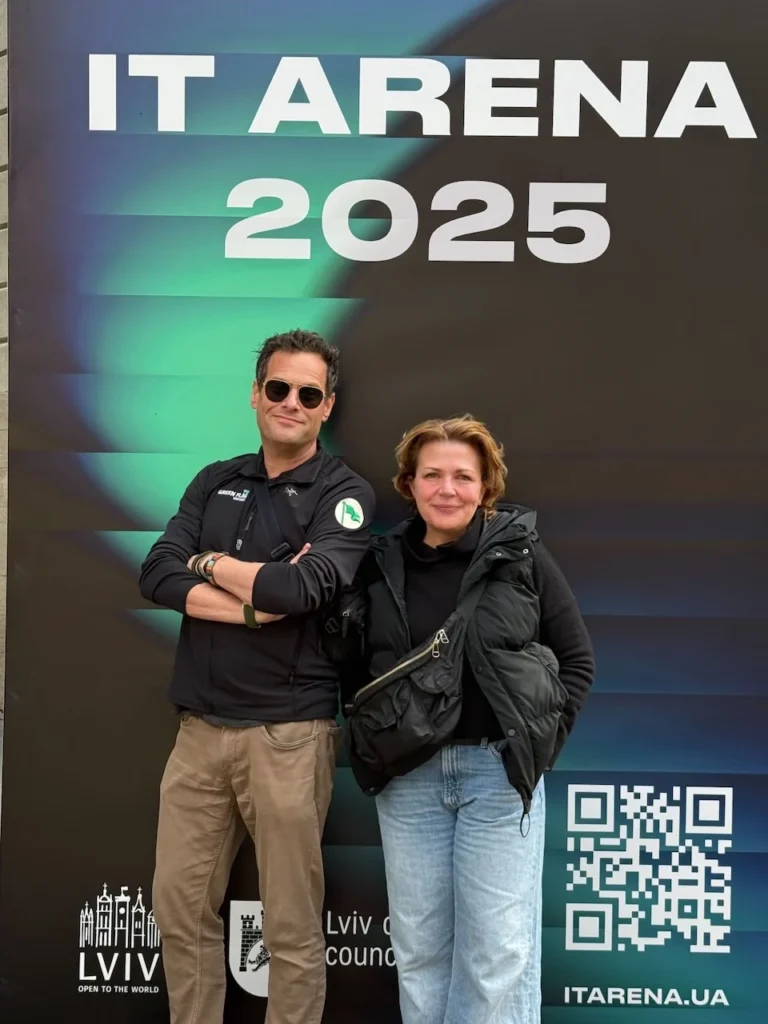
One important thing to understand is that each brigade in Ukraine has its own procurement authority. It’s also worth noting that the contested front line – where Russia has invaded and Ukraine must defend itself — is extremely long, and about a third of it runs along the sea. That means the technology needed in a forest or along the coast can be very different from what’s needed in a desert or muddy terrain.
Because of that, Ukrainian startups are developing environment-specific solutions. This diversity of conditions is driving more innovation here than almost anywhere else. Over the past three years — attending events like IT Arena and Brave1 Defense Tech Valley — I’ve noticed a major decline in the number of companies solely focused on making drones.
Speaking about your investments in Ukraine, what do you think sets these startups apart?
We’ve backed five standout Ukrainian dual-use startups: HIMERA, Karadag Technologies, Swarmer, Teletactica and Falcons. Together they form a complementary stack — secure tactical communications, electromagnetic and counter-UAS dominance, AI-driven autonomy, precision targeting, and integrated situational awareness. Each has proven performance under battlefield conditions and clear potential to scale into NATO and allied defence markets.
We invest in founders solving immediate, life-or-death problems with technology that endures beyond the war. Ukraine is the most advanced real-world test environment for defence innovation; no theory, only what works. The teams we’ve backed aren’t chasing trends; they’re creating categories born out of necessity. They design under pressure, build for scale, and validate in conditions that compress years of product development into months. That combination of urgency, clarity, and adaptability is what turns local inventors into global defence leaders.
About what we look for in startups — we start with people: founders who are technically elite, operationally grounded, and mission-driven. Then the product: it must solve a critical problem, be field-validated, and defensible (through proprietary tech, data advantage, or manufacturing know-how). Finally, the path: a credible route from Ukrainian deployment to global scale, whether through NATO integration, dual-use markets, or commercial applications.
What technologies are you seeing on the rise?
Most of them are tied to the need and the ability to rapidly iterate software-defined systems in response to the enemy’s evolving tactics, techniques, and procedures. For example, when Russian forces adjust their electronic warfare strategies, Ukrainian teams must quickly adapt their technology to stay ahead and counter those threats.
That kind of real-time, continuous adaptation is a major shift — and to my knowledge, it’s something we haven’t really seen before in modern warfare.
What do you see as the main difference between European and US-based VCs when it comes to backing Ukrainian startups?
I can’t speak for everyone, but the biggest difference is risk tolerance. In the US, venture investors — and the people backing them — generally accept that many startups will fail. They expect a lower probability of success on a company-by-company basis but are comfortable taking that risk in pursuit of higher returns.
European investors, on the other hand, tend to be more risk-averse. They prefer to invest later, when startups are more mature and the risks are lower — but so are the potential rewards. In that sense, I think many European investors are limiting their own upside by being too cautious.
As for how this relates to Europe’s broader defence posture, I’d say we’re just now starting to see the effects. The recent Russian overflights into NATO territory, something that was entirely predictable yet not adequately addressed, have begun to shift thinking across the continent about defence, deterrence, and the need for more proactive investment in emerging technologies.
Green Flag’s main focus is currently on Ukrainian startups. Do you also plan to expand into the rest of Eastern Europe?
We do plan to expand – yes. The short answer is yes, but the longer answer is that our investments are focused on companies with a clear comparative advantage, particularly those whose technologies have already been tested and proven in the field.

We’re not big fans of traditional stage labels like pre-seed or Series A. Those terms have lost much of their meaning—these days, you can have a so-called pre-seed company raising $30 million, with a product already on the market and generating revenue. Instead, we evaluate startups based on their Technology Readiness Level, or TRL.
We strongly prefer companies at TRL 6 or higher – meaning their products are mature, validated, and have demonstrated that they perform as intended in real-world conditions.
Bojan Stojkovski
Bojan Stojkovski is a freelance journalist. Based in Skopje, North Macedonia, he reports on technology, science, and environmental issues, as well as post-war societies in the Western Balkan countries. His work has been featured in Foreign Policy, WSJ, ZDNET, New Eastern Europe, and Interesting Engineering.
Reading now
1
Ukrainian Skyeton secures $10.6M US army contract
2
Canadian General Dynamics signs agreements with Ukrainian GreenTech
3
The Pentagon has announced the results of Drone Dominance Gauntlet II – announced Ukrainian companies did not make the top 5
4
Korven Systems project: How Teletactica co-founder is building an autopilot for interceptor drones
5
Ukrainian SkyFall again among winners of US Drone Dominance Program
By submitting this form, you give Defender Media consent to the processing of personal data.
Надсилаючи цю форму, ви надаєте Defender Media згоду на обробку персональних даних.

Latest insights
1
Everything about the RAM-2X mid-strike drone: interview with Ukrspecsystems deputy director Andrii Rymaruk
2

A demo is not demand: How to prove the value of a defence tech product. Column by Tekever Ukraine Director Kateryna Bezsudna
3
How to choose the right video link for an FPV drone: analogue, digital, or fibre-optic?
4
How a frontline signal becomes an engineering task. A column by Defence Builder Accelerator Director Yana Shkvarovska
5