Deftech labour market in Ukraine: who are companies looking for and how much do specialists earn
Embedded engineers still top the list in terms of number of vacancies
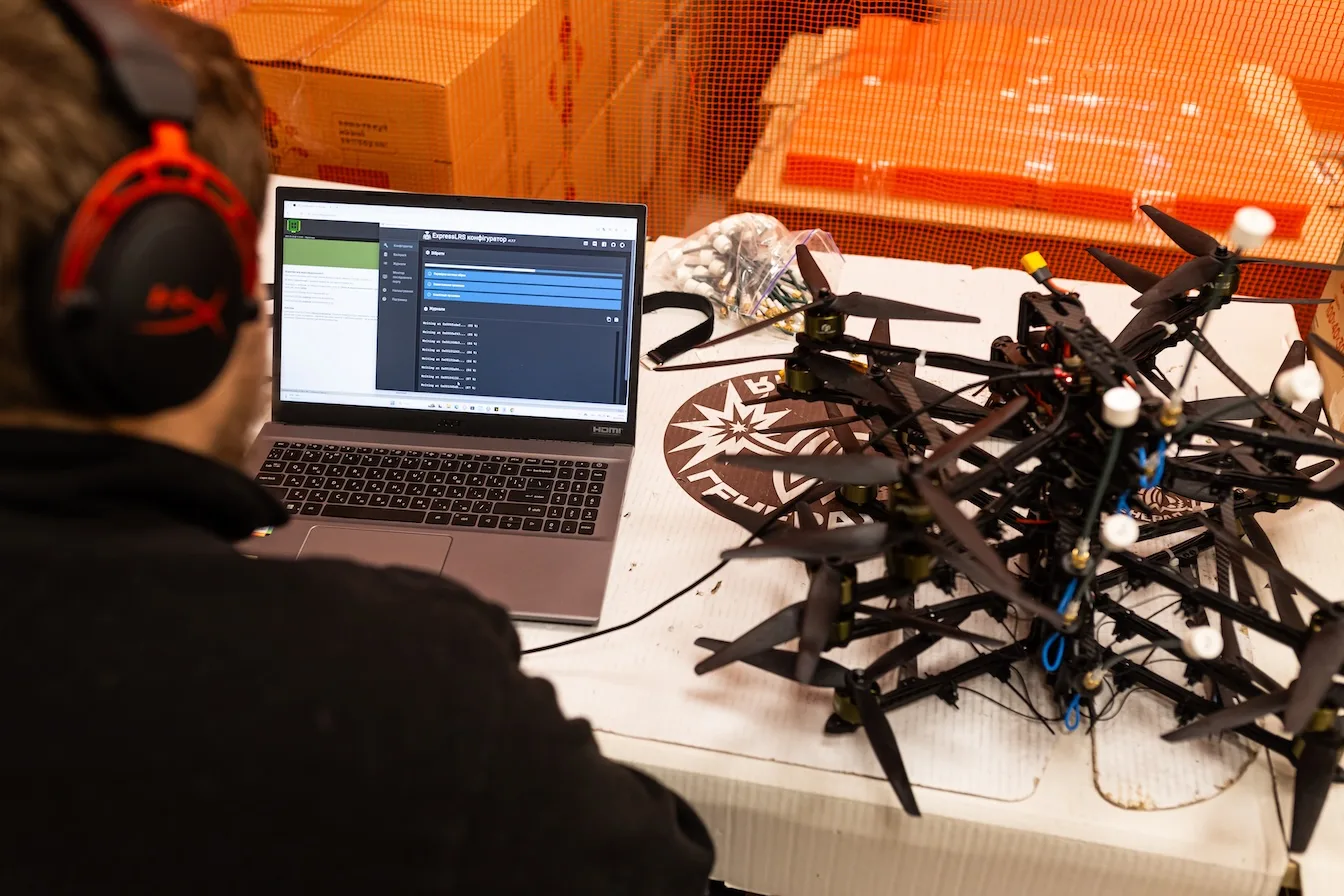
An employee of the drone manufacturer General Cherry at work. Photo provided by the company
Last month, DOU analysed and found that deftech developers earn, on average, lower salaries than IT developers in general. The conclusion is based on a survey of 73 specialists. Recruitment platforms say that some specialities do indeed earn less, but others earn more than regular IT.
Defender Media spoke with recruiters from CORE Team and BazaIT about who deftech companies are most often looking for, how much such specialists earn, and whether the salary level differs from IT.
Which positions are most in demand
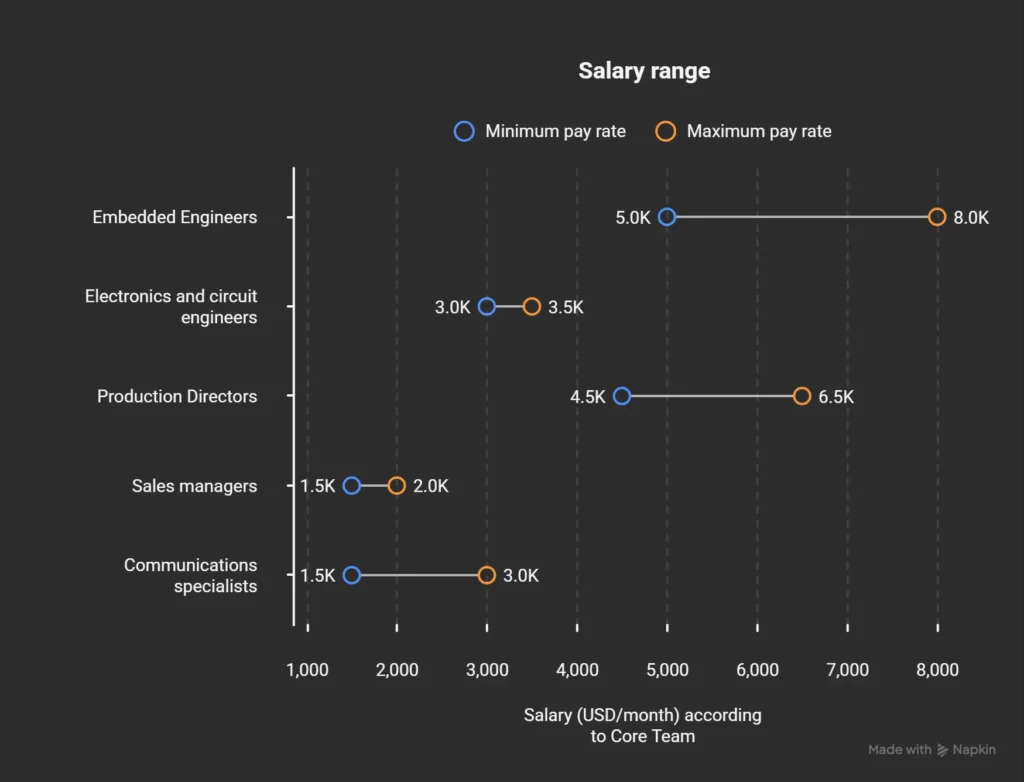
CORE Team identifies three technical areas that most often appear in job vacancies:
- Embedded engineers
- Electronics and circuit engineers
- Production Director
The most popular non-technical positions are sales managers and communications specialists.
The salary range for an embedded engineer is $5-8 thousand per month. The final amount depends on the stack, whether the person is in demand or not, and the stage of development of the company itself. Production directors earn even less — $4,500–6,500. The fact is that embedded engineers are in high demand, and they are harder to find.
According to BazaIT, the most common job openings over the past year were for the following positions:
- Embedded/Electronics Engineer (UAV, radio, hardware)
- Mechanical/Design Engineer (designers, R&D)
- FPV/UAV Technician (assembly, testing, soldering)
- Project/Product Manager (hardware+software products)
- Robotics/Computer Vision/AI Engineers
At the same time, the recruitment platform adds that many companies need high-quality production managers and operations managers.
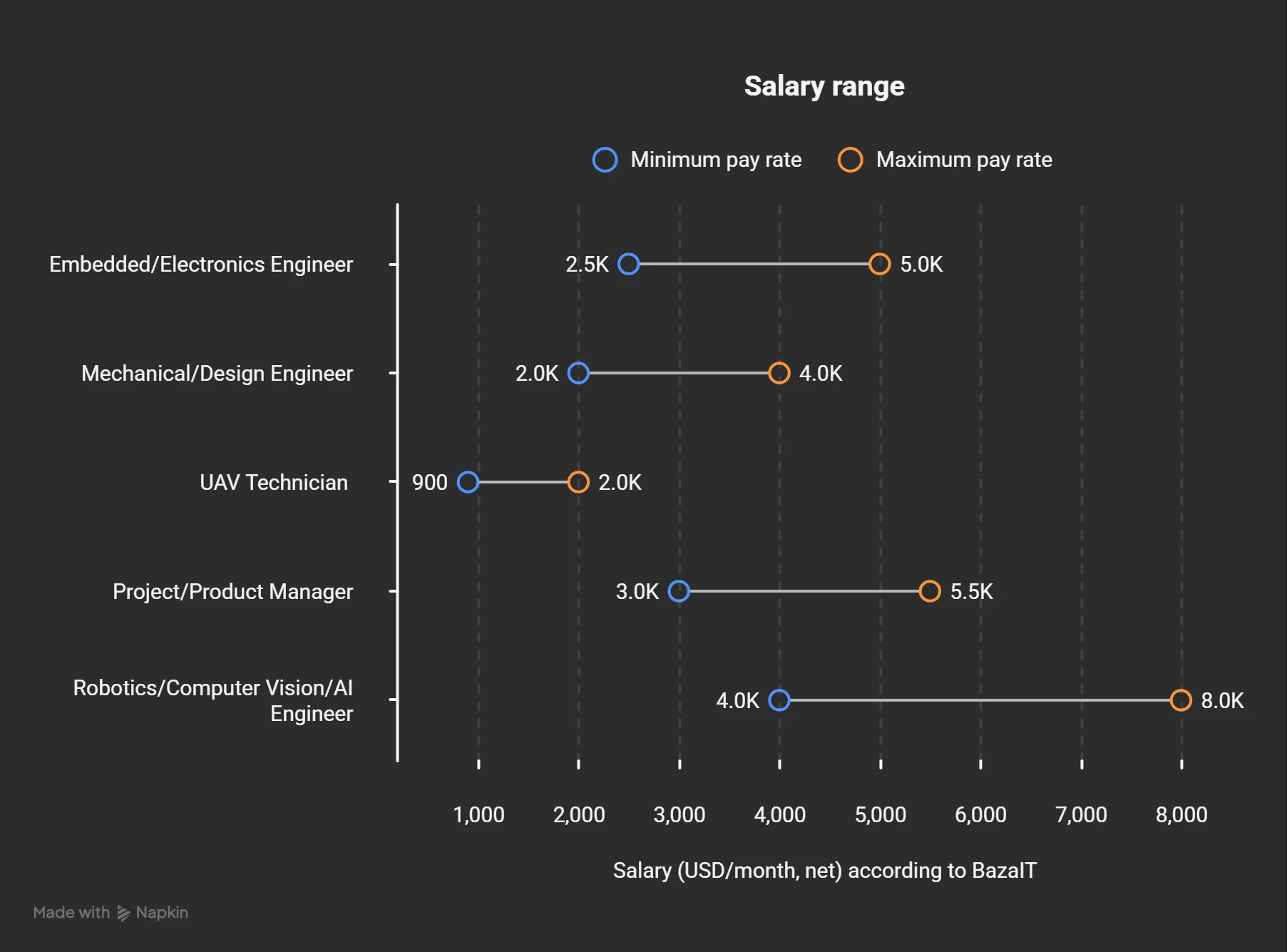
According to BazaIT, since 2024, salaries in Robotics/AI/CV have increased by 20-30%, for embedded engineers – by 10-20%, and there has also been a slight increase for project managers.
Do offers match candidates’ expectations
Anna Korol, founder of CORE Team, says that salary levels largely meet candidates’ expectations. In other cases, a compromise is sought, and companies may adjust their budgets. She adds that in some roles, deftech actually outpaces IT in terms of pay.
BazaIT, on the other hand, claims that the expectations of IT candidates differ from what deftech companies offer. Such engineers may want 20-40% more. Meanwhile, candidates from manufacturing or hardware backgrounds will often agree to less, Oksana Gorbunova, COO and co-founder of BazaIT and CEO of BazaIT Defense, told Defender Media.
For its analytics, DOU surveyed 73 developers already working in deftech. 68% consider their salary level to be insufficient. 32% receive money in line with their qualifications, and some even more than the market average.
Gorbunova from BazaIT adds that compared to IT, embedded and hardware engineers in deftech earn the same or slightly less. In software and AI positions, salaries are often 10-30% lower, and for project managers, they are 10-20% lower. Robotics engineers can earn more than in IT.
At the same time, according to DOU, embedded developers in deftech earn on average $1,250 less than in IT: $2,250 in deftech and $3,500 in IT.
Back-end specialists have the highest median salary among deftech developers — $3,550. “It is almost the same as the back-end level in IT in general,” the publication says. Full-stack developers earn $2,400, which is $600 less than in IT.
What benefits are used to attract specialists
According to Anna Korol, deftech companies are increasingly offering additional benefits to candidates. They offer reservation and medical insurance.
Since deftech work is mainly offline, some companies organise corporate catering and seek better or larger offices for their employees. Some businesses also offer a hybrid schedule after the probationary period.
At BazaIT, the most typical benefits are reservation, official employment, and rapid career growth. Meanwhile, medical insurance, bonuses, and relocation are offered less frequently, shares Oksana Gorbunova.
Also among the benefits is a mission-driven work. CORE Team adds that many candidates want to contribute to something that has a real effect and impact. Working on a product already in active service appears more appealing to them than building from scratch.
Reading now
1

Ukrainian SkyFall’s drone wins at Pentagon’s Drone Dominance selection
2

Black Forest Systems raises $400,000. Here’s what drones the startup is building
3

Sting interceptor by Wild Hornets downs costly Russian Granat-4 reconnaissance drone
4
UForce unveils Bucha middle-strike drone with a 200 km range
5
The F10 drone becomes the second Ukrainian finalist in the Pentagon’s Drone Dominance Program
By submitting this form, you give Defender Media consent to the processing of personal data.
Надсилаючи цю форму, ви надаєте Defender Media згоду на обробку персональних даних.

Latest news
1
DPA to diversify drone and ammunition orders among multiple suppliers
2
‘Ukrainska bavovna’ and Czech company Pavetra Aerospace to produce Shuhay UAV through joint venture
3
59th Assault Brigade downs Russian Ka-52 helicopter with General Cherry OPTIX FPV drone
4
Tencore develops evacuation module for TerMIT UGV
5