On the light side #4: What’s new at Rheinmetall, Hypersonica, Grupa Zbrojeniowa and others
New developments and trials in the free world’s defence sector: early February review
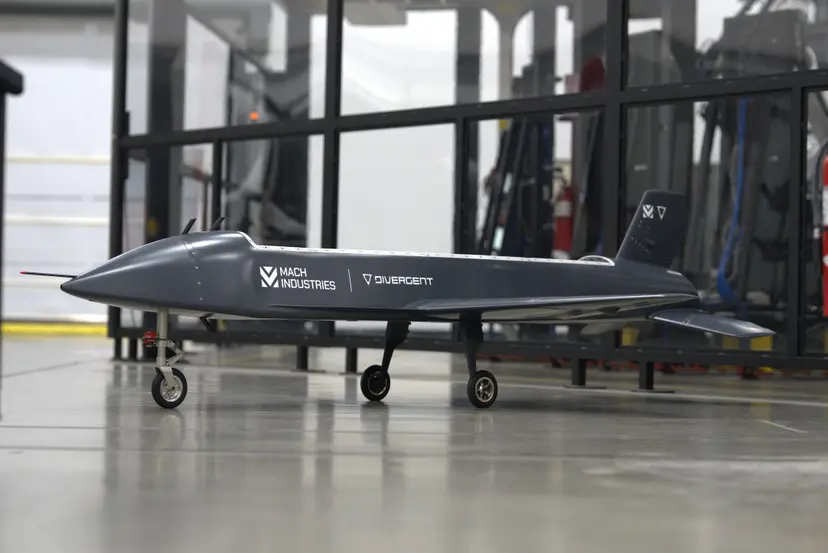
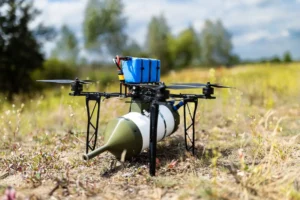
3D printed strike drone Venom. Manufacturer's photo
In ‘On the light side’, Defender Media rounds up the most interesting defence tech developments from the free world. The fourth edition features late-February updates from DARPA, General Atomics, Israel Aerospace Industries, ASELSAN, Marine Instruments, Rheinmetall, Hypersonica and Polska Grupa Zbrojeniowa.
Rheinmetall unveils FV-014 loitering munition
German Rheinmetall demonstrated its new FV-014 loitering munition to a prospective NATO customer. The system combines reconnaissance capability with a strike function, enabling it to engage armoured vehicles, artillery positions or command vehicles beyond the line of sight (BLOS).
The FV-014 is designed to hit targets at ranges of up to 100 km. It is launched from a container using a booster, after which folding wings deploy and the munition transitions to horizontal flight. Endurance is stated at up to 70 minutes, providing time for persistent surveillance, target selection and a final decision to strike. Continuous operator-in-the-loop control is maintained, including the option to abort the mission.
The system carries a HEDP warhead weighing around 5 kg, with a declared penetration capability of more than 600 mm of homogeneous armour. The design is optimised to reduce radar and thermal signatures and is suited to operating in environments where satellite navigation is suppressed or denied.
Hypersonica completes hypersonic test flight
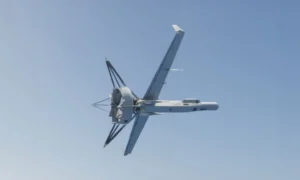
The British-German defence company Hypersonica has announced the successful completion of the first hypersonic test flight of its prototype at Andøya Space in Norway.
During the trial, the prototype missile exceeded Mach 6 (7,400 km/h) and covered more than 300 km. According to the developer, all systems functioned as intended during both the acceleration and atmospheric descent phases.
Preparations for the maiden launch took nine months and included design work, systems integration, ground testing and regulatory procedures. The company says the data gathered will underpin further refinement of the system. The project’s stated aim is to deliver a European hypersonic strike capability by 2029, with phased trials planned to expand manoeuvrability and validate the full performance envelope.
Venom strike aircraft goes from concept to flight in 71 days
US companies Divergent Technologies and Mach Industries have completed the first flight of the autonomous strike aircraft Venom, building the prototype in just 71 days from initial concept to flight readiness. The test took place on 17 February, the company reported.
Venom was developed as a demonstrator unmanned strike aircraft using digital design and additive manufacturing. The fuselage, wings and control surfaces were printed as large monolithic sections, significantly reducing production time and cutting weight.
During the demonstration, the aircraft successfully carried out its flight programme. Detailed technical specifications have not been disclosed. The project is positioned within a broader strategy to field low-cost, mass-produced autonomous systems.
Turkey deploys ASLAN ground drone in NATO exercise
Turkey deployed the ASLAN unmanned ground vehicle for the first time during the STEADFAST DART 26 exercise in Germany. The platform operated within the new Allied Reaction Force structure.

Developed by ASELSAN, ASLAN is a medium-class ground system designed for reconnaissance and fire support. It can be fitted with a remote weapon station mounting a 7.62 mm machine gun, electro-optical sensors and additional payloads. During the exercise, it was integrated alongside mechanised infantry, armoured vehicles and artillery to rehearse coordination in high-intensity scenarios.
ASLAN has been in service in Turkey for several years, but this marked its first deployment within multinational formations integrated into NATO command and control (C2) structures. According to official data, the vehicle has a top speed of up to 10 km/h, endurance of around 7 hours depending on the mission profile, and a control range of approximately 1.2 km. It can also operate autonomously, using onboard sensors to identify passable terrain and avoid obstacles.
Poland presents the SAN air defence system
Poland’s state-owned Grupa Zbrojeniowa has unveiled key elements of the new short-range air defence (SHORAD) system SAN. The system is intended to counter low-altitude threats, including drones, cruise missiles and precision-guided munitions. Deployment along Poland’s eastern border is planned by the end of the year.

SAN’s architecture incorporates X-band radars for detecting small targets, 35 mm artillery systems firing programmable ammunition, and guided 70 mm rockets. All components are mounted on Polish-made wheeled chassis.
Plans call for forming 18 batteries, each comprising three firing platoons and a support platoon. The system is intended to create overlapping layers of short-range air defence to protect military units, infrastructure and logistics hubs.
Poland’s TUGA 4D radar detects quadcopters
Polska Grupa Zbrojeniowa also presented its new digital TUGA radar at the World Defense Show, designed to detect small aerial targets, including quadcopters and micro-UAVs.
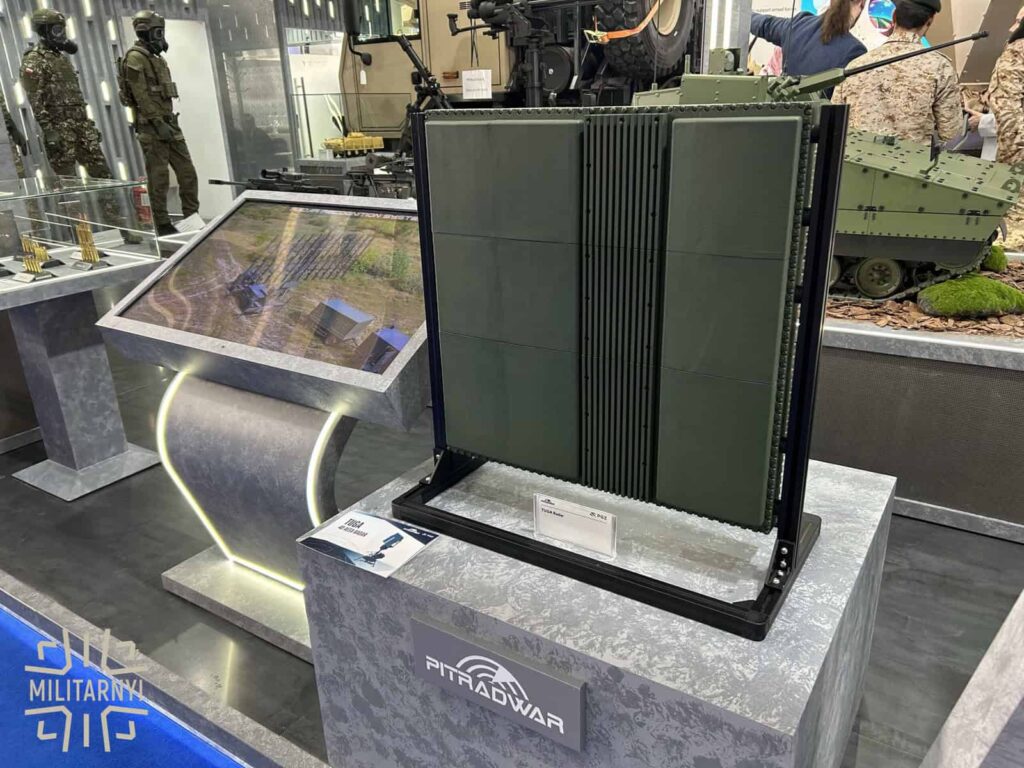
Operating in the X-band, TUGA is a 4D system capable of determining not only spatial coordinates but also the radial velocity of targets, enabling precise tracking and classification of fast, small drones.
It is claimed that TUGA can detect small quadcopters and other lightweight drones at distances of several kilometres, enhancing counter-UAV effectiveness and strengthening Poland’s short-range air defence capabilities.
Robotics Centre unveils MC-1 BAAZ hybrid UAV
The Dutch company Robotics Centre has introduced the new MC-1 BAAZ hybrid unmanned aerial vehicle, combining the characteristics of a multirotor and a fixed-wing aircraft. The UAV is capable of vertical take-off and landing while transitioning efficiently into conventional fixed-wing flight, broadening its utility for reconnaissance and extended patrol missions.
BAAZ is intended for use in demanding field conditions, including combat zones and hard-to-reach areas where manoeuvrability and range must be balanced. Declared specifications include endurance of up to six hours, a maximum speed of up to 105 km/h depending on configuration and mission profile, and a payload capacity of up to 5 kg. The platform features a modular bay for sensors or mission equipment.
Israel begins flight tests of Arrow 4 interceptor
Israel Aerospace Industries (IAI) has announced the start of flight testing of the new Arrow 4 air defence interceptor under a joint US-Israeli programme to develop advanced missile defence systems.
Arrow 4 is set to replace the earlier Arrow 2 within Israel’s national air defence network and to complement the existing Arrow 3 system. According to IAI chief executive Boaz Levy, the missile has completed key design and testing stages, with entry into service expected in the coming months.
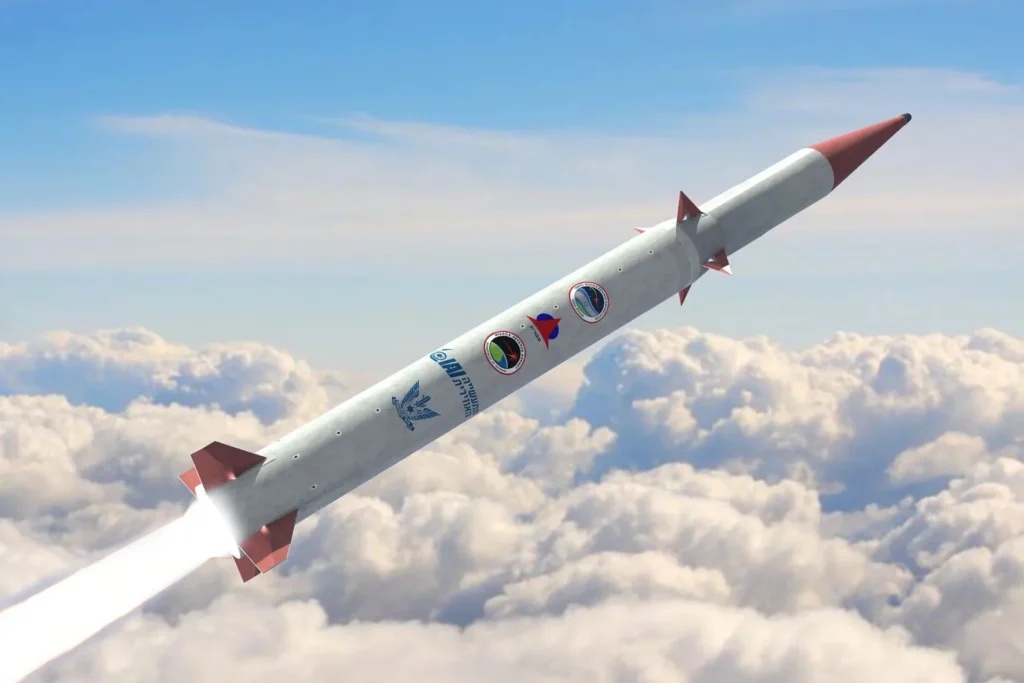
The new interceptor is said to have a shorter range than Arrow 3 but improved accuracy, enabling a more effective response to contemporary threats, including high-speed cruise missiles and unmanned aerial vehicles. Official performance parameters have not been disclosed.
Denmark forms new UAV squadron ahead of 2028 deliveries
The Royal Danish Air Force has formally established Eskadrille 729 to operate four long-range MQ-9B SeaGuardian unmanned aircraft, which will undertake intelligence and surveillance missions in the Arctic, the North Atlantic, and the Baltic region. The drones are not expected to be delivered before 2028.
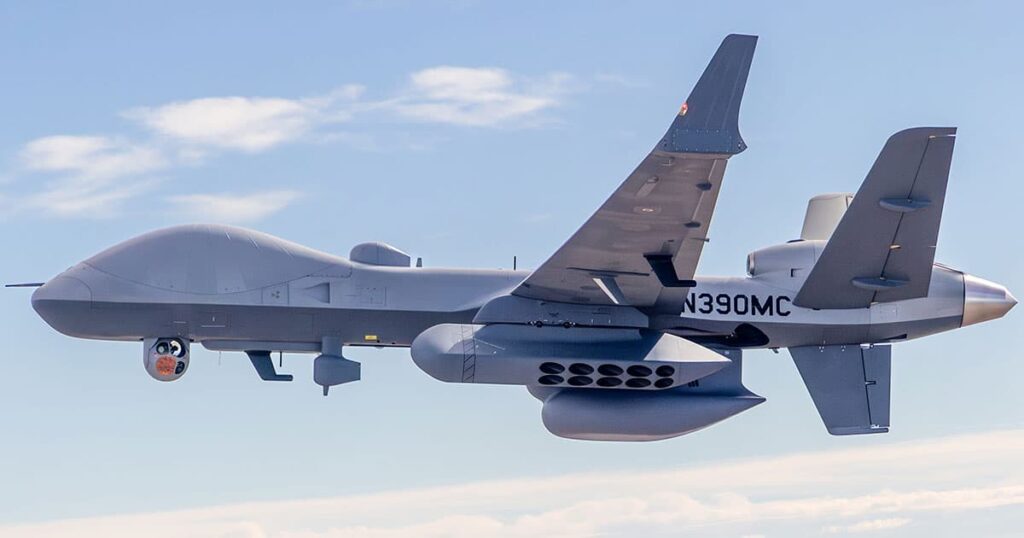
The MQ-9B SeaGuardian, produced by US company General Atomics Aeronautical Systems, is designed for long-endurance surveillance, particularly in northern and maritime environments. As a MALE-class system (Medium Altitude Long Endurance), it can remain airborne for 24–30 hours or more, depending on configuration.
Denmark has procured four aircraft through the NATO Support and Procurement Agency (NSPA). Delivery is scheduled no earlier than 2028; in the meantime, infrastructure and training facilities are being developed for crews and technical personnel.
Spanish Navy orders solar-assisted UAVs
Spanish company Marine Instruments is scaling up serial production of the M5D-Airfox unmanned aerial vehicle, which can integrate solar panels to supplement the power supply during extended missions. The UAV has been developed for the Spanish Navy and is designed to significantly extend autonomous operations at sea, including night missions through an enhanced visual observation system.
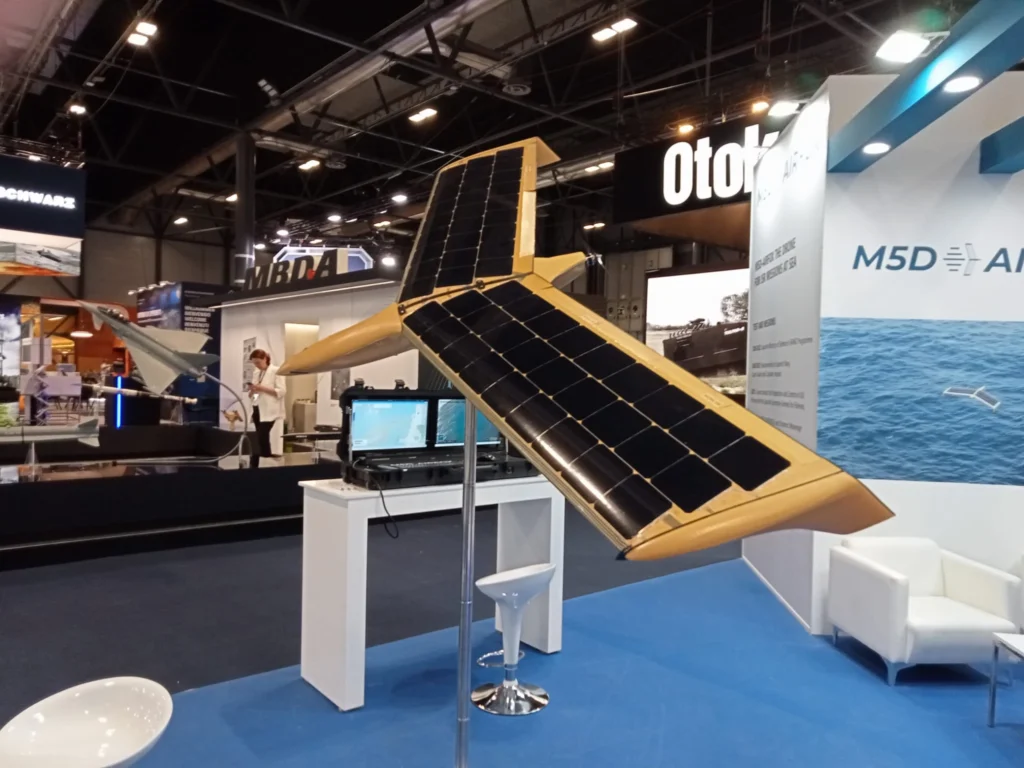
The M5D-Airfox is a lightweight electric UAV capable of drawing power from solar panels mounted on its wings. It has a take-off weight of around 4 kg, a maximum speed of 83 km/h, and an endurance of up to 10 hours under optimal solar conditions. The drone can operate within a radius of approximately 33 km, carries a Full HD camera with real-time video transmission, and supports BVLOS (beyond visual line of sight) operations. Its design allows launch and recovery from maritime platforms or from ships via catapult.
Prototypes appeared at exhibitions as early as 2022 and were gradually integrated onto Spanish naval vessels. In 2025, the system set an endurance record of 8 hours 57 minutes and accumulated significant flight hours. Marine Instruments has since adapted its production line for serial manufacture.
DARPA advances LongShot X-68A towards flight testing
The US Defense Advanced Research Projects Agency (DARPA) has completed a series of trials of the LongShot unmanned aircraft, now designated X-68A. The programme, conducted jointly with General Atomics Aeronautical Systems, has concluded wind-tunnel testing and evaluations of weapon-release systems and parachute recovery.
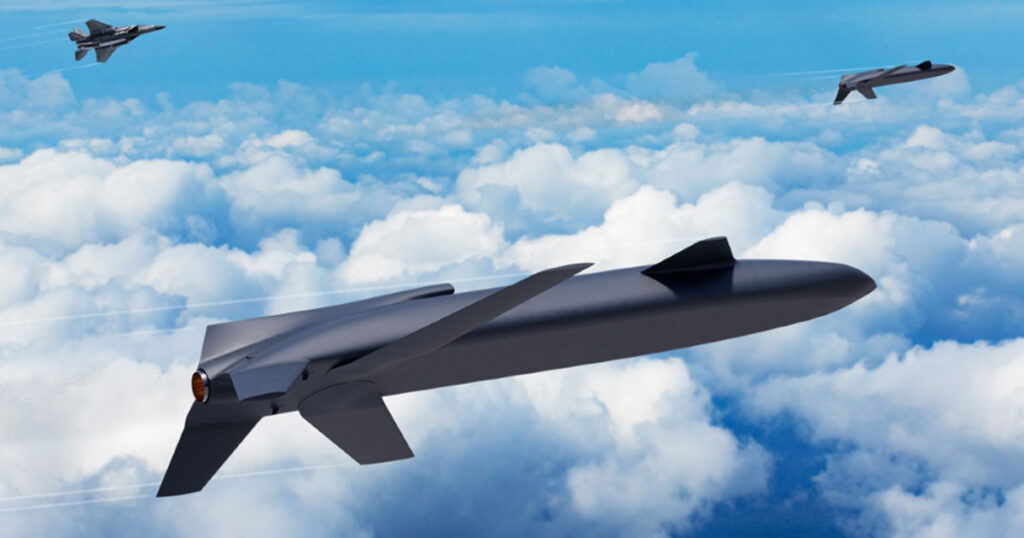
The autonomous X-68A is being developed to operate within modern air power structures, including the ability to be launched from manned aircraft such as fighter jets before proceeding independently into forward areas.
DARPA and General Atomics have confirmed that the current phase focuses on validating system performance and preparing for flight tests scheduled for late 2026. The plan involves launching from an aircraft such as the F-15, after which the X-68A will demonstrate autonomous flight and weapon-release capability.
Reading now
1

Ukrainian SkyFall’s drone wins at Pentagon’s Drone Dominance selection
2

Black Forest Systems raises $400,000. Here’s what drones the startup is building
3
Sting interceptor by Wild Hornets downs costly Russian Granat-4 reconnaissance drone
4
UForce unveils Bucha middle-strike drone with a 200 km range
5
The F10 drone becomes the second Ukrainian finalist in the Pentagon’s Drone Dominance Program
By submitting this form, you give Defender Media consent to the processing of personal data.
Надсилаючи цю форму, ви надаєте Defender Media згоду на обробку персональних даних.

Latest news
1

DPA to diversify drone and ammunition orders among multiple suppliers
2
‘Ukrainska bavovna’ and Czech company Pavetra Aerospace to produce Shuhay UAV through joint venture
3
59th Assault Brigade downs Russian Ka-52 helicopter with General Cherry OPTIX FPV drone
4

Tencore develops evacuation module for TerMIT UGV
5