On the light side #3: What’s new at Lockheed Martin, Leonardo, Shield AI, Kawasaki, Kratos Defense, ALM Meca, and HAVELSAN
A review of new developments and tests in the defence industry of the free world in January of 2026
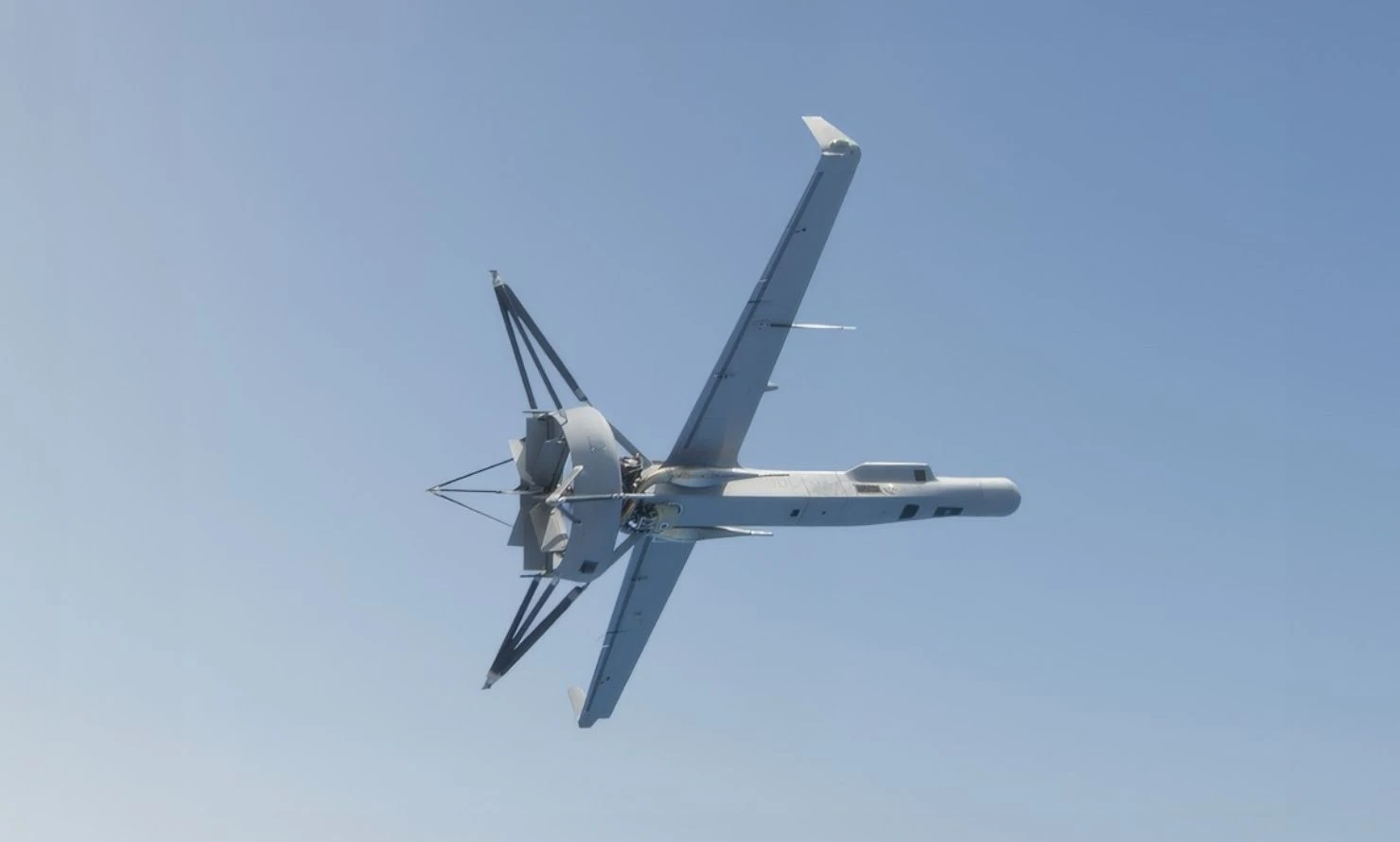
V-BAT drone by Shield AI. Manufacturer’s photo
On the Light Side is an occasional digest where Defender Media rounds up the most notable defence tech developments from countries of the free world.
In the third edition: short-range interceptor drones, high-speed strike UAVs, autonomous drone swarms, tactical and long-range unmanned platforms, modular counter-drone systems, and new tactical and ballistic missile programmes. While these innovations demonstrate significant technological progress, all of them are still at the prototype stage or produced in limited batches. Read more in Defender Media’s overview.
First flight test of NGSRI — a US air defence missile set to replace Stinger
Lockheed Martin has successfully completed the first flight test of the Next-Generation Short-Range Interceptor (NGSRI) air defence missile, which is being developed to replace the ageing FIM-92 Stinger system in the US Armed Forces.
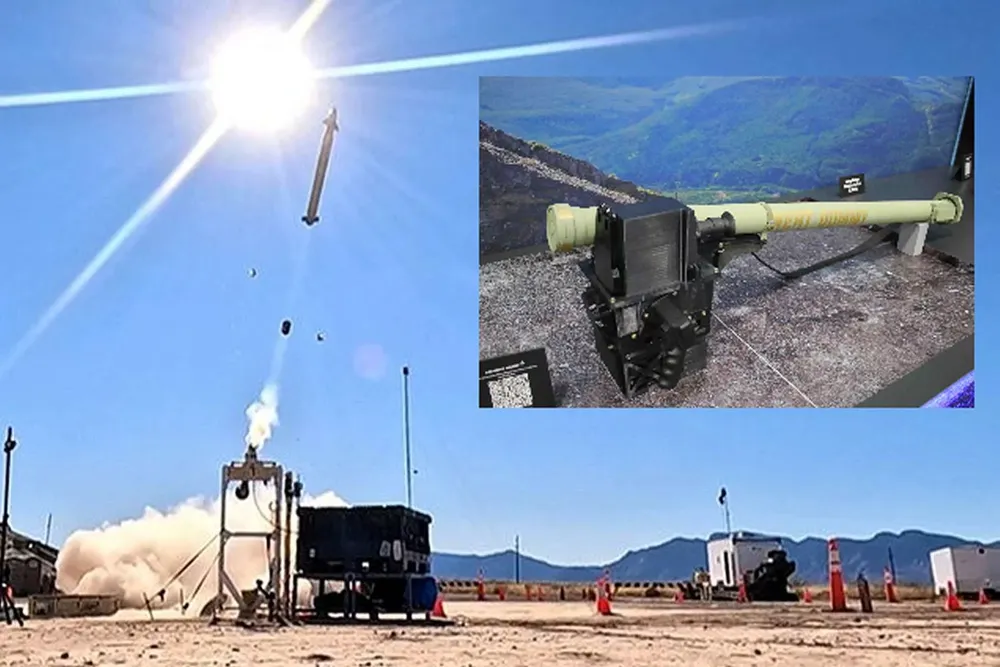
NGSRI is a modular interceptor suitable for use both in man-portable systems and on combat vehicles. It is equipped with a digital guidance system, does not require cooling batteries, and significantly outperforms the Stinger in terms of range and accuracy. The missile is compatible with existing US Army launchers.
The system supports integration into networked air defence and can receive target data from radars, sensors, and even satellites. Lockheed Martin said the first test confirmed the system’s readiness for further trials and eventual deployment. Serial production is expected to begin after 2028.
The US Marine Corps has cleared its first in-house 3D-printed drone for flight
US Marines have 3D-printed the Hanx drone, which has received official flight clearance and meets component safety requirements. The drone was developed as part of a programme to deploy mass batches of low-cost expendable unmanned systems by 2028 through decentralised production within operational units.
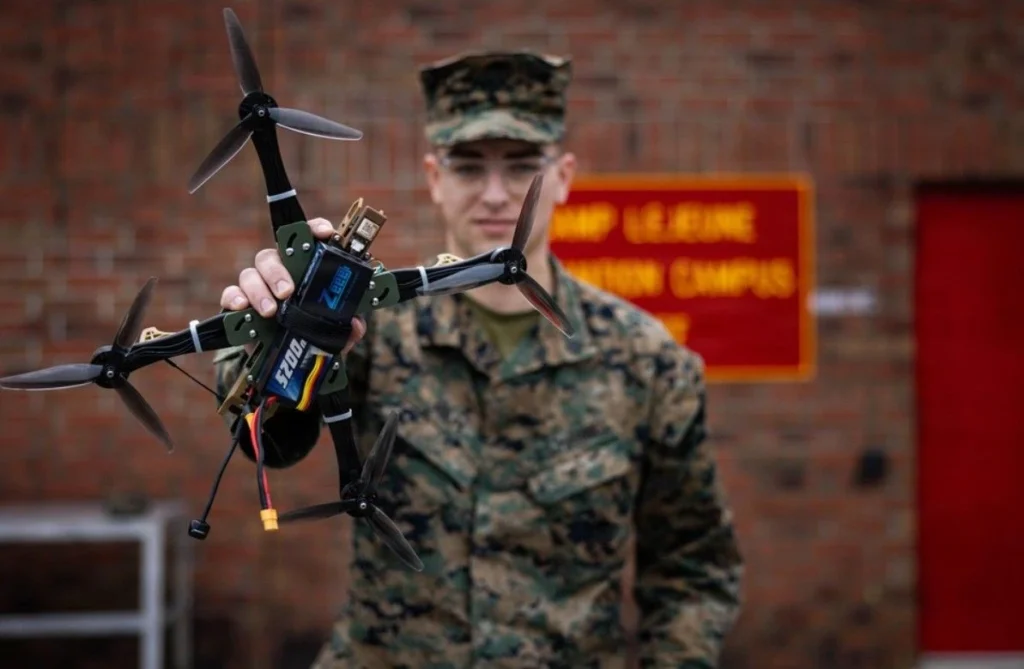
HANX is intended for reconnaissance, logistics support and kamikaze missions, has a stated payload capacity of up to 1 kg, and an estimated unit cost of around $700.
Unlike earlier experimental projects, HANX was designed from the outset as a system that can be produced, repaired and upgraded directly within combat units, without reliance on external contractors.
Leonardo unveils Hystrix ground-based air defence system for counter-drone warfare
Italian company Leonardo has unveiled the Hystrix family of ground-based air defence and counter-UAS systems, including the Hystrix 40 ADS and Hystrix 76 ADS, based on 40 mm and 76 mm naval gun mounts. The systems are integrated into the Michelangelo Dome architecture and are intended to engage drones, loitering munitions and low-altitude aerial targets.
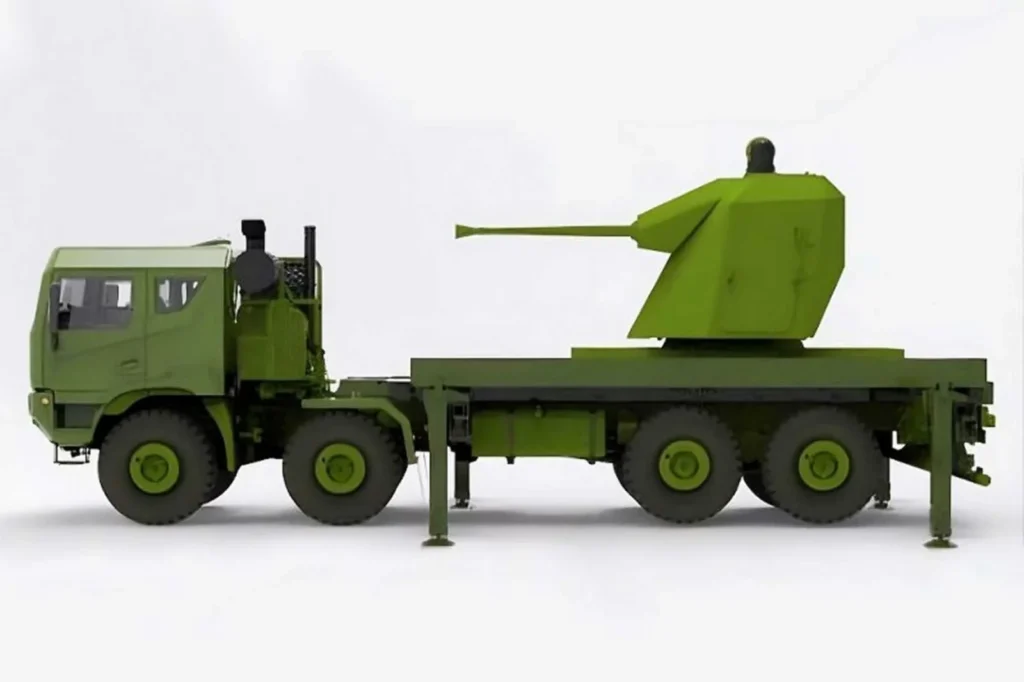
The Hystrix 76 ADS is trailer-mounted and remotely operated, features full 360-degree rotation, an elevation range from –5° to +85°, and uses, among other munitions, DART guided rounds and high-precision Vulcano shells. A prototype is expected by the end of 2026, followed by testing.
Hystrix 40 ADS is based on the naval Marlin 40 system, which is in service with the navies of more than 30 countries. The ground version has its own electro-optical sensors, full circular firing sector, and a rate of fire of up to 300 rounds per minute. The first prototype of Hystrix 40 ADS is also planned for completion by the end of the year for integration into the Michelangelo Dome command system.
Shield AI’s V-BAT reconnaissance drones tested in Ukraine
US company Shield AI is operating V-BAT reconnaissance drones in Ukraine, capable of functioning under active electronic warfare conditions. The drones successfully passed Ukrainian tests for resistance to jamming. In 2025, they carried out more than 35 combat missions and helped identify over 200 Russian targets.
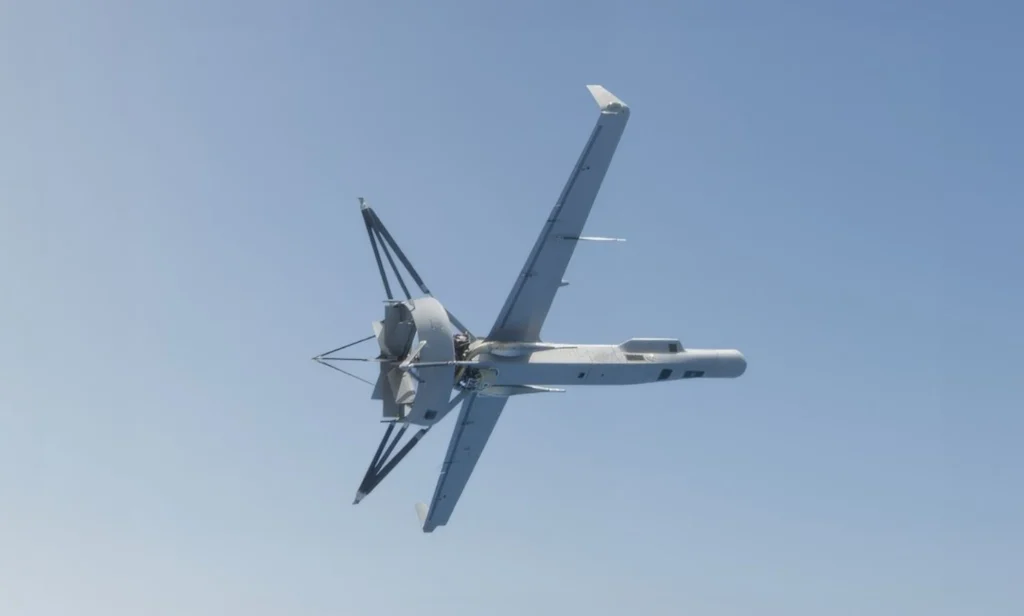
V-BAT is a vertical take-off UAV capable of staying airborne for up to 13 hours and operating at altitudes above 5 km. After integration of the Hivemind autonomous system, the drone can operate without GPS and remote control, independently planning routes and avoiding threats.
Shield AI currently produces around 200 drones per year. The company sells systems in batches of between 4 and 300 units, with an estimated price of about $1 million per drone. Shield AI also licenses the Hivemind autonomy system to foreign customers.
It is reported that 16 such drones were delivered to Ukraine, most of them purchased by European allies. One of the most notable operations took place in April, when a V-BAT flew around 80 km deep into occupied territory near Zaporizhzhia and helped identify and destroy two military headquarters and barracks from which Russian FPV drones were being controlled.
Japan reveals test results of long-range cruise missile demonstrator
Kawasaki Heavy Industries has published detailed results of its long-range cruise missile technology demonstrator programme. This is the first official release following research presented at ATLA’s technology symposium in November 2025.
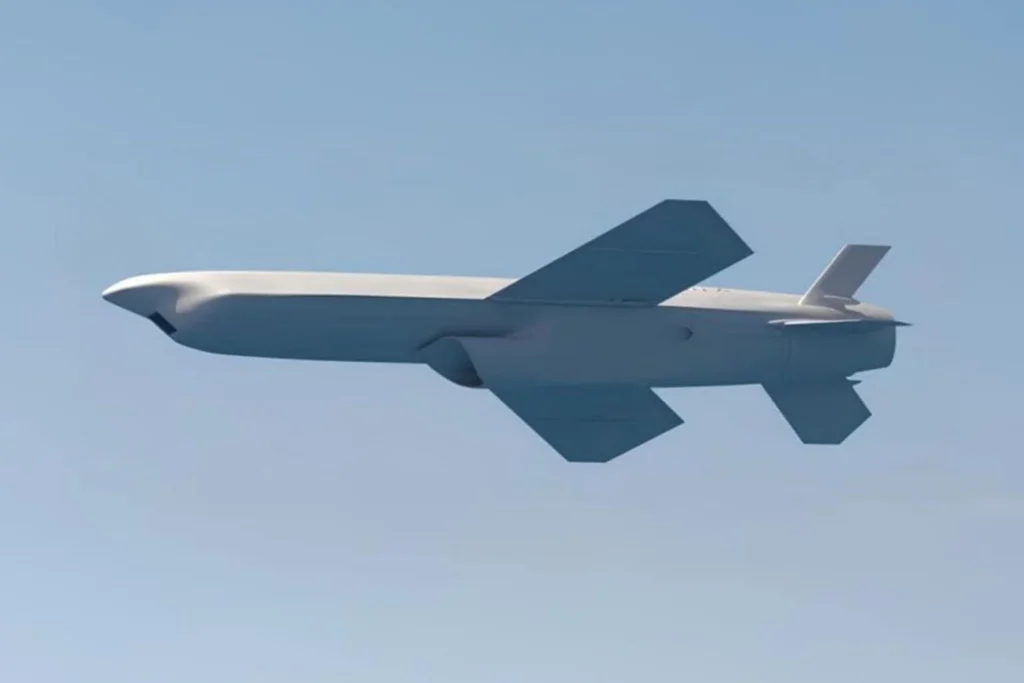
The project has the status of a technology demonstrator and is not intended for immediate operational deployment. Its purpose is to validate key technologies for a future Japanese national cruise missile, including propulsion, guidance systems, survivability and modular payloads. The programme is linked to island defence concepts and the development of indigenous long-range strike capabilities.
According to the published materials, the missile features a modular architecture supporting different payload types, including kinetic, electronic warfare and reconnaissance modules. Prototype imagery indicates the presence of a booster and compatibility with vertical launch systems, allowing deployment from naval and land-based platforms.
France delivers first MX-10 DAMOCLES remotely operated munitions
France’s Ministry of the Armed Forces has delivered the first batch of MX-10 DAMOCLES remotely operated munitions to the armed forces. The drone was developed by KNDS France in partnership with DELAIR and is the first industrialised French-made tele-operated munition.
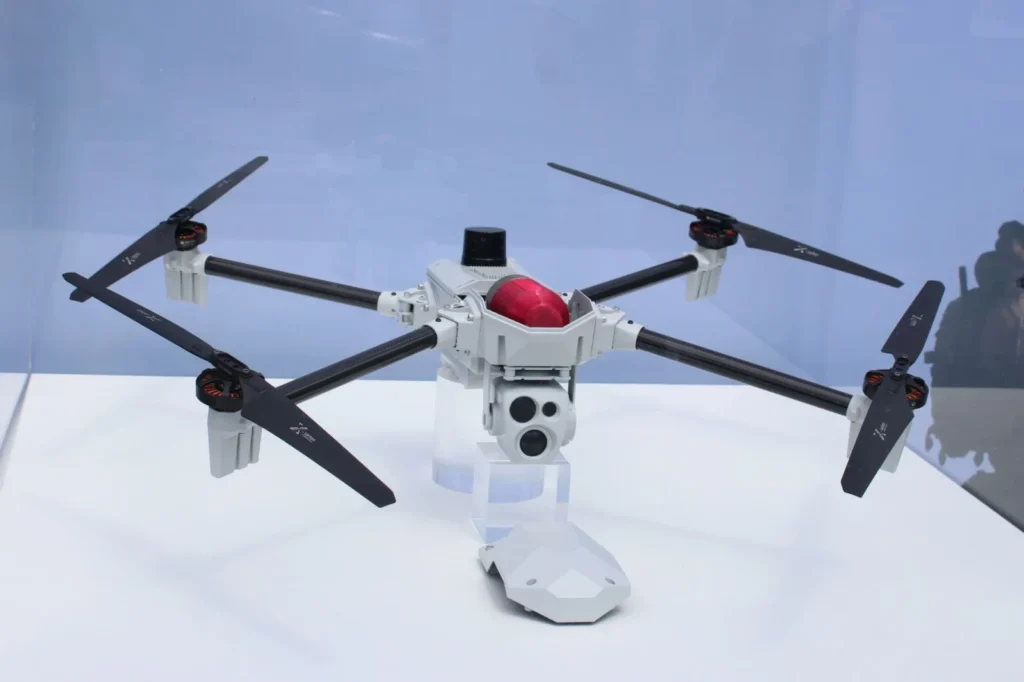
The system is based on a quadcopter with vertical take-off and electric propulsion, has a range of up to 10 km and an endurance of up to 40 minutes. It is equipped with electro-optical and infrared cameras with real-time video transmission, can operate under GPS jamming conditions, and carries a 550-gram fragmentation-incendiary warhead. The system allows for attack abort and re-engagement.
According to French defence plans, 460 MX-10 DAMOCLES units are to be delivered to the armed forces by July 2026.
The US and Taiwan successfully test Mighty Hornet IV jet strike drone
The US and Taiwan have successfully tested the Mighty Hornet IV, a high-speed jet-powered strike drone developed by Kratos Defense & Security Solutions in cooperation with Taiwan’s National Chung-Shan Institute of Science and Technology (NCSIST).
Mighty Hornet test by Kratos
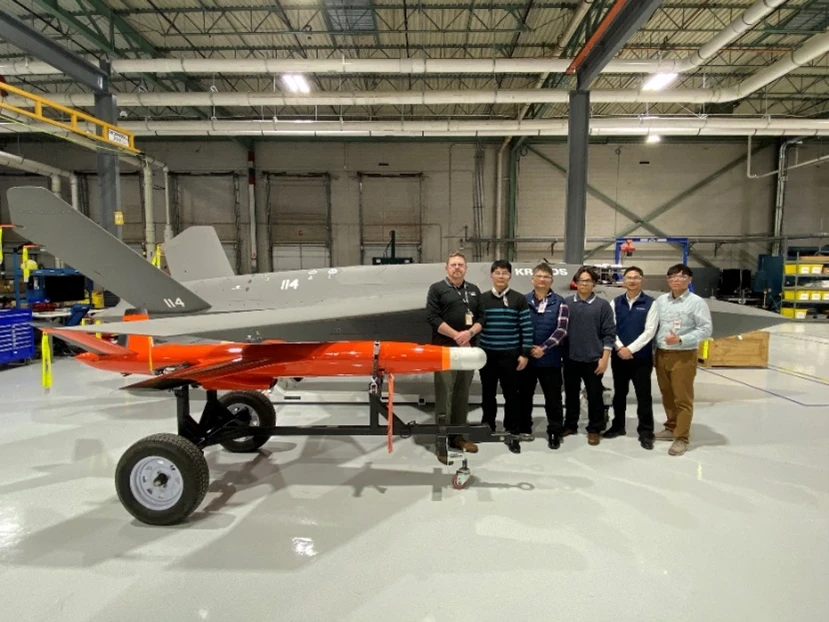
Mighty Hornet IV is based on the MQM-178 Firejet airframe, combining strike capabilities with UAV characteristics: high speed (around Mach 0.8), manoeuvrability and a service ceiling of up to 10 km, making it a promising platform for medium- and long-range combat operations.
Intelic and DroneShield develop modular counter-drone system
Dutch company Intelic, specialising in defence software, has announced a partnership with Australia’s DroneShield to jointly develop a scalable and modular counter-UAS system for Europe. The project aims to integrate detection, coordination and neutralisation of hostile drones into a single solution for military and civilian users.
The integration combines Intelic’s Nexus software core, which generates a real-time common air picture, with DroneShield’s drone detection and disruption technologies. This approach allows faster threat identification and response, as well as the addition of new sensors and effectors without major capital investment.
The integrated system is scheduled for testing at several military and civilian sites across Europe in the coming months to assess its effectiveness in real-world conditions. This could become an important step toward harmonising C-UAS solutions across European countries and strengthening the role of local technologies in air security.
The UK launches Nightfall programme to develop tactical ballistic missiles
The United Kingdom has officially announced the launch of “Project Nightfall”, aimed at rapidly developing new ground-based tactical ballistic missiles to support Ukraine in the war against Russia. The missiles are expected to carry a warhead of around 200 kg and have a range exceeding 500 km, expanding long-range strike capabilities.
The UK Ministry of Defence has opened a competition among defence companies, under which three teams will each receive approximately £9 million for design, development and delivery of the first three missiles within 12 months for further testing. The first test articles are expected to be ready by the end of 2027.
France develops Fury 120 interceptor to counter Shahed-type drones
French engineering company ALM Meca has developed a new unmanned interceptor, Fury 120, designed to destroy Shahed-type attack drones and their Russian “Geran” counterparts. Unlike most French defence systems, Fury 120 was not developed under programmes of the Directorate General of Armaments and was financed and built privately by the company.
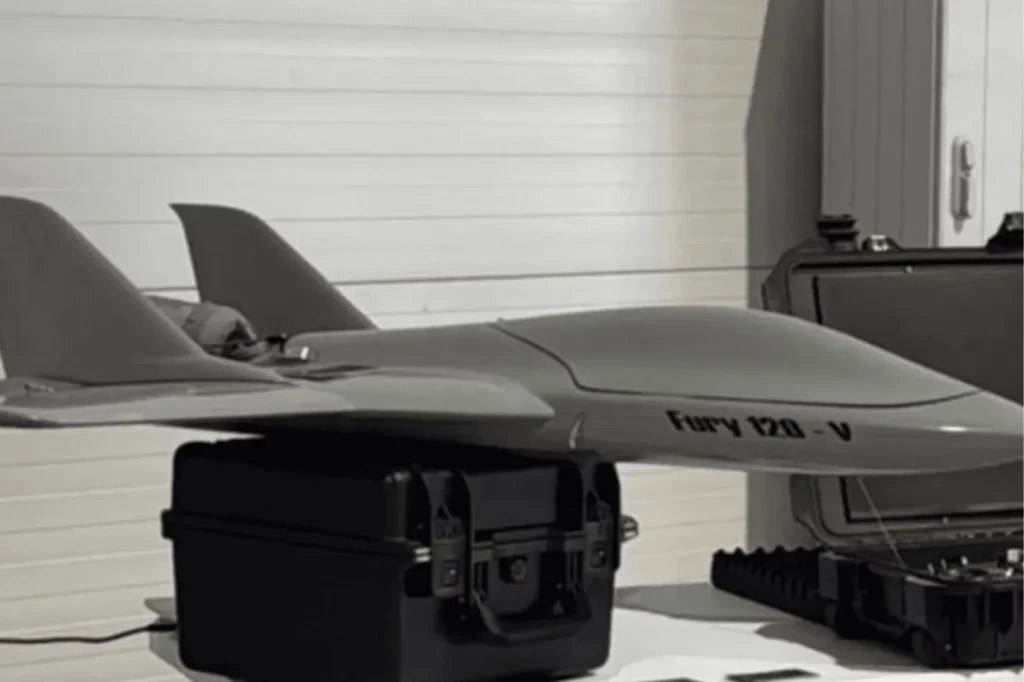
Fury 120 is about 1.1 metres long with a wingspan of just over one metre. It is powered by a microjet engine and can reach speeds of up to 700 km/h. According to French media, the interceptor can sustain manoeuvres with up to 20G, an unusual figure for lightweight unmanned systems.
Türkiye demonstrates autonomous POYRAZ drone swarm with kamikaze attacks
HAVELSAN has conducted a field demonstration of its Digital Troops concept, during which a swarm of POYRAZ quadcopters carried out autonomous missions involving sub-swarm distribution, synchronised kamikaze attacks and simultaneous engagement of multiple targets. The demonstration took place in late January 2026 in the presence of Türkiye’s civilian and military leadership.
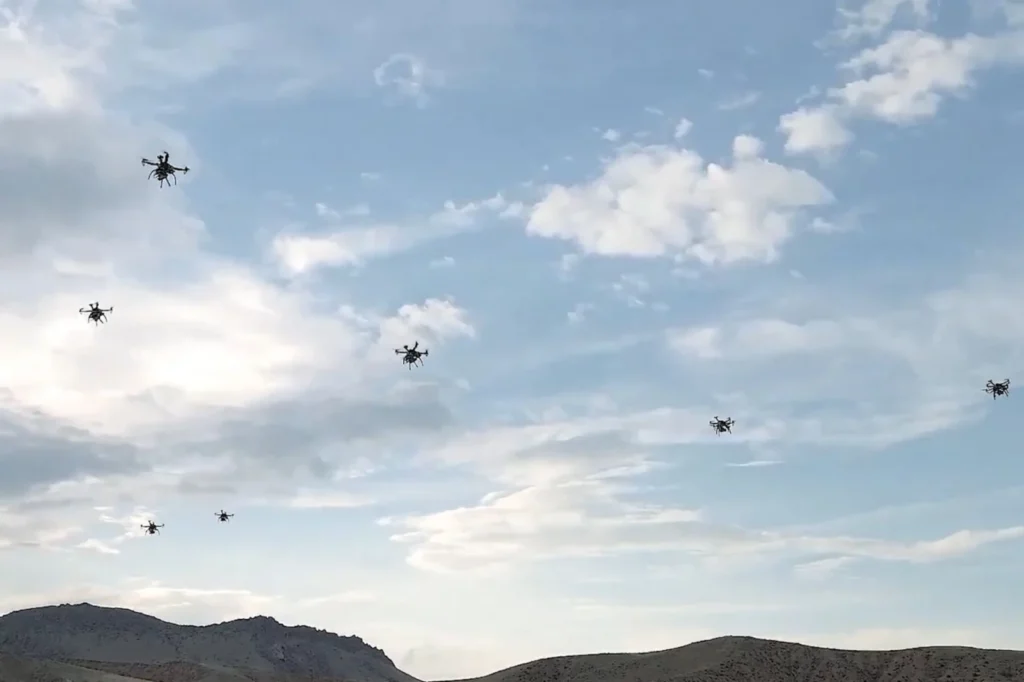
In the scenario, the swarm operated without centralised control: each drone made decisions within a distributed architecture, allowing the mission to continue even under partial loss of communications. HAVELSAN reported that communication disruptions were deliberately simulated during the demonstration, but the swarm maintained coordination and completed the mission.
POYRAZ is a short-range quadcopter optimised for precise manoeuvring and terminal-phase operations. In the demonstrated configuration, the swarm autonomously split into sub-swarms, each assigned a separate target and executing synchronised dive attacks.
The scenario also employed a BULUT VTOL-class UAV equipped with the GIMBAL 275 electro-optical system, providing reconnaissance and real-time video data for swarm targeting.
According to HAVELSAN, the system supports self-configuration: in the event of individual drone failures, they are automatically excluded from the swarm, while the remaining units continue the mission. Attack result data is transmitted to higher-level command systems, enabling integration of the swarm into broader command and control architecture.
TYTAN Technologies launches mass production of drone interceptors in Bavaria
TYTAN Technologies has opened a new factory in Bavaria and signed a Memorandum of Understanding with HENSOLDT to scale up production of its drone interceptors. The company plans to manufacture up to 3,000 units per month by the end of 2026, focusing on mass use against reconnaissance and strike drones, as seen in the Russia–Ukraine war.
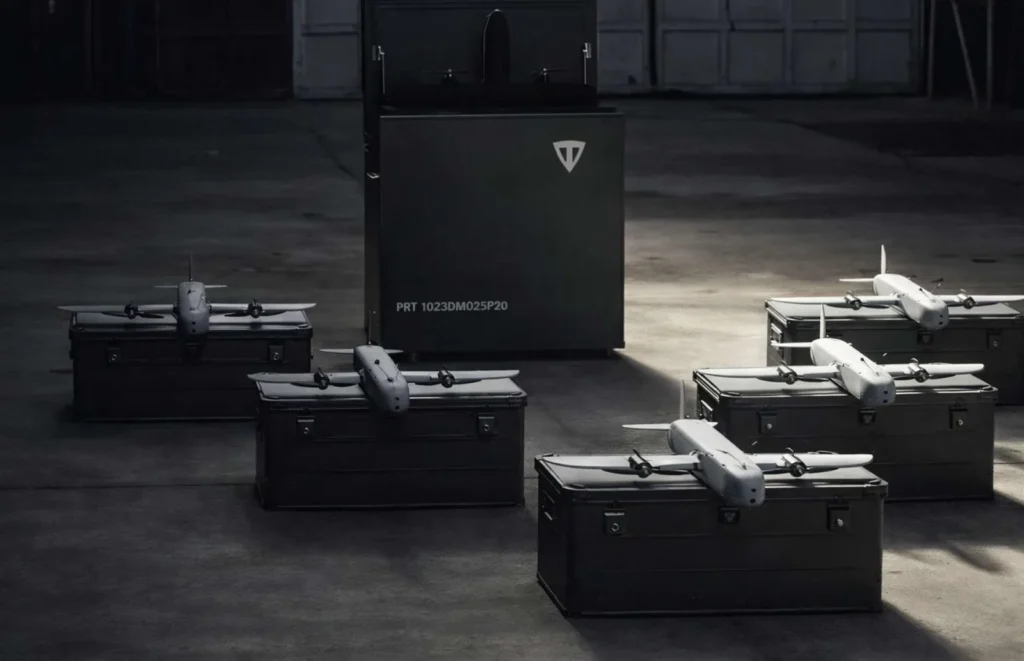
The TYTAN Interceptor is a compact autonomous interceptor weighing around 5 kg with a 1 kg payload. It reaches speeds above 250 km/h, operates at ranges exceeding 15 km, and uses a kinetic hit-to-kill system with computer vision. An automated launcher module accelerates deployment and re-engagement in swarm scenarios.
The partnership with HENSOLDT is intended to integrate the interceptors with existing radars and command-and-control systems, allowing expensive missiles to be reserved for high-end targets and mass interceptors to counter “drone waves”. TYTAN emphasises that its systems have been tested in Ukraine.
Reading now
1

Ukrainian SkyFall’s drone wins at Pentagon’s Drone Dominance selection
2
Black Forest Systems raises $400,000. Here’s what drones the startup is building
3
Sting interceptor by Wild Hornets downs costly Russian Granat-4 reconnaissance drone
4
UForce unveils Bucha middle-strike drone with a 200 km range
5
The F10 drone becomes the second Ukrainian finalist in the Pentagon’s Drone Dominance Program
By submitting this form, you give Defender Media consent to the processing of personal data.
Надсилаючи цю форму, ви надаєте Defender Media згоду на обробку персональних даних.

Latest news
1
DPA to diversify drone and ammunition orders among multiple suppliers
2
‘Ukrainska bavovna’ and Czech company Pavetra Aerospace to produce Shuhay UAV through joint venture
3
59th Assault Brigade downs Russian Ka-52 helicopter with General Cherry OPTIX FPV drone
4
Tencore develops evacuation module for TerMIT UGV
5