Shortage of engineers in defence tech: the market is growing faster than specialists are emerging
According to a study by ITExpert, engineering vacancies sometimes attract between 0 and 2 applicants
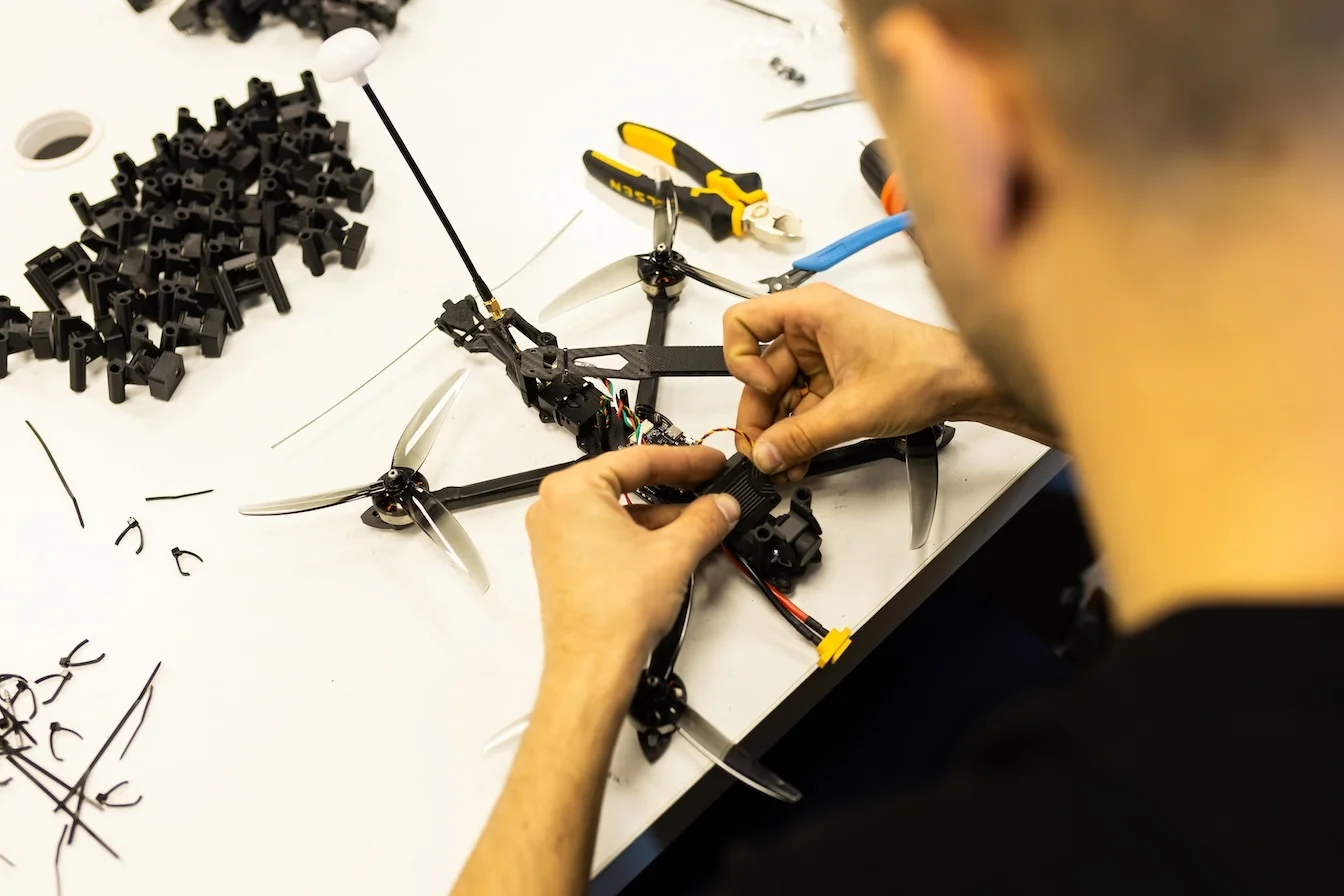
In the second half of 2025, staff shortages became one of the most pressing problems for Ukrainian defence tech companies. Against the backdrop of the industry’s rapid growth, companies increasingly found themselves in situations where no candidates applied for engineering vacancies or where only one or two people applied for each position.
According to a study by the recruitment company ITExpert, which analysed data from specialised universities, compared training programs, and surveyed defence companies, this is the case. Defender Media recounts the study’s most interesting findings.
Who is most in demand
According to analysts’ estimates, there are more than 500 defence technology companies operating in Ukraine. However, the number of specialists capable of working with hardware solutions is growing at a much slower rate than market demand.
According to Mykola Klyestov, the CTO of ITExpert, the market lacks engineers who can design and develop hardware solutions from scratch, including microchips, circuit boards, communication modules, and navigation systems. These competencies are developed over years and require access to laboratories, not just short courses.
Pavlo Chubka, the recruitment manager at Twist Robotics, notes that the most tremendous shortage is among PCB design engineers and RF engineers. Demand for these engineers has risen sharply, while the supply has remained virtually unchanged. Engineers with experience working with FPV drones and communication systems that consider the impact of electronic warfare are highly valued.
Frontline Robotics notes that it is most challenging to find specialists who possess a combination of knowledge in electronics and design, including board layout, proficiency in Altium, and expertise in soldering components.
The increase in enrollment does not meet market needs
In 2025, the number of applications for key defence tech specialities at Igor Sikorsky Kyiv Polytechnic Institute and Lviv Polytechnic National University increased by 23–82%. The most significant increase was in the fields of avionics and aviation, as well as rocket and space technology.
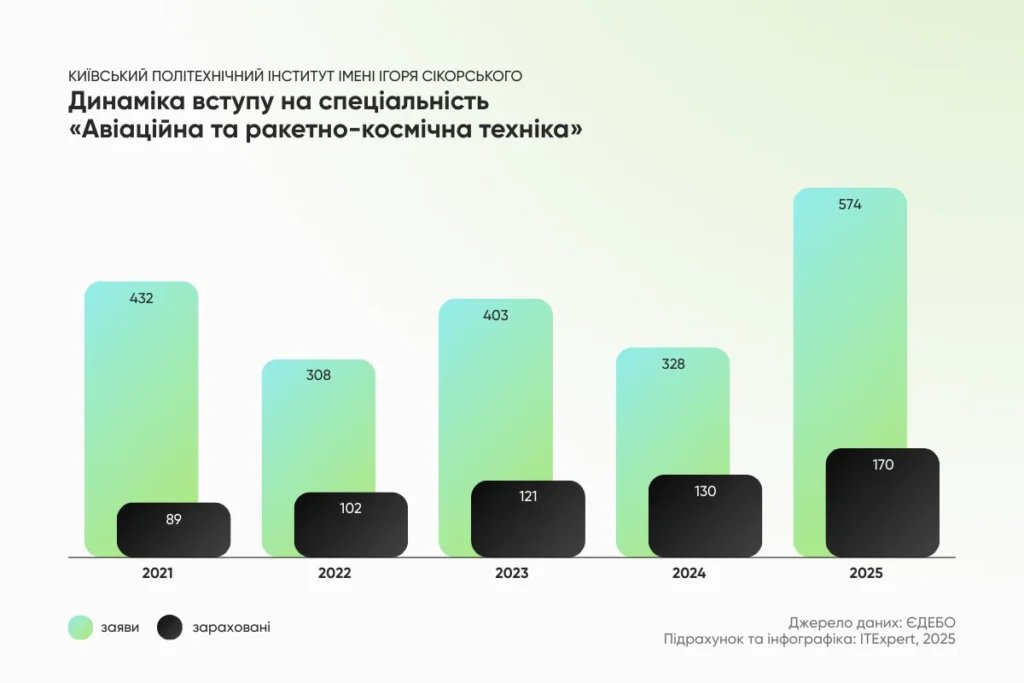
Despite this, enrollment levels have not returned to pre-war levels, while market demand for niche engineers has grown significantly. According to EDEBO data, the average enrollment at KPI is approximately 3,800 students and continues to decline by 12% annually. At Lviv Polytechnic, enrollment remained at 780 for a long time, but in 2025 it rose to 880, the highest figure in five years.
However, demand for engineering majors among applicants remains consistently low. During the 2025 admissions campaign, most applicants chose management, psychology, and law, while technical sciences remained among the outsiders, writes Andriy Lavrenovych, HRD of the drone manufacturer General Cherry, in his column.
Education is not keeping pace with the needs of the front
Meanwhile, educational institutions are not keeping pace with the front’s needs in their curricula. According to Lavrenovich, only a few programs in Ukraine are adapted to the realities of war. These include the bachelor’s program in “Automation, Computer-Integrated Technologies and Robotics” at NaUKMA, a similar program at KPI, and the master’s program in “Engineering of Unmanned Aerial Systems” at KAI.
ITExpert’s research also notes a systemic gap in educational programs. Some programs still lack critical modules, such as electronic warfare, high-speed PCB design, Altium use, soldering, and real hardware operation.
Meanwhile, universities are gradually involving businesses in updating education. KPI has laboratories in collaboration with SQUAD, Ajax Systems, Skyfall, Datacom, Keysight, Melexis, EPAM, and other companies. Lviv Polytechnic has spaces sponsored by Infineon, Ajax, Lifecell, Kyivstar, and Cisco. These partnerships provide students with access to modern equipment, ranging from embedded systems to microelectronics.
Accelerated training programs play a special role. For example, in 2025, Beetroot Academy’s Embedded Development course trained approximately 50 students and included six practical projects involving hardware work from the first module.
How companies are trying to close the gap
Among the practices that market participants consider most effective are cooperation with universities, the creation of training laboratories and internship programs, the training of engineers within companies, internal transitions between roles (in particular, from RF engineer to PCB design), and programs to integrate veterans into R&D teams.
The report separately notes the case of the miltech company Atlon Avia, which works not only with universities but also with schools. In 2025, the company launched a course on “How Unmanned Systems Work” based on the Furia UAV for teachers of the subject “Defence of Ukraine” in partnership with the Kharkiv Department of Education.
At the same time, ITExpert’s research notes positive developments: universities are updating their curricula, online courses are adding practical modules, and companies are investing in laboratories.
Reading now
1
Ukrainian SkyFall’s drone wins at Pentagon’s Drone Dominance selection
2
Black Forest Systems raises $400,000. Here’s what drones the startup is building
3
Sting interceptor by Wild Hornets downs costly Russian Granat-4 reconnaissance drone
4
UForce unveils Bucha middle-strike drone with a 200 km range
5
The F10 drone becomes the second Ukrainian finalist in the Pentagon’s Drone Dominance Program
By submitting this form, you give Defender Media consent to the processing of personal data.
Надсилаючи цю форму, ви надаєте Defender Media згоду на обробку персональних даних.

Latest news
1
DPA to diversify drone and ammunition orders among multiple suppliers
2
‘Ukrainska bavovna’ and Czech company Pavetra Aerospace to produce Shuhay UAV through joint venture
3
59th Assault Brigade downs Russian Ka-52 helicopter with General Cherry OPTIX FPV drone
4
Tencore develops evacuation module for TerMIT UGV
5