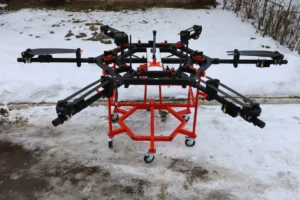
Dorozvidka #36: Wild Hornets vs General Cherry, Yaroslav Filimonov, Quantum Systems, and a new weapon against glide bombs
A review of news, articles and interviews about Ukrainian defence tech from the past week
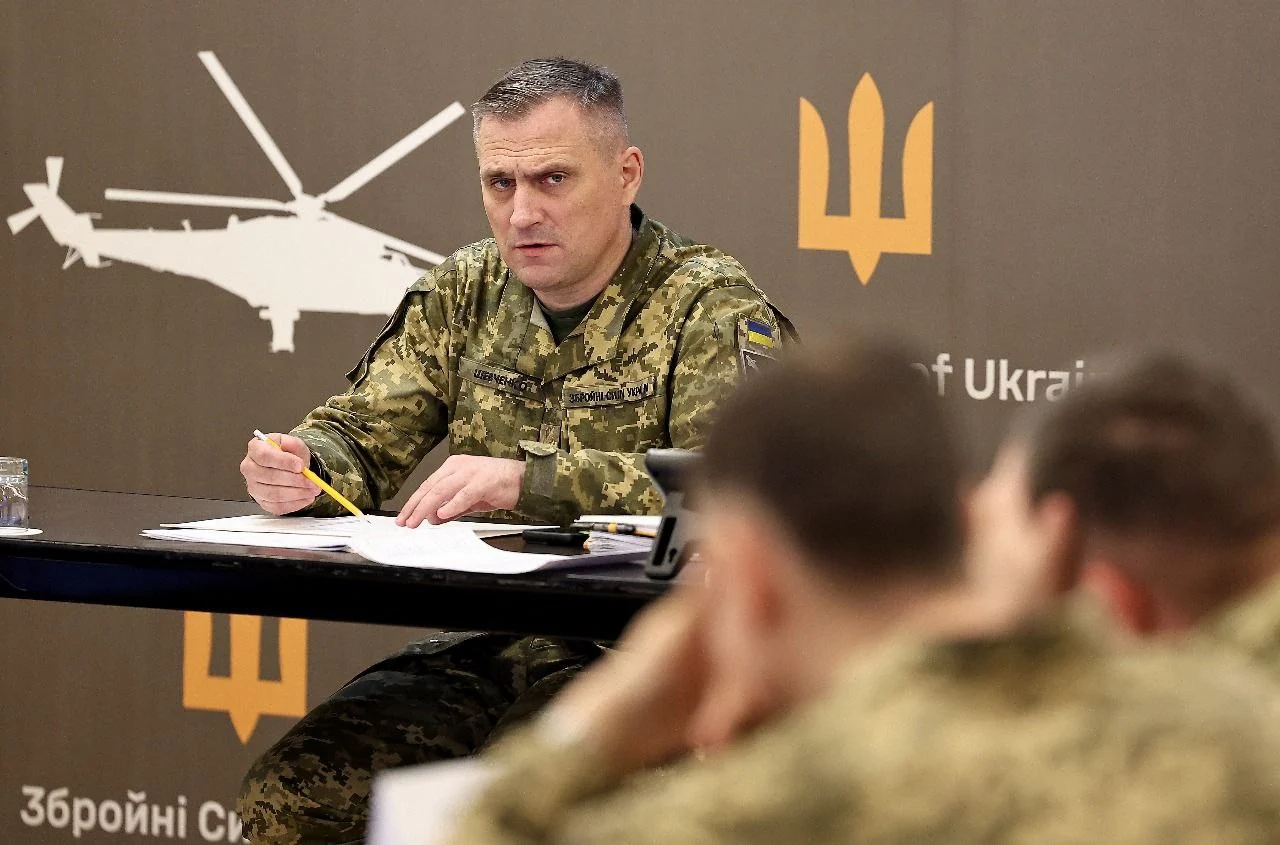
Brigadier General Oleksii Shevchenko, Deputy Chief of the General Staff / Photo courtesy of the General Stuff
Issue #36 of Dorozvidka sums up last week’s key media stories in Ukrainian defence tech and covers:
- The General Staff reports that tests of new weapons against glide bombs are progressing well, and that robotic strongpoints may soon be equipped with combat modules;
- Wild Hornets accused the company General Cherry of copying the appearance of its interceptor drone;
- Kvertus CEO Yaroslav Filimonov in a new episode of Zbroya video podcast;
- Quantum Systems secures another investment round and reaches a valuation of €3 billion;
- The WSJ reports that Ukraine’s SBU was dissatisfied with the Altius drones manufactured by the US company Anduril.
Wild Hornets accuse General Cherry of copying the appearance of the Sting interceptor drone
On 28 November, the company Wild Hornets, which produces the Sting interceptor drones, accused fellow market players at General Cherry of copying the model. “We’ve received a complete copy of our STING drone, which General Cherry is producing under the name Bullet… We note that the manufacturer did not approach us for permission to copy it,” the company wrote on its Telegram channel.
Speaking to the outlet Oboronka, the director of Wild Hornets clarified that the key complaint concerns the visual identity of the drones. He also said the company does not plan to go to court.
The same day, General Cherry issued a statement, stating that the company operates in strict compliance with current legislation, including in the field of intellectual property rights.
The company stated that the form factor is not unique and cannot belong to a single producer. “This is not the exclusive invention of one Ukrainian manufacturer; it’s a universal tail-sitter VTOL design used worldwide,” the team said. “Similar drones exist among many global producers: RAM-1 (Czech Republic), BLAZE by Latvia’s Origin Robotics, Israel’s Hunter Eagle, Poland’s SKYctrl.”
They added that the real distinction between drones should lie in their internal components. “And here we know they are original, created to meet the specific requirements and vision of the military we designed this product with,” General Cherry concluded.
Defender Media will keep following the story.
New guest on the video project Zbroya: Kvertus CEO Yaroslav Filimonov
The latest episode of Zbroya, produced by Militarniy together with the Ukrainian Council of Defence Industry, features Yaroslav Filimonov, CEO of Kvertus and head of the Radioelectronic Alliance of Ukraine. He spoke about smart EW for regional protection, suppressing Shaheds, and whether an ideal infantryman’s EW system is possible.
Main topics of the conversation:
- How electronic defence architecture is built at the frontline;
- Targeted suppression with “smart EW”;
- Whether a perfect EW tool for infantry will appear;
- How much EW costs;
- Detecting enemy radars and drones;
- Kvertus is developing an airborne ELINT system;
- The Atlas system for defending entire regions;
- Ukrainian manufacturers preparing to open exports.
Quantum Systems raises €180 million
The German unmanned systems developer Quantum Systems has secured a new investment round, pushing its valuation above €3 billion. The round was led by Balderton Capital.
The investment will accelerate the company’s multidomain expansion in unmanned defence technologies across air, land and sea. Quantum Systems plans to speed up development of AI, software and hardware across all domains, united by the MOSAIC UXS mission software.
A portion of the funding will go toward acquisitions. After its previous round, Quantum Systems acquired AirRobot, Nordic Unmanned and Spleenlab.
Quantum Systems’ platforms have been used by Ukraine’s Defence Forces since 2022, including the Vector reconnaissance UAV. The company operates a factory in Ukraine and invests in Ukrainian defence tech startups such as Frontline Robotics.
Ukraine tests new weapons against glide bombs, up to 100 KABs shot down this autumn
On 30 November, the General Staff reported on a monthly capability development meeting, at which the Ukrainian military leadership presented updates on strengthening countermeasures against the enemy.
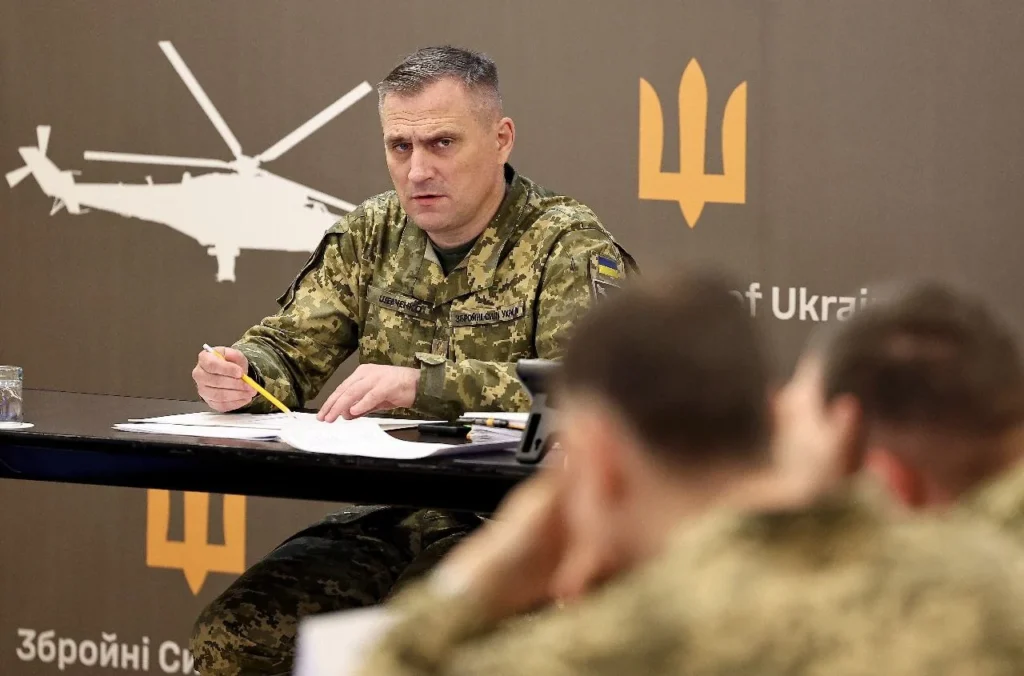
The report states that Russia has already used 138 “reactive Geran” drones, most of which were destroyed by Ukrainian air defence. Ukraine is also taking effective steps to reduce the impact of Russian glide bombs. New weapons are being tested to counter them. Between September and November, Ukraine’s Air Force SAM units shot down up to 100 glide bombs. Details remain classified.
The meeting also addressed the introduction of new weapons, including combat modules for robotic strongpoints.
SSU stops using Altius drones from Anduril
In 2024, the Security Service of Ukraine discontinued the use of Altius strike drones made by US company Anduril due to their vulnerability to Russian EW systems. According to The Wall Street Journal, the drones were losing connection and missing their targets.
Anduril, however, states that its drones were used to destroy a significant number of Russian targets.
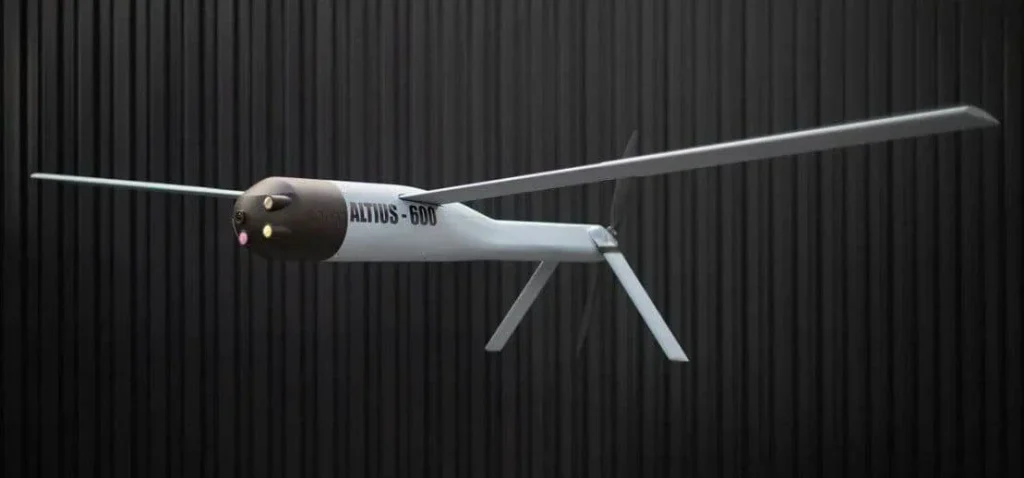
Anduril, however, states that its drones were used to destroy a significant number of Russian targets.
Reading now
1

Ukrainian SkyFall’s drone wins at Pentagon’s Drone Dominance selection
2
Black Forest Systems raises $400,000. Here’s what drones the startup is building
3
Sting interceptor by Wild Hornets downs costly Russian Granat-4 reconnaissance drone
4
UForce unveils Bucha middle-strike drone with a 200 km range
5
The F10 drone becomes the second Ukrainian finalist in the Pentagon’s Drone Dominance Program
By submitting this form, you give Defender Media consent to the processing of personal data.
Надсилаючи цю форму, ви надаєте Defender Media згоду на обробку персональних даних.

Latest news
1
DPA to diversify drone and ammunition orders among multiple suppliers
2
‘Ukrainska bavovna’ and Czech company Pavetra Aerospace to produce Shuhay UAV through joint venture
3
59th Assault Brigade downs Russian Ka-52 helicopter with General Cherry OPTIX FPV drone
4

Tencore develops evacuation module for TerMIT UGV
5