How localised is Ukraine’s defence tech: A study by the IRON cluster and the Snake Island Institute
Some categories of components are already localised by 85% or more, while for complex components the supply remains minimal
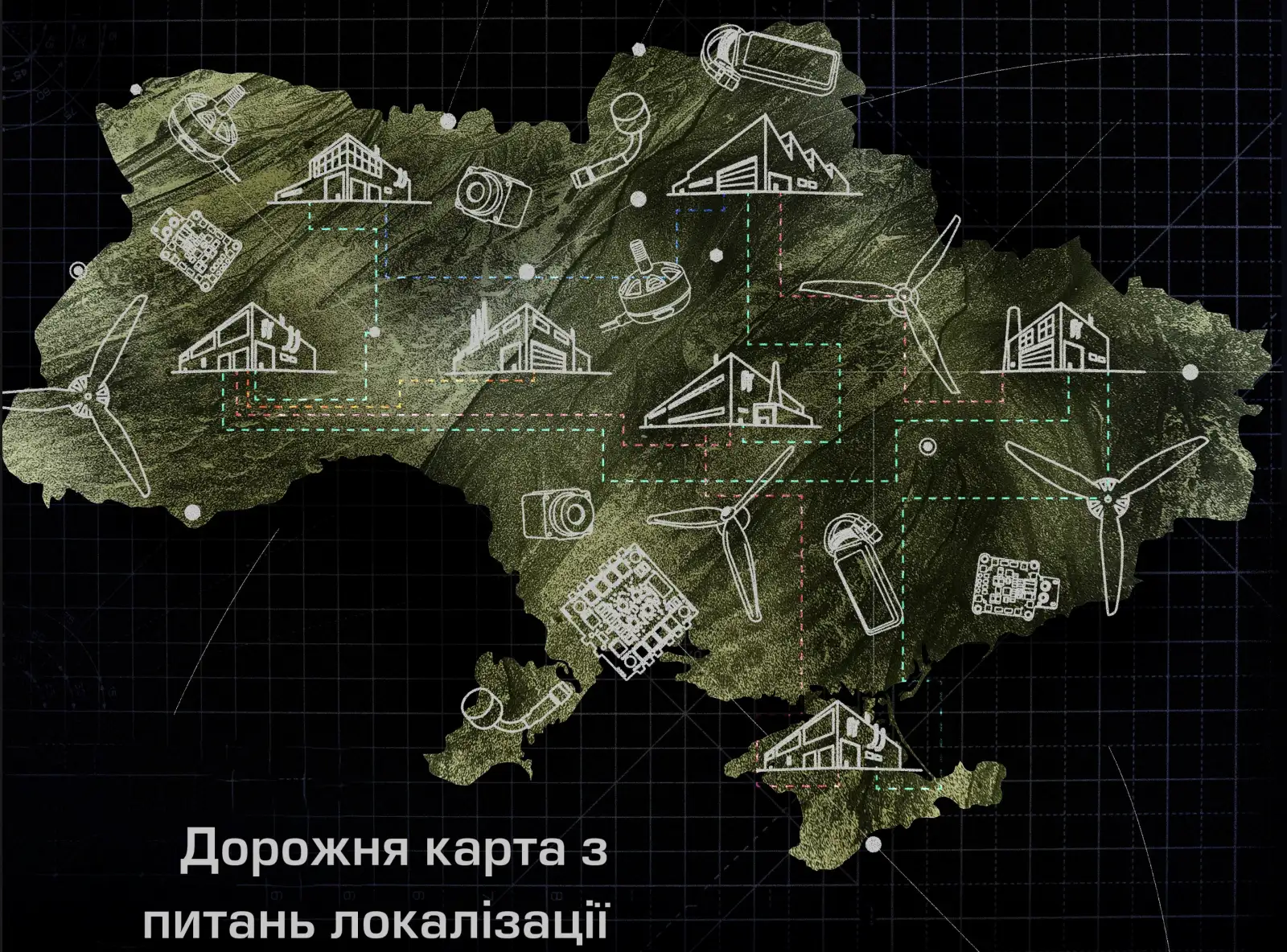
Screenshot from Study
On 2 December, during the Components of Freedom conference, the IRON cluster and the Snake Island Institute presented their study, “Components of Freedom,” which focused on the localisation of production for unmanned systems and EW/ESM equipment. According to the authors, success in producing such systems directly depends on the development of the components market.
In Ukraine, this market is currently highly uneven: some components are widely used across most systems, while others cover only a small share of demand or are not produced at all. Across all segments, the same pattern emerges: component manufacturers have the potential to scale, but they do not receive enough orders from producers of end systems, who often prefer imported components. According to the authors, Ukraine needs to support the development of component manufacturers by removing regulatory barriers that favour imports and providing financial support to enable scaling and reduce production costs.
The authors of the study concluded that Ukraine’s market for components of unmanned systems is extremely unevenly localised. In specific categories — such as casings or communication components — the supply is ample, competition among manufacturers is intense, and the level of localisation is high. In contrast, for more technologically complex components, the share of Ukrainian manufacturers remains limited: the market is either only partially served or almost entirely dependent on imports.
High level of localisation (≈ 85%). Frames and casing components: technologically simple to produce, requiring no unique materials or complex processes. Ukrainian manufacturers fully meet the needs of most drone producers.
Medium level of localisation (50–70%). Communication and control: analogue video transmitters (VTX) and receivers (VRX), control receivers (RX), transmitters (TX), antennas. In these categories, Ukrainian manufacturers can supply a significant portion of the market.
Low level of localisation (up to 25%). Flight stack (flight controller and ESC), electric motors, thermal imaging cameras. These components require significantly more complex manufacturing processes and specialised parts.
Almost complete absence of local production. Digital video transmitters and receivers, daylight cameras, and several specialised electronic modules. In these segments, Ukraine is currently almost entirely dependent on imports.
“Today, Ukraine already has manufacturers for almost all components of unmanned systems, but their market share remains low due to a lack of capital, an unfavourable regulatory environment, and the challenges of scaling production during wartime,” says Yurii Lomikovskyi, Head of GR and Partnerships at the IRON Cluster. “Moreover, a clear trend is observed: as the complexity and technological intensity of component production increase, the share of Ukrainian-made products in that segment decreases.”
The study also includes a review of initiatives and policies supporting the localisation of component production in Ukraine, as well as a roadmap for overcoming key barriers.
Reading now
1
Ukrainian SkyFall’s drone wins at Pentagon’s Drone Dominance selection
2
Black Forest Systems raises $400,000. Here’s what drones the startup is building
3
Sting interceptor by Wild Hornets downs costly Russian Granat-4 reconnaissance drone
4
UForce unveils Bucha middle-strike drone with a 200 km range
5
The F10 drone becomes the second Ukrainian finalist in the Pentagon’s Drone Dominance Program
By submitting this form, you give Defender Media consent to the processing of personal data.
Надсилаючи цю форму, ви надаєте Defender Media згоду на обробку персональних даних.

Latest news
1
DPA to diversify drone and ammunition orders among multiple suppliers
2
‘Ukrainska bavovna’ and Czech company Pavetra Aerospace to produce Shuhay UAV through joint venture
3
59th Assault Brigade downs Russian Ka-52 helicopter with General Cherry OPTIX FPV drone
4
Tencore develops evacuation module for TerMIT UGV
5