Dorozvidka #33: Ihor Fedirko, Vlad Piotrovskyi, ‘Stark’, ‘Ara’, recon drones of the ‘Yastruby’, and Sky News on the Sting interceptor
Overview of useful photo, video and text publications in the media from the past week
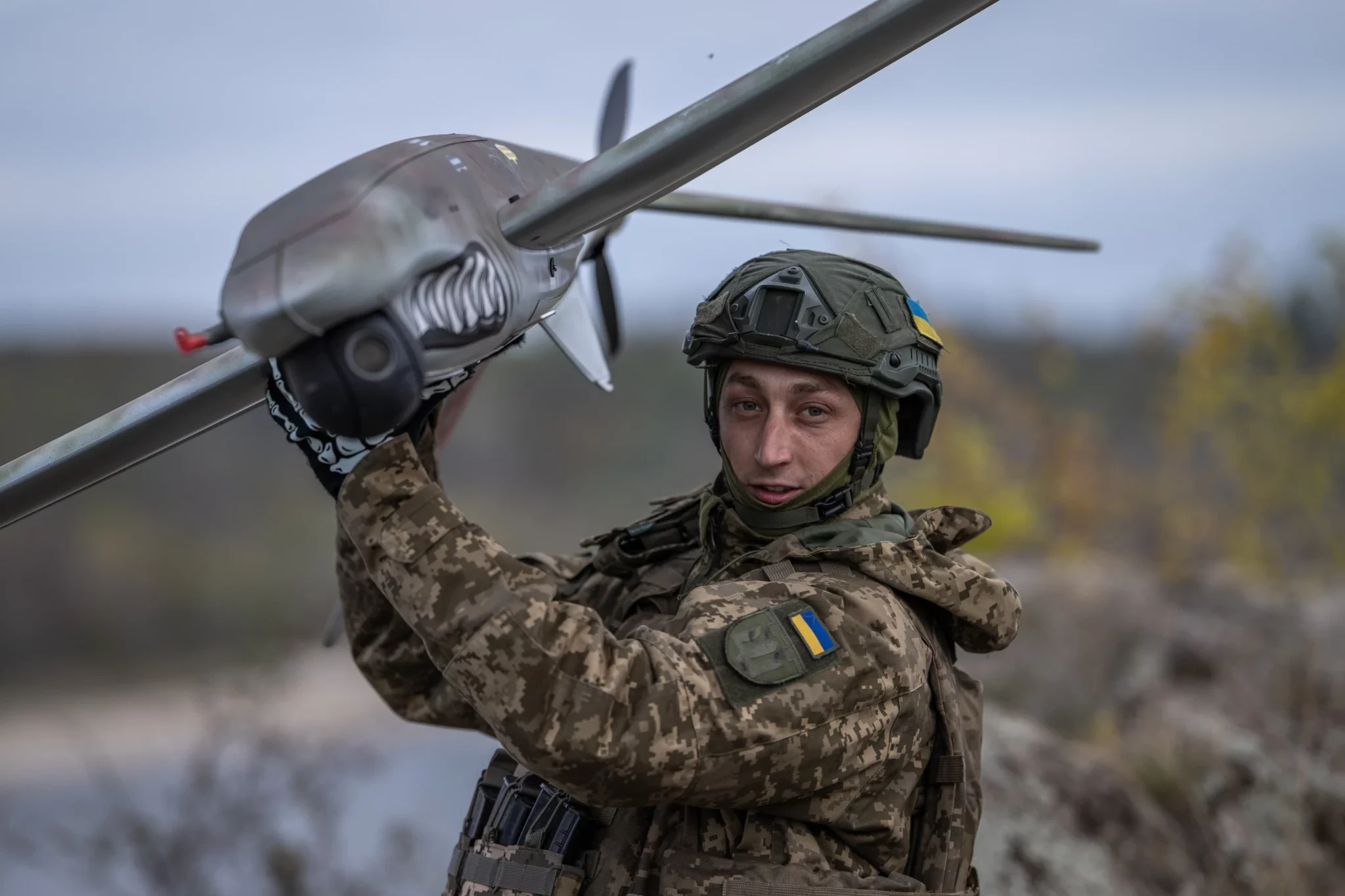
Photo: Anton Shevelyov / Ministry of Defence of Ukraine
What Ukrainian and international media published last week about Ukrainian defence tech:
- Two Ukrainian companies have launched production of engines for their long-range drones;
- The role of artificial intelligence in UGVs — a column by “Stark” from the 3rd Assault Brigade;
- A Sky News report on Sting interceptor drones;
- An interview with the CEO of Dwarf Engineering about hiring, security requirements, and exports;
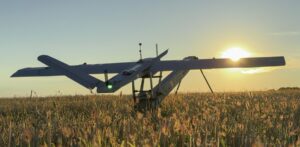
- A photo report on reconnaissance drones used by the 411th Separate Unmanned Systems Regiment “Yastruby.”
Read more about these and other stories in Dorozvidka #33.
By 2026, 70% of UAV procurement will be conducted through DOT Chain Defence
First Deputy Minister of Defence of Ukraine Ivan Havryliuk announced that 70% of UAV procurement is planned to be carried out in 2026 through the digital platform DOT Chain Defence. He said this during the presentation of the study “Corruption risks in the procurement of unmanned systems and electronic warfare equipment for the Armed Forces of Ukraine.”
Ukraine already produces engines for deep-strike drones
Two Ukrainian companies have established a full production cycle of engines for their long-range drones, though they still do not fully cover demand. This was reported by Ihor Fedirko, Executive Director of the Ukrainian Gunmakers Council, in a new video project by Militarnyi titled “Weapons.”
According to Fedirko, although domestic engine production does not yet fully meet the need, it is a significant step forward. Having the manufacturing technology ready means it can later be adapted to different purposes.
“Stark” on the role of AI in UGVs
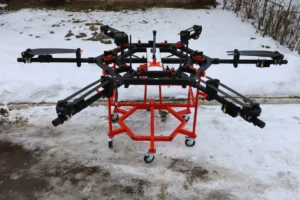
Viktor Pavlov (“Stark”), platoon commander of ground robotic systems and founder of the UGV School of the 3rd Assault Brigade, published a blog post on DOU about the role of artificial intelligence in UGVs.
“AI is a tool. It can reduce the workload on people, increase analysis speed, and provide decision options. But it doesn’t solve problems on its own.
Our primary task now is scaling. We need to train operators, introduce UGVs into units, and refine procedures. Without this, any software is just an accessory. Next comes optimisation — if the system is widespread and well-tested, AI can help optimise logistics, navigation, mission planning, and reduce risks for people. Only after that can we add more complex autonomy algorithms, where it makes sense technically and economically.”
Sky News report on Sting interceptor drones
British Sky News published a report on how soldiers of the 3rd Assault Brigade use Sting interceptor drones to shoot down Shaheds.
Dwarf Engineering CEO on hiring, safety requirements, and export
Ukrainian company Dwarf Engineering develops autonomous targeting systems for drones. Its best-known product is the Narsil auto-aiming module for FPV drones.
The company currently employs 50 people and plans to double that number in 2026. Its main current project is a zero-trust B2B platform for secure software deployment.
In an interview on DOU, Dwarf Engineering CEO and co-founder Vladyslav Piotrovskyi discussed how the company attracts investment, why even finding a sysadmin can be a challenge, and in what cases AI is merely a mathematical application.
Recon drones used by the “Yastruby” regiment
Domakha, Furia, SHARK, Cetus, and Songbird — these five UAVs are used for reconnaissance behind enemy lines by the 411th Separate Unmanned Systems Regiment “Yastruby.” The beauty of these aerial drones and the Ukrainian defenders who pilot them was captured in a photo report by ArmiyaInform.

How UGV operators work
The media team of the Unmanned Systems Forces released a new episode of their podcast Na zviazku (“On the Line”). The guest was “Ara” — a serviceman of the separate 108th Battalion “Da Vinci Wolves” of the 59th Separate Brigade of Unmanned Systems “Stepovi Khyzhaky.”
“Ara” shares many insights valuable for ground drone manufacturers, including:
- How UGVs can assist in the kill zone;
- Whether there is demand for UGVs in the military;
- UGV problems and solutions;
- Development directions;
- Predictions for the future of UGVs.
Reading now
1
Ukrainian SkyFall’s drone wins at Pentagon’s Drone Dominance selection
2
Black Forest Systems raises $400,000. Here’s what drones the startup is building
3
Sting interceptor by Wild Hornets downs costly Russian Granat-4 reconnaissance drone
4
UForce unveils Bucha middle-strike drone with a 200 km range
5
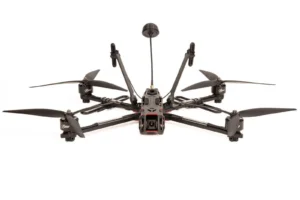
The F10 drone becomes the second Ukrainian finalist in the Pentagon’s Drone Dominance Program
By submitting this form, you give Defender Media consent to the processing of personal data.
Надсилаючи цю форму, ви надаєте Defender Media згоду на обробку персональних даних.

Latest news
1
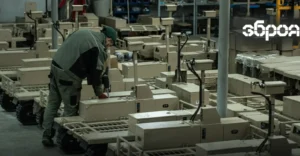
DPA to diversify drone and ammunition orders among multiple suppliers
2
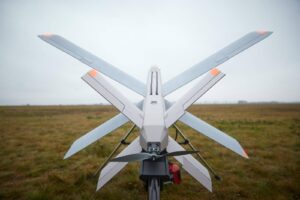
‘Ukrainska bavovna’ and Czech company Pavetra Aerospace to produce Shuhay UAV through joint venture
3
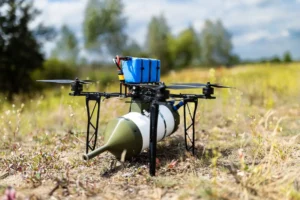
59th Assault Brigade downs Russian Ka-52 helicopter with General Cherry OPTIX FPV drone
4
Tencore develops evacuation module for TerMIT UGV
5