Black Mirror #31. FPV for Doomsday, Impulse-PVO, anti-drone systems from Shvabe and other Russian miltech innovations
A review of Russian military technology developments from the last week of October
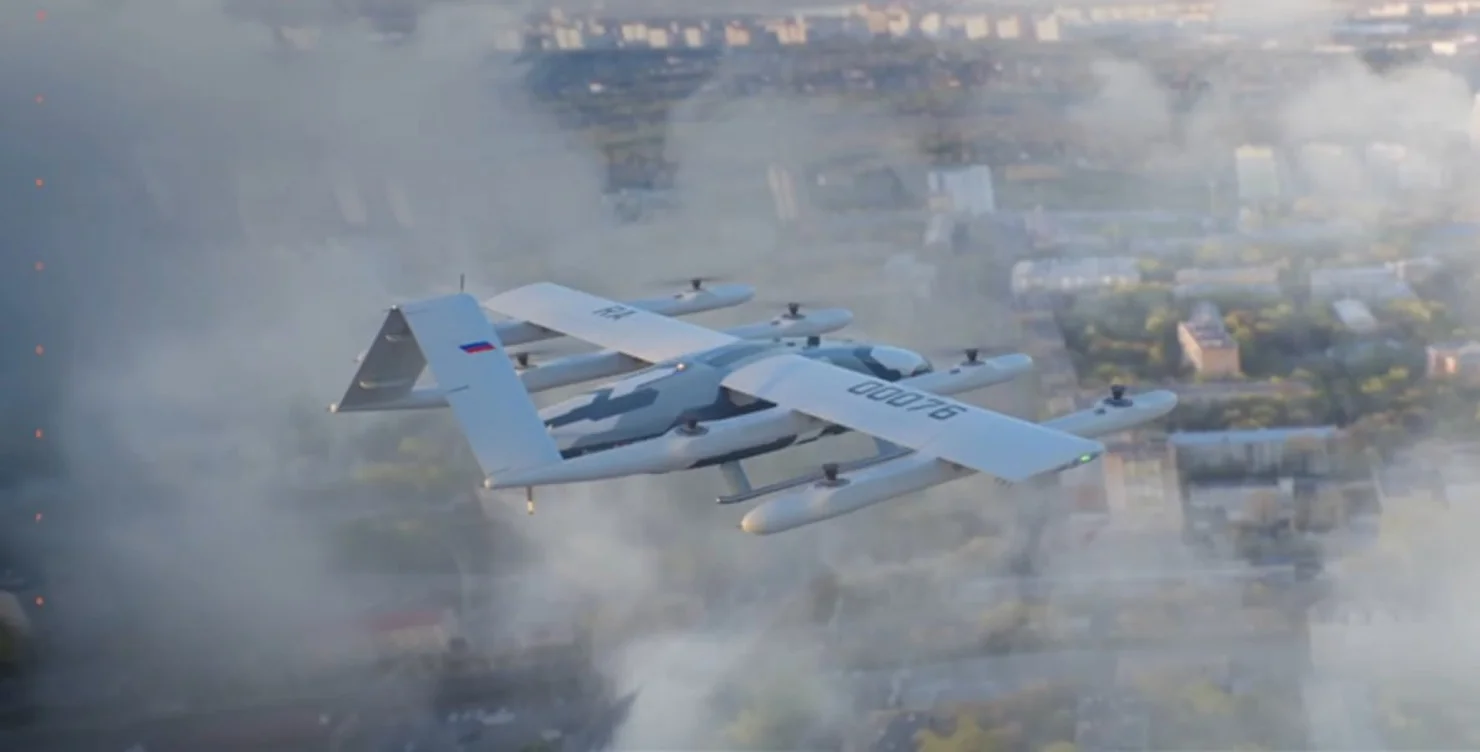
С-76
The Russians tested the global-range cruise missile Burevestnik with a nuclear propulsion unit and are also developing scenarios for using FPV drones after a nuclear strike. Meanwhile, they unveiled several new UAVs and air-defence systems capable of countering both large and small targets.
More on these and other enemy military tech innovations – in Black Mirror #31.
Frequencies for drones
Roscosmos aims to expand the frequency spectrum used to control UAVs via the low-orbit satellite cluster Gonets. Currently there is no infrastructure. Although the 5030–5091 MHz band has been allocated for UAV control via satellite channels, no infrastructure is yet in place. Therefore they propose to consider using already-designated bands, in particular the P-band (below 1 GHz) and S-band (2–4 GHz), assigned to the state corporation Roscosmos.
Robotic air defence Impulse-PVO
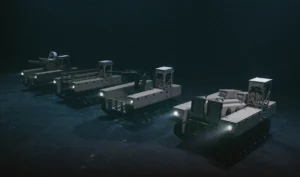
Russia has developed a robotic air defence complex called Impulse-PVO. It uses interceptor drones to strike UAVs. The new development was presented by the Russian company Gumich RTK at an exhibition in Moscow.
It is reported that the autonomous short-range complex, based on a tracked chassis, is equipped with eight small interceptor drones. The appearance suggests that these are Yelka drones. Each of them weighs 1.35 kilograms and is reportedly capable of reaching speeds of up to 200 kilometres per hour. The system is designed to neutralise small UAVs flying at low altitudes.

According to the developer, the Impulse-PVO operates in the frequency range from 700 MHz to 6200 MHz, which allows the complex to function effectively in complex electromagnetic environments.
The complex is designed for remote control as part of a broader strategy to automate short-range air defence – in particular, to support mobile fire groups or protect critical infrastructure from UAV attacks.
Scenarios for using the Doomsday FPV-drone
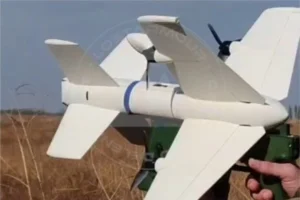
Russian specialists from the Centre for Integrated Unmanned Solutions (CIUS) have developed a series of scenarios for the use of the Doomsday FPV drone – part of an environmental contamination monitoring system after nuclear strikes.
The technology is designed for use during the first hours and weeks following a potential nuclear conflict. It is designed to rapidly determine levels and zones of radioactive contamination, which change quickly and are distributed unevenly – information that is critically important for organising the movement of people and equipment.
The system has been modified to operate from moving armoured and hermetically sealed vehicles. This allows the operator to control the drone without having to go outside, for example, while escorting evacuation convoys.
Technical specifications of the drone:
- Operating range: from 500 meters in zones of continuous contamination to 2 kilometres in zones of variable contamination.
- Flight time: up to 20 minutes.
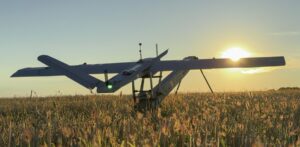
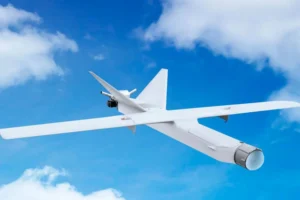
The certification process for the S-76 drone from OAK has begun
At OKB Sukhoi (a part of United Aircraft Corporation) a committee session was held on the UAV S-76, marking the start of work to obtain the development certificate. Committee members reviewed the system, its technical characteristics, and expected conditions of operation.
The S-76 is a Russian vertical-take-off-and-landing (VTOL) transport drone capable of carrying up to 200 kg of cargo over a distance of up to 500 km. The development was first shown in 2024. The drone combines capabilities of a plane and a helicopter, and in military use can be applied for logistics.

Currently, the conformity of the system’s design and characteristics with the Russian certification base is being determined — the set of requirements necessary for the safe operation of unmanned aviation systems.
Airspace control using satellites
During tests, the CubeSat Geoscan‑2 demonstrated its ability to detect signals from aircraft at altitudes ranging from 76 meters to 13,100 meters. This confirms the capability to monitor air traffic via satellites at both low and high altitudes.
The satellite is equipped with a receiver using ADS‑B technology, designed to record the location, speed, and direction of aircraft. On October 10, during four orbits, the CubeSat processed 2,203 messages from 114 aircraft from 32 countries, with the maximum recorded aircraft speed reaching 1,110 km/h.
In the near future, the implementation of functions for targeted tracking of specific aircraft and data filtering to optimise satellite resource usage is planned. Additionally, the technology for receiving signals from unmanned aerial vehicles will be developed.
New AD system: twin machine-guns + AI
St. Petersburg air-defence makers have created a mobile complex with AI-guided targeting based on twin PKT machine-guns (two paired PKT machine-guns + turret + AI-based targeting)

The complex was used to destroy UAVs of the Armed Forces of Ukraine over the waters of the Black Sea.
MLRS Sarma
Two battalion-equivalent units of the new mobile high-precision 300-mm multiple-launch rocket system Sarma have been ordered for the Russian army.
The 300 mm MLRS Sarma is built on the armoured KAMAZ-63501 chassis and was presented this year by the Motovilikha Plants enterprise. One launcher of the new model reportedly cost the Russian army 155 million rubles (approximately USD 1.9 million). In addition, the system was to receive a new automated fire-control and targeting system. A more compact vehicle, fitted with a shortened six-tube launch module, is mounted on a four-axle KAMAZ-63501 chassis with an armoured cab.

Russian designers have also initiated development of a 300-mm rocket equipped with a passive radar-homing seeker. This type of guidance is primarily used to engage powerful sources of emissions, in particular the radars of air-defence systems.
Work on the new munition began in 2024, with plans to produce the first experimental sample in 2025 and to conduct state trials in 2026.
Testing of an automatic UAV countermeasure turret
In Russia, a video was released showing tests of an automatic turret designed to counter UAVs. The turret is built on a PKT machine gun and uses AI algorithms for targeting and lead calculation. The artificial intelligence ensures accuracy, allowing it to shoot down FPV drones from a distance of 340 meters and fixed-wing drones from 450 meters.

New automated complex for destroying UAVs
The Shvabe holding presented a new automated complex for destroying unmanned aerial vehicles using interceptor drones. The solution can be integrated into multi‑layered defence systems and combined with various radar stations and other means of strike.
The new anti‑drone complex provides early detection, tracking, and automated engagement of attack UAVs. It consists of a radar detection station, electro‑optical systems for additional reconnaissance and tracking, a computing system, and an automated operator workstation.
Neutralisation of UAVs is carried out by a high‑speed interceptor drone that launches from a special container – a droneport.
Laser complex for countering UAVs
The Shvabe holding also demonstrated a mobile laser complex for countering UAVs. The core of the system, which fits into a truck chassis, consists of a high-power air-cooled laser and an electro-optical system for detecting and tracking targets.

According to the developers, the mobile laser’s radiation can disable several UAVs of different types, including small FPV drones, within one minute. All of this operates from onboard batteries, which can be recharged from external sources.
Tests of the 9M730 Burevestnik
Russia conducted tests of the advanced long‑range cruise missile 9M730 Burevestnik with a nuclear propulsion unit.
The missile’s flight lasted about 15 hours, during which it covered roughly 14,000 kilometres. It is worth noting that during such tests, the missile is said to leave a radioactive trail – this was recorded during previous trials.
Information about the missile remains classified. At the same time, it is known to be equipped with a direct‑flow jet engine in which air is heated by the energy of a compact nuclear reactor to produce the required thrust.
According to the Russian developers, the missile’s chief advantage is its extraordinary range, which allegedly allows it to bypass air‑defence zones even without using a nuclear warhead.
Reading now
1

Ukrainian SkyFall’s drone wins at Pentagon’s Drone Dominance selection
2
Black Forest Systems raises $400,000. Here’s what drones the startup is building
3
Sting interceptor by Wild Hornets downs costly Russian Granat-4 reconnaissance drone
4
UForce unveils Bucha middle-strike drone with a 200 km range
5
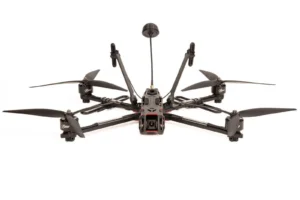
The F10 drone becomes the second Ukrainian finalist in the Pentagon’s Drone Dominance Program
By submitting this form, you give Defender Media consent to the processing of personal data.
Надсилаючи цю форму, ви надаєте Defender Media згоду на обробку персональних даних.

Latest news
1
DPA to diversify drone and ammunition orders among multiple suppliers
2
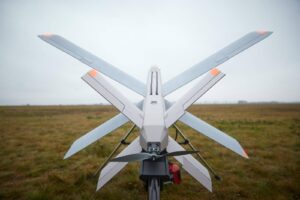
‘Ukrainska bavovna’ and Czech company Pavetra Aerospace to produce Shuhay UAV through joint venture
3
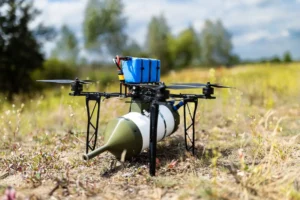
59th Assault Brigade downs Russian Ka-52 helicopter with General Cherry OPTIX FPV drone
4
Tencore develops evacuation module for TerMIT UGV
5