Black Mirror #30. Auto-guidance in Molniya, automated air defence, ring-wing drone and other Russian miltech innovations
Overview of Russian miltech developments for the penultimate week of October
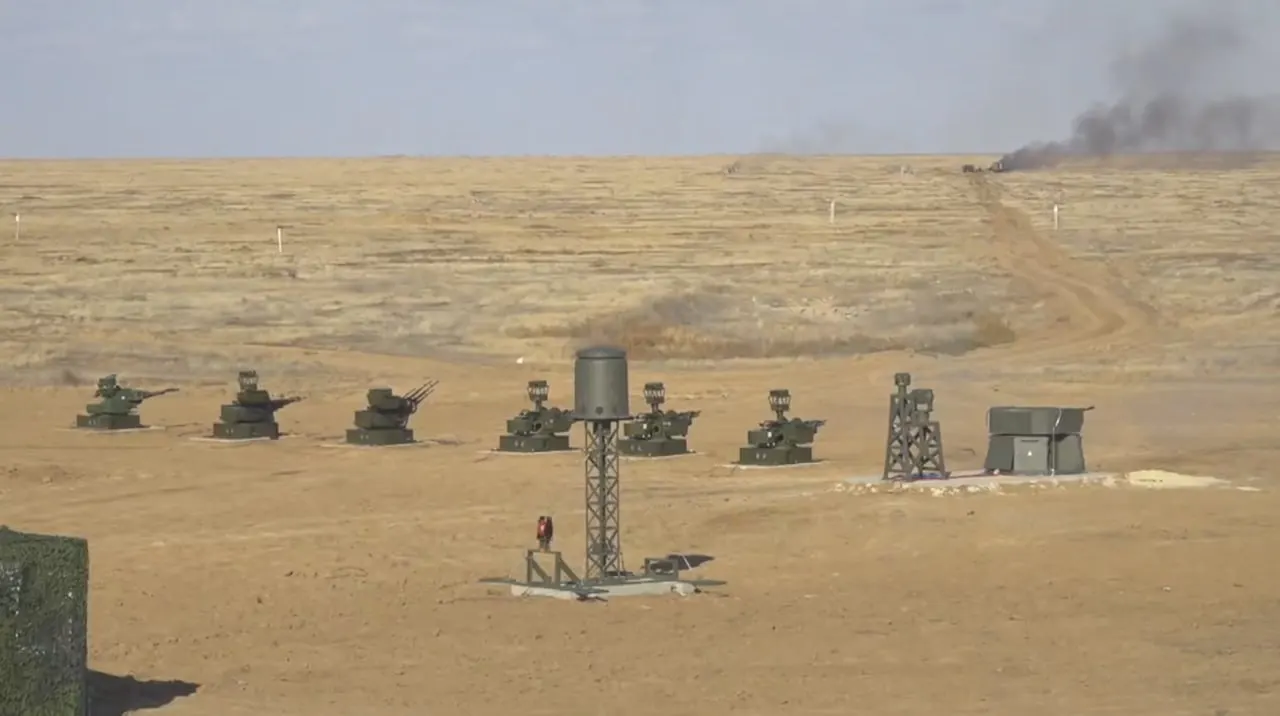
Automated ZU-23-2 / Image Credits here and below: Internet
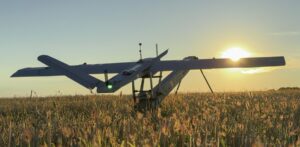
In the Ukrainian sky, fixed-wing enemy UAVs equipped with a machine-vision targeting system, as well as previously unknown ring-wing drones, have been spotted. Russians have also developed new smart guided munitions for air-dropped bombs and automated ZU-23-2 anti-aircraft installations.
More about these and other Russian military tech novelties – in Black Mirror #30.
Unknown ring‑wing drone
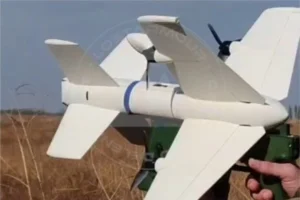
Russia has begun deploying over Ukraine a previously unknown type of unmanned aerial vehicle featuring an unusual ring‑shaped wing structure.

The hostile drone was recorded by a Ukrainian air-defence UAV; its purpose has not yet been determined – it could perform reconnaissance or strike missions. In the ring‑wing design, the wing tips are joined (top-to-top and bottom-to-bottom), so there are no conventional winglets – this reduces the intensity of wing tip vortices.
An additional lifting effect occurs when airflow passing through the closed contour is directed downward; this effect becomes stronger as the wing’s angle of attack increases.
Flow separation (stall) happens when, as the angle of attack increases, the airflow can no longer smoothly follow the wing’s upper surface and peels away, forming vortices. In that case, the lift falls off sharply and the vehicle can lose controllability.
An underwater unmanned vehicle equipped with mini-torpedoes
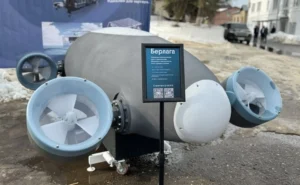
Developers at the Kuznetsov Naval Academy have received a patent for an underwater unmanned vehicle capable of carrying mini-torpedoes. The system is intended to search for and destroy maritime targets, including fortified (hardened) objects. It is equipped with a combined detection suite – optical, magnetic, and hydroacoustic.
The drone can autonomously allocate targets among its torpedoes and overcome anti-torpedo defences. If it detects a threat, such as an enemy counter-torpedo, the vehicle can launch one of its mini-torpedoes to neutralise that threat and then proceed to attack the primary target.
Auto-guidance in aircraft-type strike drones
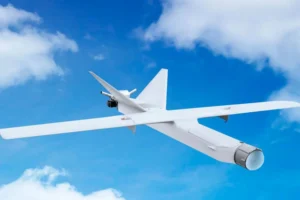
Military expert Serhii Beskrestnov (Flash) published intercepted video from a Russian UAV showing the operation of a target-auto-lock system and drone guidance via machine vision.
“Such systems for FPV are no longer news, but guiding a cruise UAV in wind conditions is quite difficult,” the expert writes. “This is done mainly to strike distant targets at moments when radio-communication near the ground disappears.”
Thus, the enemy is working on increasing the accuracy and range of UAV strikes of the Molniya type, Flash explains.
Automated ZU-23-2
Russia tested an automated air-defence system built on the ZU-23-2 anti-aircraft mounting.
In addition to the modernised ZU-23-2, the system includes paired 6P49 Kord machine guns. Judging by published materials, the installation is configured as a stationary turret. The standard wheeled carriage has been removed.

Such modules are likely to be transported and installed using trucks. A radar station for detecting and tracking airborne targets of unknown type is mounted on the turrets. Nearby, another radar unit may be a dome-type electronic warfare complex.
Such a system was likely created to strengthen local air defence and to protect essential facilities and drone flight routes on Russian territory that cannot be effectively defended with existing means because of the country’s large area.
Modified two-seat light aircraft Yak-52
Russia publicly demonstrated a modified two-seat light aircraft, the Yak-52B2, for the first time, adapted for destroying drones.
The new model is armed with a semi-automatic 12-gauge carbine. In the future, the aircraft are planned to be fitted with interceptor drones mounted under the wings.

The Yak-52 upgrade encompasses both avionics (including a 360-degree search radar, a weather radar, and an onboard computer) and armament. A semi-automatic 12-gauge carbine with a magazine capacity of up to eight rounds is installed in the midsection of the right wing panel.
New UMPKs for FAB-500T air bombs
Russian Su-34 aircraft have been fitted with new Universal Planning and Correction Modules (UPCM) for FAB-500T.
These systems are designed to convert conventional bombs into long-range, high‑precision glide munitions. The design features an extended tail section and enlarged wings – modifications intended to improve the bomb’s aerodynamic characteristics and flight stability.

Thanks to the upgraded UPCM, the FAB-500T’s stated flight range exceeds 100 kilometres. This allows the Su-34 to engage targets without entering the engagement envelope of Ukrainian air‑defence systems.
New interceptor drone
A new interceptor drone was unveiled in Moscow. The high‑speed interceptor from the Kulibin Club carries an explosive charge that is automatically activated when near the target, while artificial intelligence and an onboard computer help the drone pursue and destroy the target.

The AI enables the drone to fly autonomously to designated targets, coordinates over distances of 10–15 kilometres, and, according to claims, all the software is domestically developed. The first batches – reportedly numbering in the hundreds – have already been produced for testing, and the manufacturer is preparing for serial production.
UAV for remote monitoring
In Russia, a UAV for remote forest monitoring and delivery of humanitarian cargo has been patented; by its characteristics and design, it resembles the Geran‑2 drone. The new drone’s flight range is up to 1,800 km, with a payload capacity of 50–90 kg.
The patent documents state that the UAV is an aircraft‑type glider built on a flying‑wing layout, featuring a triangular wing and a cylindrical nose section. The device is made from composite materials, featuring a PVC-foam core.
It is intended to utilise the system, particularly for monitoring facilities in the oil and gas sector; even the civilian version of the UAV is equipped with an anti-jamming unit.
Reading now
1

Ukrainian SkyFall’s drone wins at Pentagon’s Drone Dominance selection
2
Black Forest Systems raises $400,000. Here’s what drones the startup is building
3
Sting interceptor by Wild Hornets downs costly Russian Granat-4 reconnaissance drone
4
UForce unveils Bucha middle-strike drone with a 200 km range
5
The F10 drone becomes the second Ukrainian finalist in the Pentagon’s Drone Dominance Program
By submitting this form, you give Defender Media consent to the processing of personal data.
Надсилаючи цю форму, ви надаєте Defender Media згоду на обробку персональних даних.

Latest news
1
DPA to diversify drone and ammunition orders among multiple suppliers
2
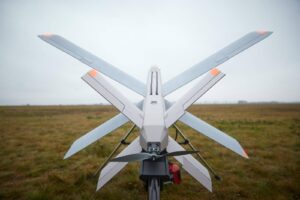
‘Ukrainska bavovna’ and Czech company Pavetra Aerospace to produce Shuhay UAV through joint venture
3
59th Assault Brigade downs Russian Ka-52 helicopter with General Cherry OPTIX FPV drone
4
Tencore develops evacuation module for TerMIT UGV
5