Mother drone Veresen, first UGV and the response to the Russian Molniya: what Vyriy showcased at Defence Tech Valley 2025
Blyskavka is already being supplied to the front line, Sokil is preparing for serial production
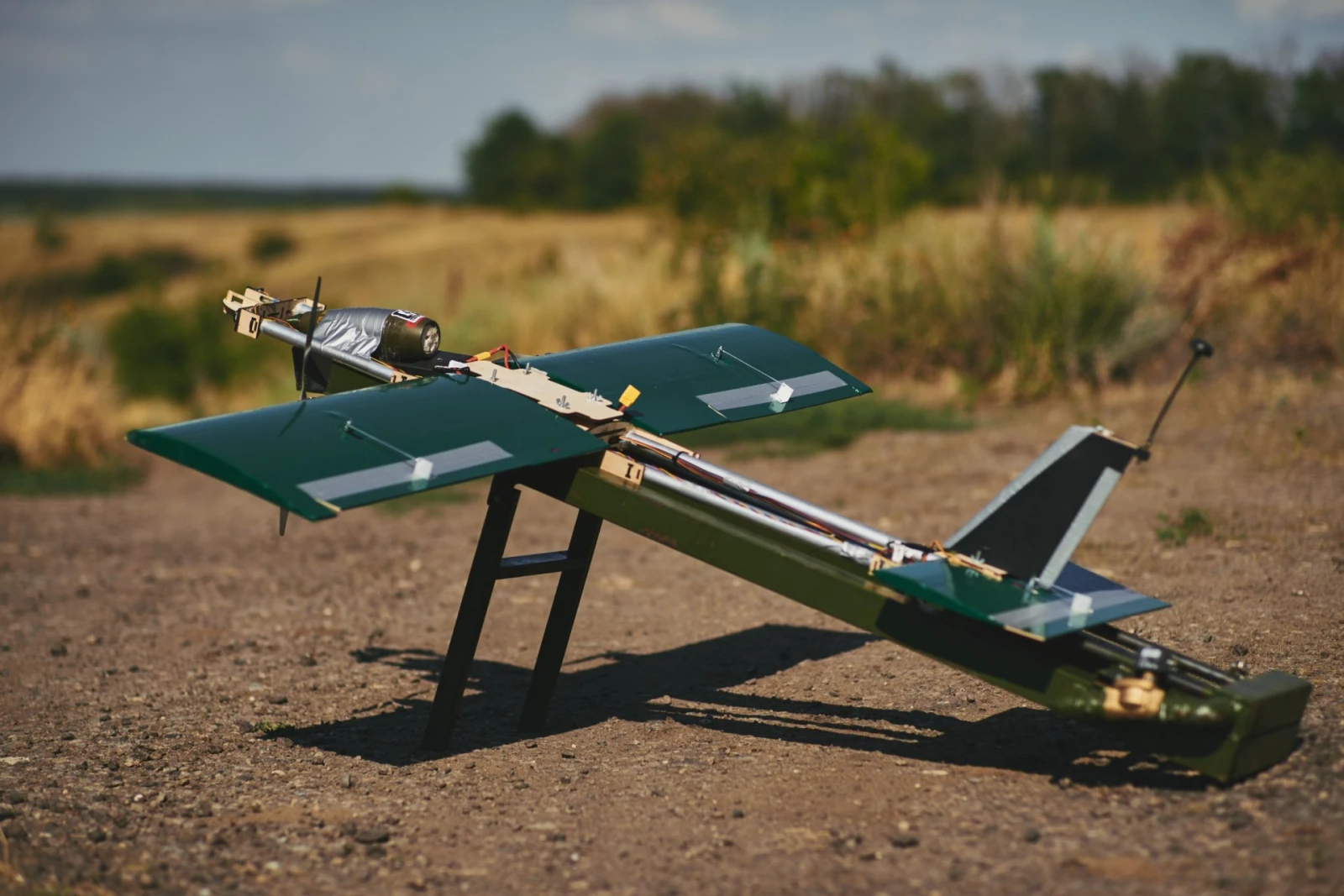
Photo by Oboronka
The Ukrainian defence company Vyriy Drone unveiled several new developments at the Defence Tech Valley 2025 investment summit, including the Dzhankoi UGV, the kamikaze drone Blyskavka, and the UAVs Sokil and Veresen.
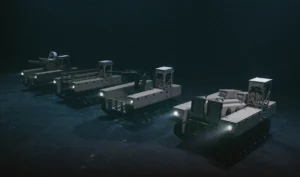
The ground drone “Dzhankoi” became the company’s first tracked project. According to Vyriy CEO Oleksiy Babenko, the UGV was created based on an idea from a Lviv engineer, but almost all components had to be redesigned. Only the original track, weighing 40–45 kg, remained operational, allowing the drone to reach speeds of up to 25 km/h and traverse difficult terrain.

Dzhankoi is equipped with Starlink satellite communication and the ExpressLRS system, has a payload capacity of over 500 kg and a range of 30–50 km. The company plans to integrate artificial intelligence for obstacle navigation and to create specialised versions — from an engineering model with a bucket to variants with a combat turret or a platform for FPV drones.

Another novelty was the kamikaze drone Blyskavka, developed based on a captured Russian model Molniya. Its construction, with a wooden centre wing and an open configuration, mirrors the basic design of the Russian prototype, but Ukrainian engineers have improved the assembly system, standardised the connectors, and enhanced communications.
The Ukrainian version costs 35,000 hryvnias, has two electric motors on the wings, is launched from a pneumatic catapult, and can remain airborne for up to 60 minutes. Its maximum flight range with a repeater reaches 80 km, and the maximum altitude is 2,000 m. The payload capacity is up to 8 kg. “Blyskavka” is already being supplied to the front line.
The tactical reconnaissance UAV Sokil was designed for operations directly on the front line. According to Babenko, the drone is intended as a mass-produced, low-cost alternative to more expensive UAVs that are lost to electronic warfare and interceptors. “Sokil” will cost between $3,000 and $5,000 depending on configuration. Its specifications include a flight duration of up to 2.5 hours, 10× optical zoom with threefold digital magnification, a range of up to 130 km, and a cruising speed of 75 km/h. The device weighs 8 kg, is hand-launched, and requires minimal crew preparation.
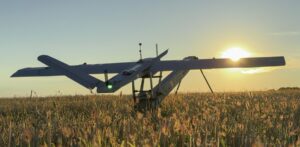
Another innovation from Vyriy Drone is the Veresen mothership drone. This twin-engine aircraft was developed in partnership with the K-2 unit and is named after its commander, Kyrylo Veres. “Veresen” is designed to deliver FPV drones deep into enemy territory and to conduct reconnaissance for them.
According to Babenko, a significant part of the work was carried out by the K-2 team, but due to the complexity of the development within the military unit, Vyriy provided specialists, funding, and resources.

The twin-engine aircraft can transport two copters with a payload of up to 1.5 kg each, sufficient for mounting fragmentation warheads or cumulative PG-7V grenades. The maximum flight radius reaches tens of kilometres depending on the load, in addition to the operational range of the strike drones. “Veresen” simultaneously relays two communication channels.
The drone can reach speeds of 70–130 km/h and, besides transporting drones, can be used as a kamikaze with a payload of up to 4 kg or as a reconnaissance vehicle with a flight duration of up to 180 minutes.
It is also worth noting that during the Defence Tech Valley 2025 summit, four foreign investment companies announced plans to invest $100 million in Ukrainian defence technologies.
Reading now
1

Ukrainian SkyFall’s drone wins at Pentagon’s Drone Dominance selection
2
Black Forest Systems raises $400,000. Here’s what drones the startup is building
3
Sting interceptor by Wild Hornets downs costly Russian Granat-4 reconnaissance drone
4
UForce unveils Bucha middle-strike drone with a 200 km range
5
The F10 drone becomes the second Ukrainian finalist in the Pentagon’s Drone Dominance Program
By submitting this form, you give Defender Media consent to the processing of personal data.
Надсилаючи цю форму, ви надаєте Defender Media згоду на обробку персональних даних.

Latest news
1
DPA to diversify drone and ammunition orders among multiple suppliers
2
‘Ukrainska bavovna’ and Czech company Pavetra Aerospace to produce Shuhay UAV through joint venture
3
59th Assault Brigade downs Russian Ka-52 helicopter with General Cherry OPTIX FPV drone
4
Tencore develops evacuation module for TerMIT UGV
5