Dorozvidka #24: Drone swarms at the front, the first month of DOT-Chain Defence, plus Denys Hurak, Oleksandr Yakovenko and Taras Chmut
Traditional review of important publications in Ukrainian and foreign media
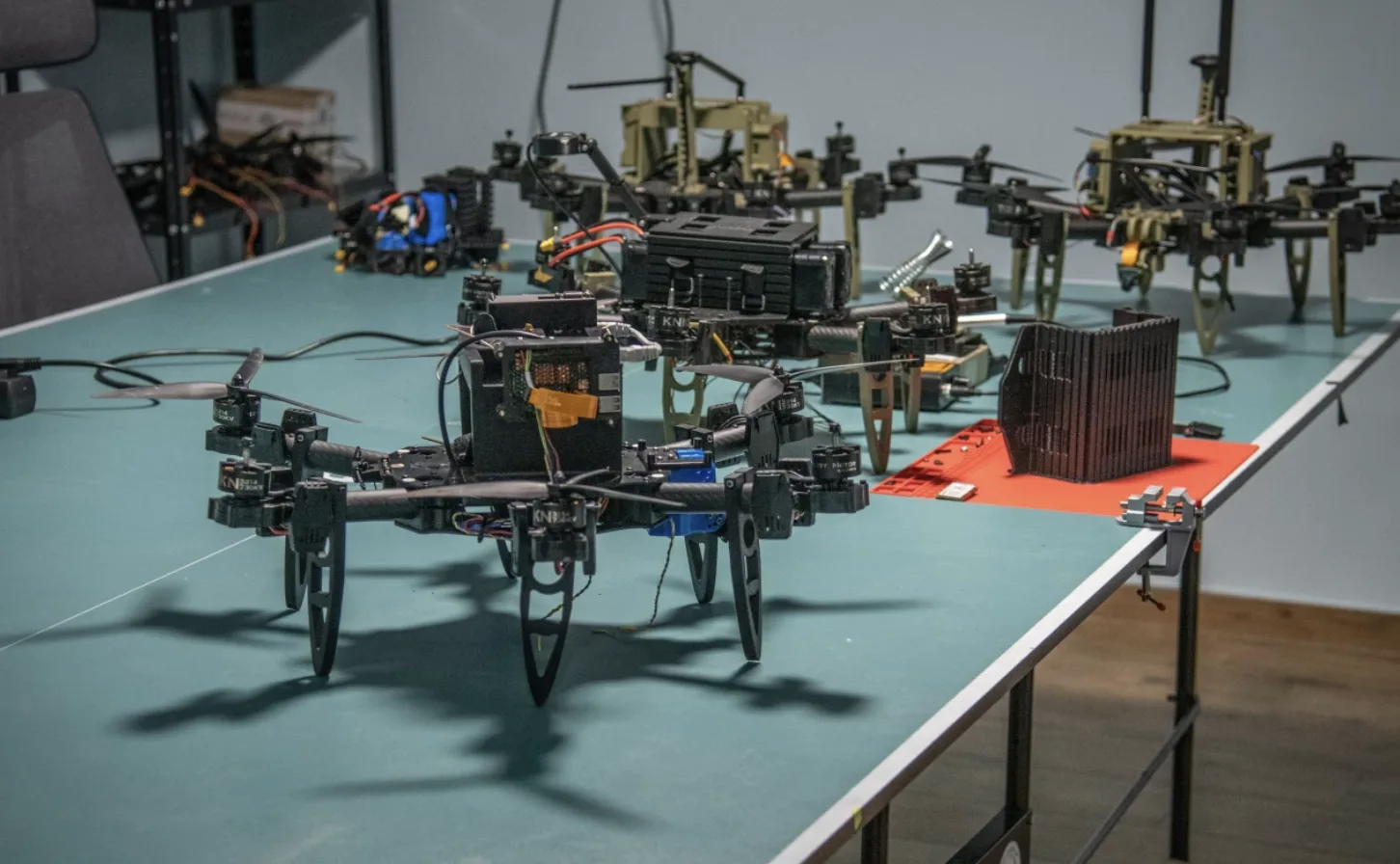
Photo: The Wall Street Journal
Ukrainian forces are already deploying drone swarms controlled by artificial intelligence systems on the front line – in particular, technology developed by the startup Swarmer. Officers and developers shared the story with American journalists, and Defender Media highlights the key points in Dorozvidka #24.
Also in this issue:
- TAF Industries founder Oleksandr Yakovenko and MITS Capital co-founder Denys Gurak warn about risks to Ukrainian defence tech;
- Taras Chmut compares the Shahed to the iPhone;
- The former owner of US PMC Blackwater is interested in acquiring Ukrainian drone manufacturers;
- Arsen Zhumadilov sums up the first month of DOT-Chain Defence and shares future plans.
The Guardian: Blackwater founder wants to buy Ukrainian drone manufacturers
The Guardian reports, citing its own sources, that Erik Prince, the founder of several major US private military companies, is seeking to acquire Ukrainian drone producers. Prince, the former owner of Blackwater and now founder of Vectus Global, has so far been unsuccessful. According to the Guardian, Ukraine considers these companies strategic assets in wartime and has resisted selling them.
MITS Capital co-founder Denys Gurak: 80% of Ukraine’s defence tech sector is at risk of disappearing

Ukraine’s defence tech industry has grown faster than almost any other sector in the country. Since 2022, it has scaled from almost nothing to hundreds of companies at various stages of maturity. “But the situation is fragile – we risk losing at least 80% of the players regardless of how the peace process unfolds,” Gurak wrote in a column for Forbes.
According to him, Ukraine is losing the race to scale defence innovation to Russia, which enjoys China’s support. The only chance for Ukrainian defence startups to survive, he argues, is to consolidate into a handful of large companies similar to US giant Lockheed Martin. In his article, Gurak outlines three possible scenarios for consolidation of the domestic defence tech market.
Oleksandr Yakovenko, TAF Industries: “Some deftech companies have already stopped being Ukrainian”

DOU published an interview with TAF Industries founder Oleksandr Yakovenko (formerly TAF Drones). In just 18 months, the company has grown from a 20-person startup to a workforce of 1,000. TAF Industries now produces up to 80,000 drones monthly and is one of three Ukrainian companies listed among the world’s top drone manufacturers.
In the interview, Yakovenko discusses how other firms poach his staff, how the company generated a billion in revenue without external investment, the prospects for Ukrainian defence tech exports, why IPOs are not always the ultimate goal for defence firms, and the path from concept to finished product.
DOT-Chain Defence delivers 5,600 drones worth UAH 216 million in first month
According to the Defence Procurement Agency (DPA), in its first month of operation, the DOT-Chain Defence IT system from the State Rear Operator supplied 5,600 drones to the front line, worth a total of UAH 216 million.

“The pilot results confirm the system’s effectiveness. We have received extensive feedback from the military about the efficiency of purchases via the marketplace – they choose drones for specific tasks and receive them in days, not months,” said DOA head Arsen Zhumadilov.
The DPA reports that the supply cycle has been cut more than fivefold – from several months to just weeks. Average delivery time is under two weeks, with a record turnaround of only five days from order to frontline delivery.
The system currently offers 151 drone models from 25 companies, including AIR SKYLINE, Escadrone, Gurzuf Defence, Hunter, Lucky Strike, Nebo Peremogy, Quantum Systems, SKYRIPER, TAF Drones, VAMPIRE, Vyriy Drone, Warbirds, General Cherry, DeViRo, YEDRON, Reactive Drones, Sky Tactic, and UKRSPECSYSTEMS.
In addition to FPV drones, bomber drones, including heavy ones, have also been added. The fastest delivery for this type was 12 days. Overall, troops have already ordered more than 11,000 drones worth UAH 397 million.
Responding to frontline requests, the DPA is now expanding the system to more brigades and broadening the range of available tech: other drone types, EW/ESM systems, ground robotic platforms, and munitions drops.
Ukrainian drone swarms – already in combat
Ukrainian troops are already using drone swarms controlled by AI systems, The Wall Street Journal reports. Recently, a group of three Ukrainian drones approached Russian positions under cover of darkness and independently determined the moment to strike.
According to WSJ, this attack used Swarmer’s technology, whose software enables drone groups to coordinate. Company representatives say trials with 100-drone swarms are coming soon.

Ukrainian forces first used Swarmer technology for mine-laying around a year ago. Later, it was adapted for strikes against Russian troops, vehicles, and infrastructure. An anonymous Ukrainian officer said his unit has used the system more than 100 times, and that other units are also equipped with drones running the software.
He described a typical operation: one reconnaissance drone and two attack drones armed with small bombs are tasked with hitting a Russian trench. The operator designates a target area and gives the attack order once targets are detected. The reconnaissance drone maps the route, while the attack drones decide when and how to drop munitions.
Taras Chmut: Shahed is the iPhone of drones
Taras Chmut, founder of the “Come Back Alive” foundation, considers the Shahed loitering munition the best in its class. He noted that Ukraine already has at least three similar designs that resemble the Iranian drone in appearance but lag in quality and cost-efficiency.
In an interview with the YouTube channel PRESSING, Chmut said Ukrainian companies had built several Shahed analogues with different characteristics and higher production costs.

He also compared drone manufacturing in Ukraine and Russia. While Russia has essentially one Shahed counterpart, Ukraine has dozens of manufacturers producing more than 20 drone models. Chmut called this a “zoo,” stressing that such diversity is both an advantage and a drawback.
Seven universities join the Brave1 cluster
Deputy Prime Minister Mykhailo Fedorov announced that the state defence tech cluster Brave1 has begun deeper cooperation with higher education institutions. This will be a dedicated Brave1 project to leverage academic potential for Ukraine’s defence sector while creating new opportunities for engineering students.
The cooperation includes:
- joint events for technology development, such as hackathons;
- support for universities in creating innovative defence solutions;
- involvement of academics in advising developers;
- student internships at Brave1 cluster companies.
So far, seven universities have joined Brave1:
- Oles Honchar Dnipro National University
- National Aerospace University “Kharkiv Aviation Institute”
- Kharkiv National University of Radio Electronics
- Ukrainian Catholic University
- Lviv Polytechnic National University
- Kyiv Aviation Institute State University
- Ukrainian State University of Science and Technology
The list of universities will be expanded – Brave1 is open to new proposals in this area.
Reading now
1
Ukrainian SkyFall’s drone wins at Pentagon’s Drone Dominance selection
2
Black Forest Systems raises $400,000. Here’s what drones the startup is building
3
Sting interceptor by Wild Hornets downs costly Russian Granat-4 reconnaissance drone
4
UForce unveils Bucha middle-strike drone with a 200 km range
5
The F10 drone becomes the second Ukrainian finalist in the Pentagon’s Drone Dominance Program
By submitting this form, you give Defender Media consent to the processing of personal data.
Надсилаючи цю форму, ви надаєте Defender Media згоду на обробку персональних даних.

Latest news
1
DPA to diversify drone and ammunition orders among multiple suppliers
2
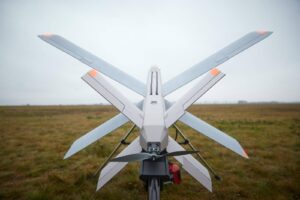
‘Ukrainska bavovna’ and Czech company Pavetra Aerospace to produce Shuhay UAV through joint venture
3
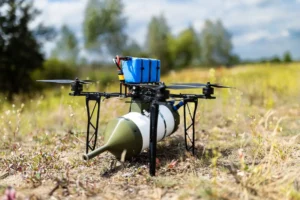
59th Assault Brigade downs Russian Ka-52 helicopter with General Cherry OPTIX FPV drone
4
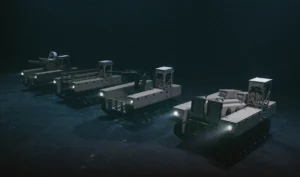
Tencore develops evacuation module for TerMIT UGV
5