Ukrainian army already use domestic AI system Clarity, which autonomously detects enemy equipment and personnel in photos and videos
The software can decode photos and videos, link them to map coordinates, and automatically process orthophotos
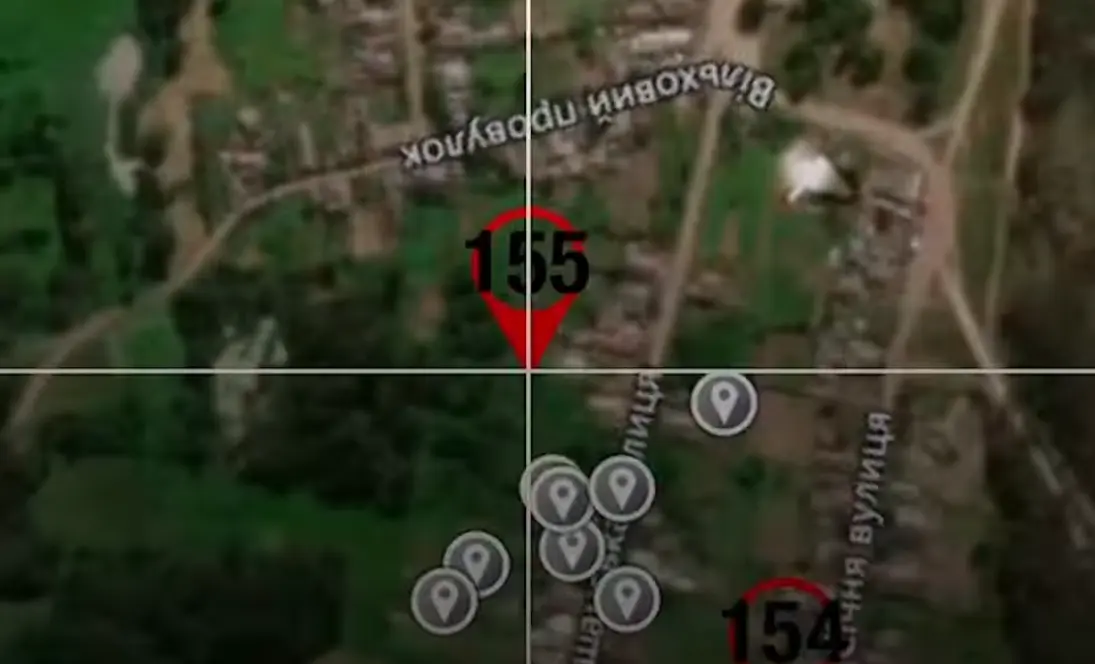
Video screenshot
The Ukrainian programme Clarity, which uses artificial intelligence to independently detect equipment and enemy presence in photo and video data, is already being deployed on the front line, Deputy Prime Minister Mykhailo Fedorov reported. The technology accelerates the kill chain, saves up to 90% of analysts’ time and can even run on a standard laptop.
The company behind the product won the pre-seed startup competition at the Happy New Fear Hackathon organised by Brave1 cluster and received a grant that enabled the creation of an enhanced version, Clarity Pro. It can decode photos and videos in seconds, link them to map coordinates, and automatically generate and interpret orthophoto maps.
The system is already used by more than 250 pilots, analysts and scouts from the Achilles, Nemesis, Rubizh, 40th Separate Brigade and other units. Feedback from the military is being used to further improve the programme.
The development of autonomous drones and other artificial intelligence–based technologies is a priority for Ukraine’s defence tech sector, Minister Mykhailo Fedorov has previously stated. Today, more than 200 companies within Brave1 are working on AI technologies. They are developing solutions for target identification, data analysis, demining, 3D modelling, optical navigation, terminal guidance, and other applications.
The next step is to significantly increase mission autonomy through AI. Recently, Brave1 launched a new grant competition with funding of up to UAH 100 million for breakthrough AI solutions. Eligible projects are those that can take autonomy to the next level, including:
- autonomous drones;
- autonomous guidance modules and thermal guidance systems for interceptor drones;
- AI solutions for intercepting and neutralising glide bombs;
- simulation environments for training and testing AI-powered autonomous combat systems.
To participate in the competition and review the requirements, manufacturers must submit an application by 9 September.
Reading now
1
Ukrainian SkyFall’s drone wins at Pentagon’s Drone Dominance selection
2
Black Forest Systems raises $400,000. Here’s what drones the startup is building
3
Sting interceptor by Wild Hornets downs costly Russian Granat-4 reconnaissance drone
4
UForce unveils Bucha middle-strike drone with a 200 km range
5
The F10 drone becomes the second Ukrainian finalist in the Pentagon’s Drone Dominance Program
By submitting this form, you give Defender Media consent to the processing of personal data.
Надсилаючи цю форму, ви надаєте Defender Media згоду на обробку персональних даних.

Latest news
1
DPA to diversify drone and ammunition orders among multiple suppliers
2
‘Ukrainska bavovna’ and Czech company Pavetra Aerospace to produce Shuhay UAV through joint venture
3
59th Assault Brigade downs Russian Ka-52 helicopter with General Cherry OPTIX FPV drone
4
Tencore develops evacuation module for TerMIT UGV
5