Black Mirror #26. HUR analysis of the UMPB, plus upgraded V2U, Lancet, Molniya and other Russian miltech updates
Overview of new Russian miltech developments for the last week of September

New Lancet, photo from the internet
Russian drones Lancet, Molniya and V2U have gained new capabilities that increase threats to both Ukrainian troops and civilians. In addition, the enemy is creating a state-run library of drone photo and video materials and developing an airspace control system.
Full details in Black Mirror #26.
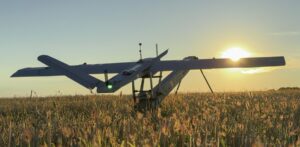
Russian AI drone V2U has become fully autonomous
The enemy’s AI drone V2U, which searches for targets and can recognize objects, no longer uses an LTE modem, according to military radio-technology specialist Serhii “Flesh” Beskrestnov. He says the drone has become fully autonomous.
“It navigates autonomously and attacks the target autonomously. You can’t suppress its control and navigation with EW because there is nothing to suppress. The drone can, for example, fly autonomously above a road or railway line and look for targets to attack. There have already been cases when the drone attacked a crowd of people at a market,” the expert said.
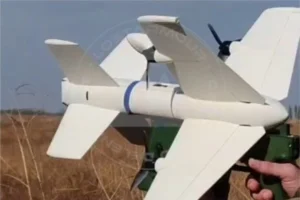
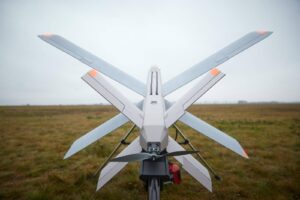
Earlier the Russians released a new version of the AI drone — the reconnaissance modification lacks tail stabilizers in the center. After completing a reconnaissance mission the drone descends on a parachute. This is the second V2U variant — the first was a strike version.
According to Ukraine’s military intelligence (HUR), this drone series is based on the Chinese mini-computer Leetop A203, and likely uses a computer-vision navigation system. In studied versions a modem-router Microdrive Tandem-4GS-OEM-11 was used, which operates with a SIM card from a Ukrainian mobile operator.
New Lancet version
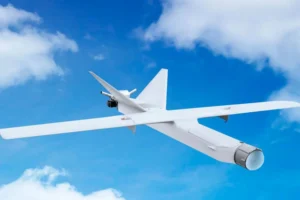
Experts have noticed a change to the antenna system on the Russian Lancet loitering munition: a new control antenna has appeared on the airframe, which may affect the platform’s operating characteristics.
Analysis of wreckage and components from a downed airframe indicates the warhead has been reinforced compared to earlier modifications. The video transmitter has also been replaced in the new version, which could improve communications and control at longer ranges.

This type of UAV is intended to engage both fixed and moving targets, including lightly armored vehicles, radars and artillery positions.
State library of drone photos and videos
Russia is creating a centralized repository of photo and video materials obtained from unmanned aerial systems, plus a processing platform using neural networks.
The library will consist of three key modules:
• “Data Transfer” — for collection and sorting of incoming data by parameters;
• “Storage and Processing” — for building datasets for analytics and training AI models using supercomputers at a shared-use center;
• “Services” — a platform or marketplace for data exchange among library users.
Molniya turned into a mothership drone
The enemy’s Molniya kamikaze loitering munition has been reworked into a mothership drone capable of carrying other FPV-type UAVs, Serhii “Flesh” Beskrestnov reported.
He noted that this variant uses reinforced batteries to provide a greater flight radius, and the FPV drones are mounted on a dedicated rack.
Airspace control system

The holding company “High-Precision Complexes” (part of Rostec) demonstrated at the Neva-2025 exhibition a system that performs airspace control. It can be installed at infrastructure sites as well as on combat vehicles.
The system aggregates radar data from 24 sensors onto a single workstation. It is reported that a person without specialized radar skills can — after 2–3 hours of training — distinguish aerial objects and forward data to command posts.
The system can automatically detect targets, including very small low-altitude aerial objects. It can operate near strong electromagnetic sources, and its software supports AI-assisted data processing.
Components of the UMPB D-30SN air bomb
Ukraine’s HUR published the structure of the enemy’s UMPB D-30SN (universal inter-service gliding munition) and listed 36 enterprises that make up its production network.
Internal modules and blocks of the UMPB are similar to those used in UMPC modules (Unified Module of Planning and Correction), including the autopilot module — S.M.A.R.T.
Carriers of the D-30SN may include Su-34, Su-30SM, Su-35, Su-24 aircraft and the S-70 “Okhotnik” UAV. Employment range — up to 100 km (when launched from an altitude of 12–15 km).
Preliminary data indicate UMPBs can also be launched from ground platforms — 300 mm Tornado-S multiple-launch rocket systems using a booster motor.
To operate under EW conditions the UMPB’s navigation suite includes a satellite navigation system with an adaptive antenna array (CRPA) — “Komet-M8”, already used in other Russian systems.
The patent owner and main organizer of UMPB production is the Russian corporation “Tactical Missile Armament” (KTRV); the principal manufacturer is a firm within the AT “Concern Granit-Electron” group.
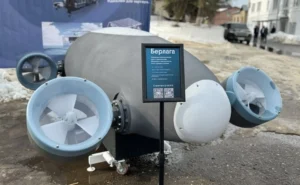
EW station for watercraft — Shadow
This system is designed to protect small vessels from reconnaissance and strike drones.

Together with the “Signal M” unit (an automatic drone detector) the station can detect an approaching UAV within about one kilometer of the vessel. At roughly 300 m range it can already jam the pilot’s control and live video links.
Reading now
1

Ukrainian SkyFall’s drone wins at Pentagon’s Drone Dominance selection
2
Black Forest Systems raises $400,000. Here’s what drones the startup is building
3
Sting interceptor by Wild Hornets downs costly Russian Granat-4 reconnaissance drone
4
UForce unveils Bucha middle-strike drone with a 200 km range
5
The F10 drone becomes the second Ukrainian finalist in the Pentagon’s Drone Dominance Program
By submitting this form, you give Defender Media consent to the processing of personal data.
Надсилаючи цю форму, ви надаєте Defender Media згоду на обробку персональних даних.

Latest news
1
DPA to diversify drone and ammunition orders among multiple suppliers
2
‘Ukrainska bavovna’ and Czech company Pavetra Aerospace to produce Shuhay UAV through joint venture
3
59th Assault Brigade downs Russian Ka-52 helicopter with General Cherry OPTIX FPV drone
4
Tencore develops evacuation module for TerMIT UGV
5