Dwarf Engineering has carried out new tests of its Narsil autonomous drone control module: results
According to the developers, the module provides up to 80% accuracy of hits

Photo by manufacturer
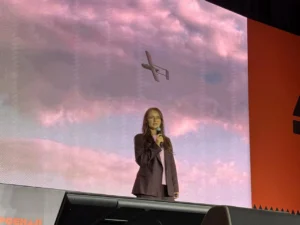
On 27 August, Dwarf Engineering demonstrated the performance of its Narsil autonomous control module at the Joint Ventures, Joint Defence event organised by the Technological Forces of Ukraine. This time, the tests involved pilots who had not previously worked with the module, the developer’s press service reported.
The purpose of the demonstration was to test the effectiveness of the system under conditions of limited operator training. On this occasion, the demonstration involved drone pilots from “General Chereshnia” and unnamed company. During the presentation, two FPV drones — one without a payload and the other carrying a one-kilogram payload — successfully targeted and struck a static target without pilot involvement. According to the pilots, Narsil proved to be easy to use and highly effective.
The Narsil module can be integrated into various types of FPV drones regardless of platform size or payload weight. It supports both digital and analogue communication and is compatible with thermal and infrared cameras.
The system operates in two primary modes: “Cruise”, which enables stable flight and target search without adjusting the position of the camera or drone, and “Terminate”, which locks onto a target and pursues it until impact, regardless of whether the target is stationary or moving along a straight or curved trajectory.
Key advantages of Narsil include accuracy, ease of use, and data security. If the equipment falls into enemy hands, all stored information is automatically deleted.
According to the developers, Narsil significantly increases mission effectiveness, achieving successful strikes in more than 80% of cases. It also functions reliably under signal loss and remains accessible to operators with only minimal training.
Previously, Defender Media reported that the development of autonomous drones is among the priorities of the updated grant programme of the Brave1 state cluster.
Reading now
1

Ukrainian SkyFall’s drone wins at Pentagon’s Drone Dominance selection
2
Black Forest Systems raises $400,000. Here’s what drones the startup is building
3
Sting interceptor by Wild Hornets downs costly Russian Granat-4 reconnaissance drone
4
UForce unveils Bucha middle-strike drone with a 200 km range
5
The F10 drone becomes the second Ukrainian finalist in the Pentagon’s Drone Dominance Program
By submitting this form, you give Defender Media consent to the processing of personal data.
Надсилаючи цю форму, ви надаєте Defender Media згоду на обробку персональних даних.

Latest news
1
DPA to diversify drone and ammunition orders among multiple suppliers
2
‘Ukrainska bavovna’ and Czech company Pavetra Aerospace to produce Shuhay UAV through joint venture
3
59th Assault Brigade downs Russian Ka-52 helicopter with General Cherry OPTIX FPV drone
4
Tencore develops evacuation module for TerMIT UGV
5