Dorozvidka #21: Flamingo cruise missile, Sparta drone by Quantum Systems, and interviews with the commanders of Signum and Nemesis
A review of the most interesting stories about defence tech for the third week of August

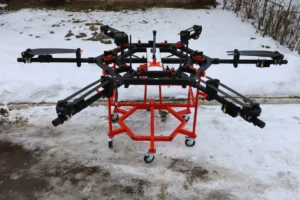
Sparta drone motherboard by Quantum Systems
Last week, industry participants, unit commanders, and defence tech experts and observers discussed the following:
- Serial production of a cruise missile with a 1,000 kg warhead and a range of 3,000 km has begun in Ukraine;
- Every brigade of the Armed Forces of Ukraine (AFU) will soon have a combat UGV company;
- Fighters of the Signum battalion shot down five Shaheds within an hour;
- Quantum Systems is developing a mothership drone, Sparta, in Ukraine, capable of reconnaissance and carrying FPV drones over distances of up to 200 km.
More on this and other topics in Dorozvidka #21.
Ministry of Defence codifies nine new EW systems
In July 2025, the Ministry of Defence of Ukraine approved for service in the Defence Forces nine new electronic warfare (EW) and electronic intelligence (ELINT) systems. Ninety percent of them are produced by Ukraine’s defence industry.
In the first seven months of 2025 alone, the ministry has approved nearly 80 EW/ELINT systems, compared with more than 150 last year. Almost all are Ukrainian-made.
Serial production of the Flamingo missile begins in Ukraine
Ukrainian Associated Press photojournalist Efrem Lukatsky published on Facebook photos of Ukraine’s Flamingo missile, claiming it is already in serial production. Its range exceeds 3,000 km.
He added that the pictures were taken on 14 August at the workshops of Ukrainian company Fire Point, which manufactures the missiles.

At IDEX-2025 in February, Milanion presented the FP-5 model and disclosed its specifications:
- Range: 3,000 km
- Time in air: 4+ hours
- Maximum speed: 950 km/h
- Cruise speed: 850–900 km/h
- Wingspan: 6 m
- Maximum take-off weight: 6 tonnes
- Warhead weight: 1 tonne
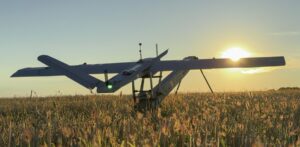
German Quantum Systems develops Sparta mothership drone in Ukraine
European defence tech giant Quantum Systems is developing the Sparta drone, capable of carrying multiple FPV drones. In an interview with German outlet Hartpunkt, company representatives confirmed the project is being developed directly in Ukraine.

Serial production is planned to start by late 2025. According to Quantum Systems, Sparta is configured for modular payloads — ranging from drones to sensor systems. It can thus serve both as a mothership and a reconnaissance platform.
The design resembles classical gliders, with V-shaped tail fins and a rear-mounted electric pusher propeller. Unlike other Quantum drones, Sparta launches via catapult and lands conventionally rather than by parachute.
The prototype’s endurance is 6–8 hours, with an operating radius of up to 200 km. Its maximum take-off weight is 23 kg, of which around 8 kg can be payload. The production version may feature different specifications.
Signum battalion commander on fibre-optic drones and Shahed interceptors
Ukrainska Pravda published an interview with “Sova,” commander of Ukraine’s leading UAV battalion Signum.
Signum was the first unit to document the use of FPVs as kamikaze drones in the war, one of the first to systematically down Russian fixed-wing reconnaissance drones, and now one of the few to independently learn how to shoot down Shaheds with interceptor drones.

Signum fighters shot down their first Shahed in mid-July, using a Ukrainian-made drone provided by volunteer Serhiy Sternenko. The battalion received 20 of these interceptors. Since then, demand has surged — “Sova” says they recently set a record of five Shaheds downed in one hour. The Russians, however, now avoid Signum’s area with Shaheds and reconnaissance UAVs.
Since spring 2025, the battalion has also been actively using fibre-optic drones, with 80% of their kills targeting optics. Signum sources these drones from two producers. “There are plenty of manufacturers, but not all meet the price–quality balance. Some of those supplying the state shouldn’t be allowed near production. But we’re satisfied with the ones we work with,” Sova said.
Every AFU brigade to form ground drone companies
On 17 August, the General Staff of the AFU reported a working meeting chaired by Chief of the General Staff Maj. Gen. Andriy Hnatov, dedicated to the deployment and scaling of unmanned ground vehicles (UGVs).
Reports indicated that UGVs are currently used mainly for logistics. In July, cargo delivered to frontline positions by ground robots increased by more than 80% compared to June. Given the growing depth of strikes and the rising number of enemy UAVs, the logistics role of UGVs will only expand.

The General Staff set the goal of creating ground drone companies in every combat brigade. Their tasks will include logistics, fire missions, mining, and casualty evacuation.
How the Nemesis regiment was built — and why drone makers value it
Anatoliy Merkotun, commander of the 412th separate Nemesis UAV regiment, gave an interview to Ukrinform.
He explained the regiment’s name came from its original heavy bomber drone, Nemesis, capable of carrying payloads of 10+ kg over 30 km. The regiment has since grown significantly and now includes aerial reconnaissance components, FPVs, UGVs, and even a naval division with unmanned surface vessels.
Merkotun argues every defence unit should have its own R&D centre to constantly adapt systems and respond to rapidly changing UAV technologies. “New tools, new comms, new video… you have to monitor and implement them. As practice shows, what flies on a test range doesn’t always fly in combat,” he said.
He also noted manufacturers highly value Nemesis because its fighters provide fast feedback. Within days of receiving new systems, they report back from combat use. “And if there are issues, it’s not ‘this doesn’t work, take it back.’ Our engineers say: look, it doesn’t work because you need this, this, and that — fix it, send it back, we’ll test again. That’s how really smart, often ingenious solutions are born, frequently much cheaper than foreign analogues,” said Merkotun.
Reading now
1

Ukrainian SkyFall’s drone wins at Pentagon’s Drone Dominance selection
2
Black Forest Systems raises $400,000. Here’s what drones the startup is building
3
Sting interceptor by Wild Hornets downs costly Russian Granat-4 reconnaissance drone
4
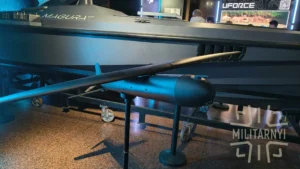
UForce unveils Bucha middle-strike drone with a 200 km range
5
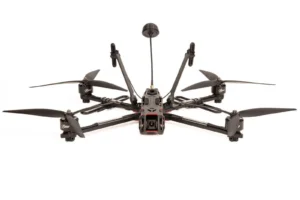
The F10 drone becomes the second Ukrainian finalist in the Pentagon’s Drone Dominance Program
By submitting this form, you give Defender Media consent to the processing of personal data.
Надсилаючи цю форму, ви надаєте Defender Media згоду на обробку персональних даних.

Latest news
1
DPA to diversify drone and ammunition orders among multiple suppliers
2
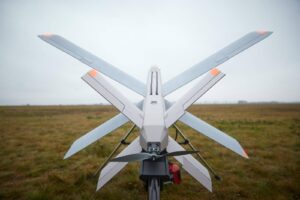
‘Ukrainska bavovna’ and Czech company Pavetra Aerospace to produce Shuhay UAV through joint venture
3
59th Assault Brigade downs Russian Ka-52 helicopter with General Cherry OPTIX FPV drone
4
Tencore develops evacuation module for TerMIT UGV
5