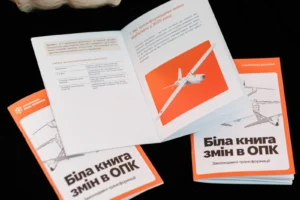
Verkhovna Rada committee supports key amendments to draft laws establishing Defence City legal regime
Resident relocation becomes voluntary, qualified income requirement reduced to 75%

CEO of the "Ukrainian Council of defence industry" Ihor Fedirko
The Verkhovna Rada Committee of Ukraine has endorsed key amendments to draft laws No. 13420 and No. 13420, which establish the Defence City legal regime. The amendments for the second reading take into account industry proposals and eliminate most of the risks present in the previous version, the public association “Ukrainian Council of Defence Industry” reports.
More than 50 companies from the Council reviewed the final draft. The concept did not receive any critical comments, and the association believes that the proposed framework meets the real needs of defence enterprises.
The main changes introduced for the second reading
- Separate section in the Law “On National Security of Ukraine”: A dedicated section for Defence City has been introduced, allowing for a clear definition of key concepts, the procedure for acquiring and losing resident status, and the mechanisms for implementing the regime. Responsibility for monitoring compliance with requirements and maintaining the register is assigned to the Ministry of Defence.
- Reduction of the threshold for qualified income: The required level has been reduced to 75%, with a separate threshold of 50% for aircraft manufacturing enterprises.
- Clear definition of qualified income: The law now specifies which types of income are considered qualified, including the sale of goods, the provision of services and performance of work; charitable funds used for production; income from participation in government contracts as a subcontractor or co-performer; and the supply of components to other Defence City residents for the fulfilment of government defence orders.
- Expanded list of defence goods: The regime now covers weapons; military and special equipment; unmanned aviation systems and unmanned aerial vehicles; ground robotic systems; unmanned water systems; electronic warfare (EW) and electronic reconnaissance (ERR) systems; means of countering technical intelligence; and weapons and ammunition.
- Creation of an automated Defence City Register: Instead of a simple list of residents, an automated register will provide reliable data protection, an orderly accounting system, and the ability to access information quickly.
- Possibility of simultaneous residency in Diia City and Defence City: It has been clarified that a company may be a resident of both regimes at the same time. However, in such cases, it will not be entitled to Defence City tax benefits. Other advantages, including confidentiality and relocation support, are preserved.
- Tax benefits without additional charges after exit: Residents are exempt from land tax, environmental tax, and real estate tax. The requirement to pay these taxes retrospectively for the period of residence in the regime upon exit has been removed. Income tax is not payable provided reinvestment occurs.
- Relocation is voluntary: The previous mandatory relocation requirement for obtaining resident status has been removed. State and local authorities are obliged to support enterprises in relocation.
The final version also preserves key provisions for additional protection of data concerning defence enterprises: the ability to designate any address as a location where communication with the company is ensured; restricted access to electronic registers containing information on Defence City residents; and the right not to publish financial and statistical reporting until the end of martial law.
It is also worth noting, that Defence City is a special legal regime proposed for implementation by 1 January 2036 through amendments to multiple codes and laws. Approximately 100 large companies, primarily in the production of weapons and equipment, are expected to become residents.
Reading now
1

Ukrainian SkyFall’s drone wins at Pentagon’s Drone Dominance selection
2
Black Forest Systems raises $400,000. Here’s what drones the startup is building
3
Sting interceptor by Wild Hornets downs costly Russian Granat-4 reconnaissance drone
4
UForce unveils Bucha middle-strike drone with a 200 km range
5
The F10 drone becomes the second Ukrainian finalist in the Pentagon’s Drone Dominance Program
By submitting this form, you give Defender Media consent to the processing of personal data.
Надсилаючи цю форму, ви надаєте Defender Media згоду на обробку персональних даних.

Latest news
1
DPA to diversify drone and ammunition orders among multiple suppliers
2
‘Ukrainska bavovna’ and Czech company Pavetra Aerospace to produce Shuhay UAV through joint venture
3
59th Assault Brigade downs Russian Ka-52 helicopter with General Cherry OPTIX FPV drone
4
Tencore develops evacuation module for TerMIT UGV
5