Black Mirror #20. Zhuravl, Omut, Granat-4, Shaheds-minelayers and other new developments in Russian miltech
Review of new Russian miltech developments for the second week of August
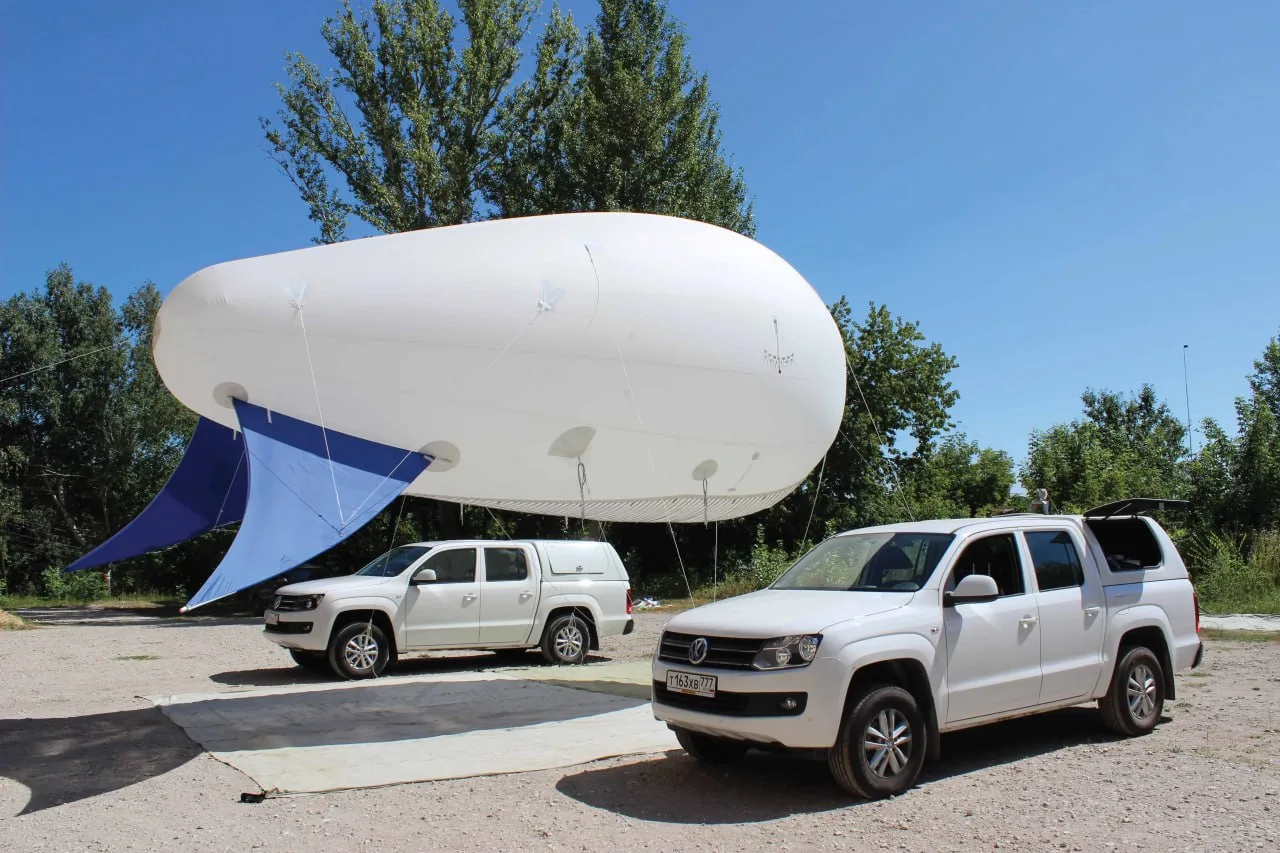
The Zhurav system from Moscow-based Radioelectronic and Optical Special Systems JSC / Source here and below: Internet
Another Shahed upgrade now enables them to carry mines – posing a threat to both military and civilian targets across Ukraine. In addition, this week the Russians unveiled the Granat-4 UAV, laser systems for countering drones, the Omut electronic warfare complex with upgraded antennas, several new navigation solutions, as well as new developments from ZALA and Kalashnikov.
Details in the new Black Mirror #20.
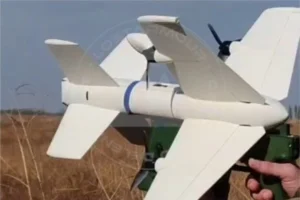
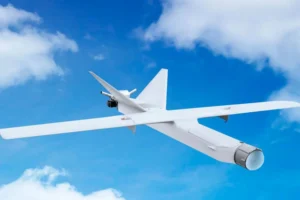
UAV Granat-4 with laser targeting
The Kalashnikov Concern has introduced the UAV Granat-4, equipped with a laser targeting module. This remote surveillance and data transmission complex is designed for round-the-clock monitoring using video and thermal imaging equipment at a distance of up to 70 km. It provides laser guidance for high-precision ammunition equipped with a passive laser guidance head.
Granat-4 can operate at altitudes from 500 to 2000 meters and has a targeting range of up to 3 km, which allows for accurate targeting of fire weapons. A team of six specialists is required to control the drone. The UAV is launched using a catapult and takes 15 minutes to launch, which ensures efficiency and mobility in combat conditions.
Laser systems for intercepting drones
Russian mobile anti-drone groups have begun using laser systems to intercept Ukrainian kamikaze drones. The video may be the first to show the moment of intercepting a Ukrainian FP-1 kamikaze drone using a laser system. From a distance of 2-2.5 kilometres, the Russians burned the drone in ten seconds. This time was enough for a hole to form in the drone’s tank, and it exploded.
Unmanned road roller
The Russians tested a prototype of the first unmanned road roller developed by Natsproektstroy and GLONASS.
The tests were conducted in the Perm Region, where they tested the basic functions of the high-precision auto-driving system.
The roller is controlled automatically using a tablet, which allows for precise adjustment of the trajectory and speed of work. This reduces the operator’s workload and the risk of errors. In the future, the system can control several vehicles simultaneously.
Shaheds became minelayers
Shaheds can now carry mine cassettes under their wings and remotely mine the enemy’s supply routes. In this way, it is possible to mine railways, junction stations, territories of training grounds and defence factories. Given the range (over 1000 km), it is possible to do this on almost the entire territory of Ukraine.
Zhuravl system in the sky
A new Zhuravl system was presented at the exhibition in Skolkovo. It is designed for perimeter control with UAVs at night.
Main characteristics:
- target detection range at night – up to 20 km, cars – up to 8 km, camouflaged objects – up to 2.5 km;
- system weight – 7.2 kg;
- dimensions – 380x310x380 mm.
The system was developed by Moscow JSC Radioelectronic and Optical Special Systems, which is also engaged in the development of mobile control points, various surveillance systems and aerostats that can carry similar systems.
A radio navigation system without satellites and regular mobile networks
The ZALA company presented the ZALA Geokosmos communication and navigation system at the international forum Unmanned Systems: Technologies of the Future in Moscow. The development ensures the reliable operation of aviation systems even in the conditions of complete absence or active suppression of traditional communication and navigation channels.
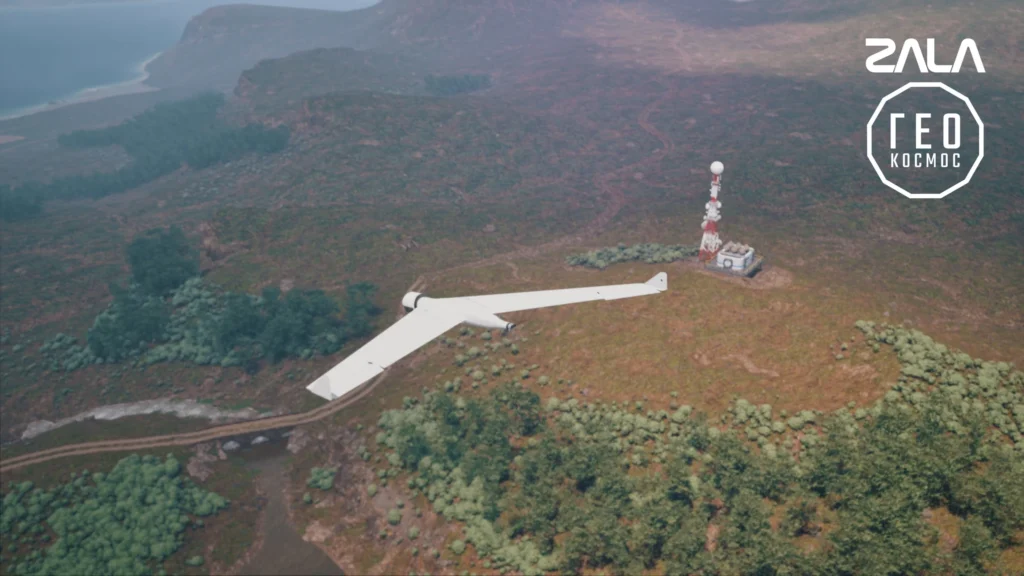
The system includes ground-based software-defined communication complexes and onboard equipment that form its own distributed and secure network. The system operates in a wide frequency range, which ensures stable, secure communication and high data transfer speed. Each component of the deployed system is a signal repeater for others, which increases the coverage area of communication and navigation, and also increases the reliability of the system.
Saturation with ZALA Geokosmos complexes will allow to promptly equip the power structures, UAV operators and critical infrastructure enterprises with a domestic communication and navigation system that does not depend on external factors.
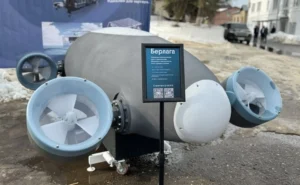
Electronic warfare Omut
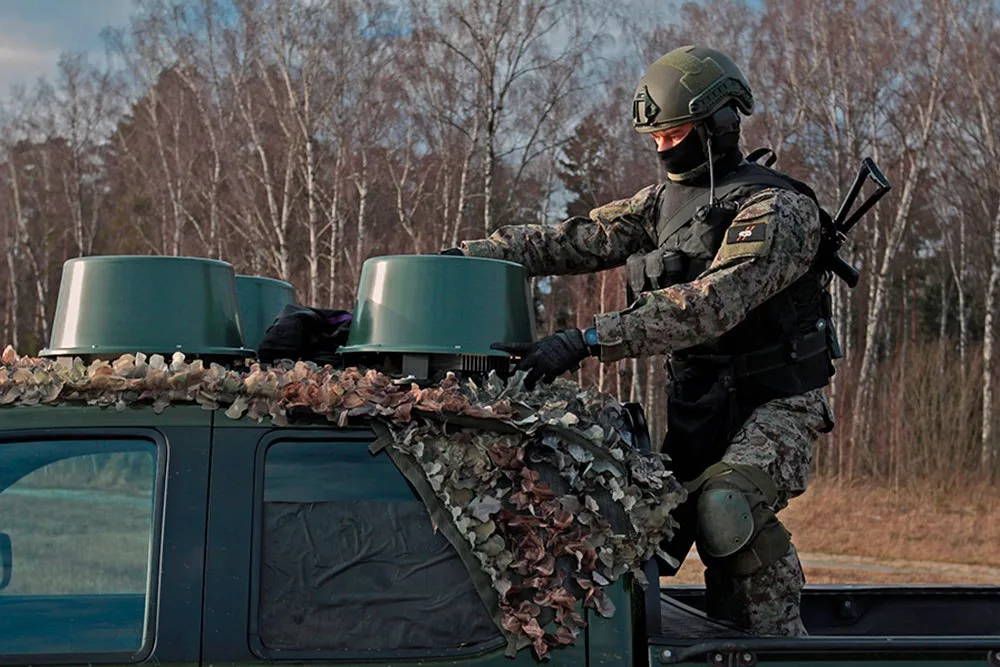
The Russian modernised EW complex Omut has an effective range against UAVs of up to 400 meters. For the updated complexes, the manufacturers chose new antennas (probably clover-type), the indicators of which are improved by 20%, and provided a circular directional pattern to cover the entire azimuthal zone of 360 degrees.
Sekira 15
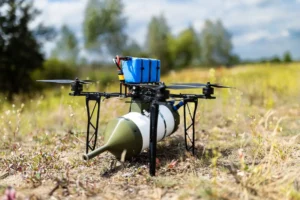
Sekira 15 is a drone used for food delivery, mining, dropping bombs (TM62, POM2 and others), and hitting targets as “kamikaze”. It can also be used as a repeater.
The flight time without a load is up to 50 minutes, the maximum flight range with a load of 10 kg is 15 km, the maximum payload is 12 kg, the optimal – 10 kg, the flight speed is up to 140 km/h, and the dimensions are 600×600×116 mm. In addition, the drone is equipped with equipment that allows operators to be protected – remote sets of antennas and repeaters.
Resistance to electronic warfare is achieved through a fibre-optic cable for transmitting control and video signals and operation at non-standard frequencies using FHSS (Frequency Hopping Spectrum Spreading).
Reading now
1

Ukrainian SkyFall’s drone wins at Pentagon’s Drone Dominance selection
2
Black Forest Systems raises $400,000. Here’s what drones the startup is building
3
Sting interceptor by Wild Hornets downs costly Russian Granat-4 reconnaissance drone
4
UForce unveils Bucha middle-strike drone with a 200 km range
5
The F10 drone becomes the second Ukrainian finalist in the Pentagon’s Drone Dominance Program
By submitting this form, you give Defender Media consent to the processing of personal data.
Надсилаючи цю форму, ви надаєте Defender Media згоду на обробку персональних даних.

Latest news
1
DPA to diversify drone and ammunition orders among multiple suppliers
2
‘Ukrainska bavovna’ and Czech company Pavetra Aerospace to produce Shuhay UAV through joint venture
3
59th Assault Brigade downs Russian Ka-52 helicopter with General Cherry OPTIX FPV drone
4
Tencore develops evacuation module for TerMIT UGV
5