Dorozvidka #14: Mykhalko, Zelenskyy, Ukrainian glide bombs, weapons for Katran, and EW/ELINT domestic market overview
A weekly roundup of the most compelling media stories and news that slipped under Defender Media’s radar

Image Credits: TFUA
This week, Ukraine’s defence tech ecosystem watched closely as controversy erupted around comments by MP Oleksii Honcharenko concerning Kateryna Mykhalko, Executive Director of “Ukraine’s Tech Forces”. The industry rallied almost unanimously in support of one of its most prominent representatives, with Mykhalko responding in an interview.
On the plus side – Ukraine conducted its first tests of domestically produced glide bombs, confirmed combat use of the “Peklo” rocket drone, and armed the Katran naval drone with weapons boasting a 100 km range. More on this in Dorozvidka #14.
Kateryna Mykhalko on the Honcharenko scandal and arms exports
On 26 June, MP Oleksii Honcharenko posted on Facebook about 24-year-old Kateryna Mykhalko, Executive Director of the private arms manufacturers’ association “Ukraine’s Tech Forces” (UTF). The MP incorrectly claimed that UTF handles arms exports and questioned how someone so young could hold such a position.
The post triggered a wave of support for Mykhalko from the defence tech community and beyond. Two examples: a response from Yaroslav Azhniuk, founder of Odd Systems and Fourth Law, and a post by entrepreneur and investor Denys Dovhopolyi. In response to criticism from Honcharenko and several Telegram channels, opinion leaders launched a social media campaign sharing achievements they made by the age of 24.
Forbes Ukraine followed up with an interview with Mykhalko, where she outlined UTF’s real work, explained how her civilian background contributes to defence, and discussed the regulatory barriers faced by Ukraine’s defence tech industry.
“Peklo” rocket drones already in combat use
Russian Telegram channels have helped verify the first combat use of Ukraine’s “Peklo” jet-powered drones, showing video footage of wreckage after an attack on a road crossing in Luhansk region.
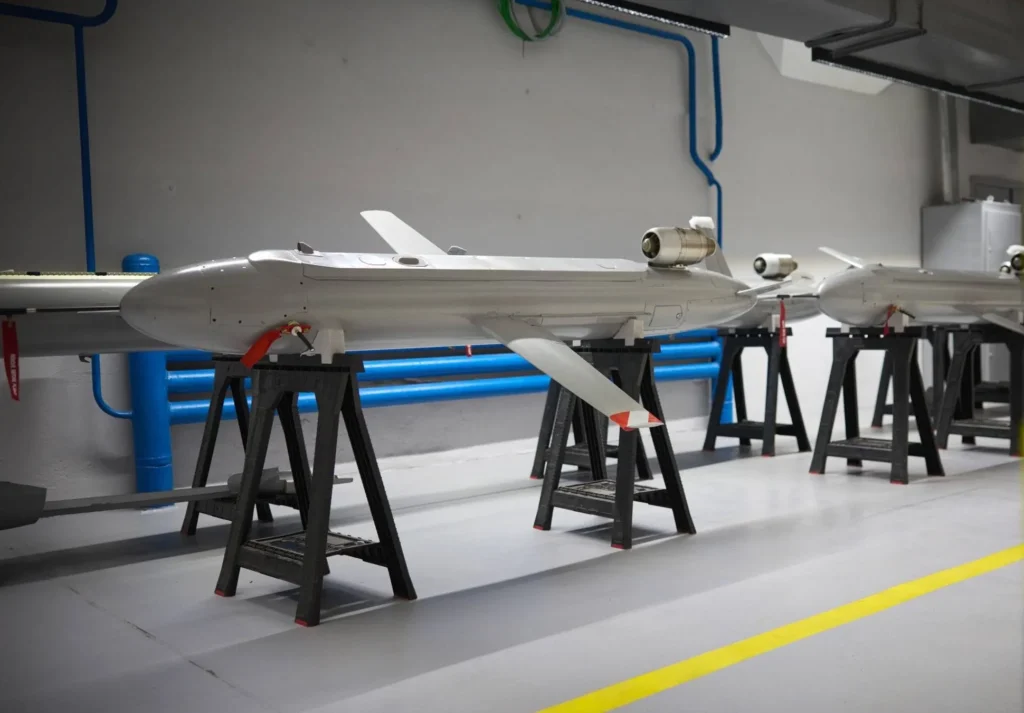
Developed by the state-owned Ukroboronprom and unveiled in December 2024, “Peklo” is effectively a small cruise missile powered by a jet engine, capable of speeds up to 700 km/h and ranges of up to 700 km.
Ukraine tests domestically produced glide bomb (KAB)
Defence Express published footage of test drops of Ukrainian-made precision-guided aerial bombs, along with commentary from the designers at KB Medoid. The company is working on a Ukrainian version of Russia’s UMPC glide bomb kit (known as a KAB). Medoid’s kit, designed to convert unguided bombs into glide munitions, is now undergoing field tests.
The footage shows a Ukrainian Air Force Su-24 bomber releasing the bomb in level flight. According to the designers, the results were promising in terms of range, release mechanics, and glide characteristics. The bomb currently achieves a 60 km range, with plans to increase this to 80 km. However, the team says they lack funding to speed up development and further trials.
Katran naval drone now armed with 100 km-range strike capability
Militarnyi spoke with “The Ninth”, a GUR MO special operations officer from the “Black Sea Legion”, about naval operations and the use of Katran sea drones.
Katran is a Ukrainian maritime drone capable of autonomous target acquisition and strike. It has a maximum range of 3,000 km, can remain at sea for up to six days, and uses AI for precision targeting.
According to “The Ninth”, Katran is now equipped with weapons capable of hitting targets up to 100 km away.
Zelenskyy: Ukraine capable of producing up to 8 million drones annually
At a NATO summit in The Hague, Ukrainian President Volodymyr Zelenskyy urged allied nations to invest in Ukrainian defence companies and create joint ventures to scale arms production.
He noted that Ukraine’s defence-industrial base has surpassed $35 billion in potential and currently offers around 1,000 product types — from artillery and armoured vehicles to drones and missiles.
“Yet only about 45% of our production capacity is being used. We could already produce 8 million drones per year, but current funding falls short,” said Zelenskyy.
He added that Ukraine is open to all forms of cooperation in defence, including sharing domestic expertise and tech with its closest allies.
“We must lead the arms race in unmanned systems — both strike drones and interceptors — as well as in conventional weaponry,” Zelenskyy said.
How Ukraine’s electronic warfare (EW/ESM) market is evolving
Forbes Ukraine published an article on the state of Ukraine’s electronic warfare and signals intelligence (EW/ESM) sector and the challenges facing domestic manufacturers.
The number of companies working in EW/ESM has increased 40-fold since 2022, with 90 new entrants in just the first half of 2025.
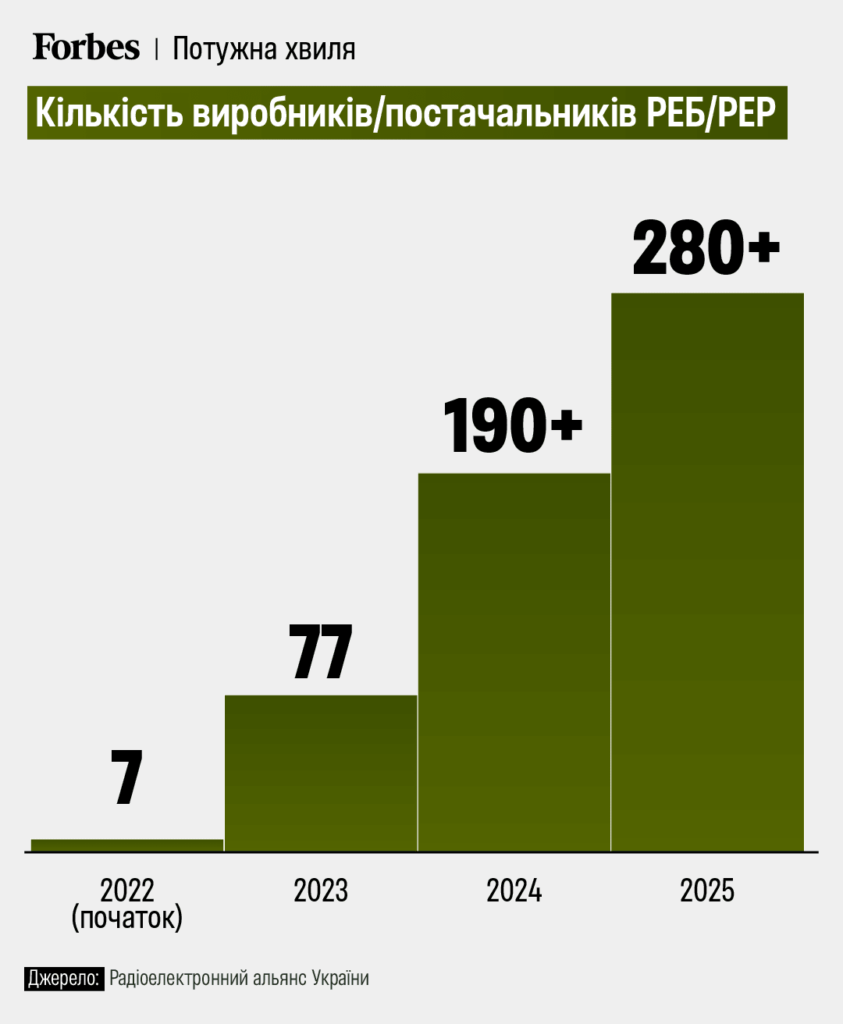
However, few have secured government contracts. In 2024, the State Acquisition Agency signed EW contracts worth ₴8.5 billion; in H1 2025, the figure reached ₴8.7 billion.
Reading now
1

Ukrainian SkyFall’s drone wins at Pentagon’s Drone Dominance selection
2
Black Forest Systems raises $400,000. Here’s what drones the startup is building
3
Sting interceptor by Wild Hornets downs costly Russian Granat-4 reconnaissance drone
4
UForce unveils Bucha middle-strike drone with a 200 km range
5
The F10 drone becomes the second Ukrainian finalist in the Pentagon’s Drone Dominance Program
By submitting this form, you give Defender Media consent to the processing of personal data.
Надсилаючи цю форму, ви надаєте Defender Media згоду на обробку персональних даних.

Latest news
1
DPA to diversify drone and ammunition orders among multiple suppliers
2
‘Ukrainska bavovna’ and Czech company Pavetra Aerospace to produce Shuhay UAV through joint venture
3
59th Assault Brigade downs Russian Ka-52 helicopter with General Cherry OPTIX FPV drone
4

Tencore develops evacuation module for TerMIT UGV
5