Dorozvidka #11: Ukrainian ballistics, M-Fly, drone shortages, and what to do about Shaheds
Overview of defence tech news and articles from the past week
Facebook-сторінка Сергія Варакіна
Last week, Ukrainian media and the blogosphere were abuzz with discussions about Shahed drones and the means to counter them. Telegram channels, citing Air Force communications chief Yurii Ihnat, circulated claims that Russia would soon be launching up to 1,000 drones per night. Later, the Air Force denied that Colonel Ihnat had made any such statements. However, it is true that Russia is ramping up production of kamikaze drones and improving their capabilities. Several detailed articles on the topic appeared in the media over the past week.
Also in this issue of Dorozvidka:
- Updates on Ukraine’s ballistic missile production programme
- The story of the M-Fly startup
- Ukrainian and international media discuss drone shortages in the Defence Forces
Valentyn Badrak: The Ukrainian Armed Forces have successfully tested a new ballistic missile
Valentyn Badrak, Director of the Centre for Army Research, announced on Espreso TV that in mid-May, Ukrainian forces conducted a successful combat test of a new ballistic missile, which destroyed a Russian command post at a distance of approximately 300 km.

According to Badrak, the missile’s warhead weighs over 400 kg. Following the successful test, plans are in place to launch serial production of Ukrainian ballistic missiles.
BBC: On the shortage of drones in Ukraine’s military
The BBC spoke with dozens of Ukrainian Armed Forces officers about the supply of FPV drones. All confirmed that the Defence Forces are indeed experiencing a shortage of kamikaze drones, which are critical for holding the front line. The article supports growing expert concerns that this spring marked the first time Ukraine fell behind Russia in terms of both the quantity and quality of drones.
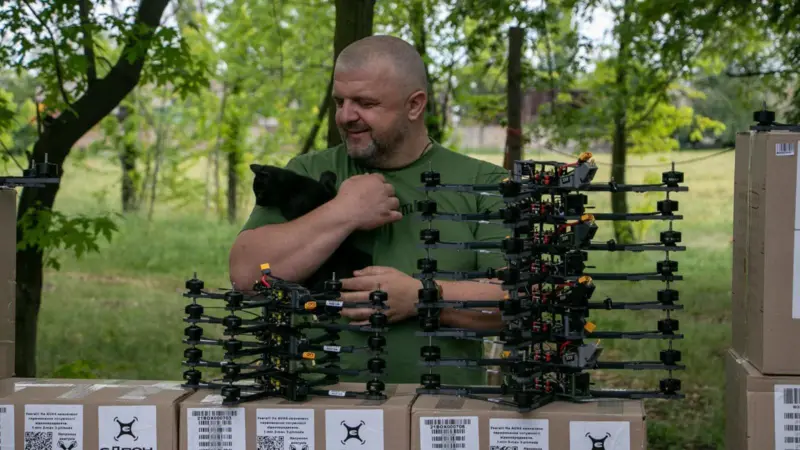
An even bigger problem, according to military personnel, is the quality of the FPV drones provided by the government. Serhii Varakin, commander of the drone systems battalion of the 58th Motorised Infantry Brigade, said he receives “a great many” subpar drones. His unit’s fighters are forced to spend their own money to buy components so that the drones can operate in their sector of the front. Read the full article.
Politico: On the drone standoff between Ukraine and Russia
Politico journalists also explored the alarming trends in the drone arms race. Spokesperson for Ukraine’s Foreign Intelligence Service, Oleh Aleksandrov, told the outlet that Russia is catching up with Ukraine in drone production thanks to greater financial resources, facilities deep in the rear, and above all, assistance from China.
“Chinese manufacturers supply them with equipment, electronics, navigation systems, optical and telemetry units, engines, microchips, processor modules, antenna array systems, and control boards. They use so-called front companies, change their names, and do everything possible to evade export controls and avoid sanctions,” he said.
Mind on M-Fly
The publication Mind ran a feature on the Ukrainian defence startup M-Fly, which recently raised $1.3 million in investment. The project is developing a laser guidance system that enables drones to strike targets even under heavy electronic warfare interference. In the article, the founders share how the idea was born, what the team is working on, the engineering challenges they’ve faced, who invested in the product, and what the company envisions for its future after victory. Full article.

Ukraine will not receive US APKWS air defence missiles
The US has redirected 20,000 APKWS laser-guided air defence missiles—originally intended for Ukraine—to its Air Force units in the Middle East. President Volodymyr Zelensky reported this in an interview with ABC News. According to Zelensky, the missiles were intended to be used against Shaheds.
More on Shaheds
In addition to the speculation about potential Shahed attack volumes and the subsequent Air Force denials, several more in-depth pieces appeared in Ukrainian media. The publication Oboronka released a long-read analysing the growth of Russian drone production, changes in their manufacturing processes and deployment tactics, and the origins of the components used in these kamikaze drones—which continue to pose a major challenge to Ukraine.
The tech media outlet DOU also published a piece examining how Shaheds are controlled, the role of SIM cards, how quickly these UAVs are upgraded, and whether they really use artificial intelligence. Experts from Aerorozvidka, including the organisation’s head Yaroslav Honchar and drone warfare specialist Yaroslav Nyzhnyk, contributed to the investigation.
Reading now
1

Ukrainian SkyFall’s drone wins at Pentagon’s Drone Dominance selection
2
Black Forest Systems raises $400,000. Here’s what drones the startup is building
3
Sting interceptor by Wild Hornets downs costly Russian Granat-4 reconnaissance drone
4
UForce unveils Bucha middle-strike drone with a 200 km range
5
The F10 drone becomes the second Ukrainian finalist in the Pentagon’s Drone Dominance Program
By submitting this form, you give Defender Media consent to the processing of personal data.
Надсилаючи цю форму, ви надаєте Defender Media згоду на обробку персональних даних.

Latest news
1
DPA to diversify drone and ammunition orders among multiple suppliers
2
‘Ukrainska bavovna’ and Czech company Pavetra Aerospace to produce Shuhay UAV through joint venture
3
59th Assault Brigade downs Russian Ka-52 helicopter with General Cherry OPTIX FPV drone
4
Tencore develops evacuation module for TerMIT UGV
5