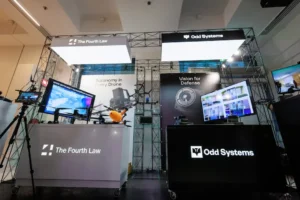
Ukrainian team DONS among winners of NATO hackathon to counter fibre-optic FPV drones
The innovation must detect drones at a distance of up to 500 metres and cost no more than €100,000
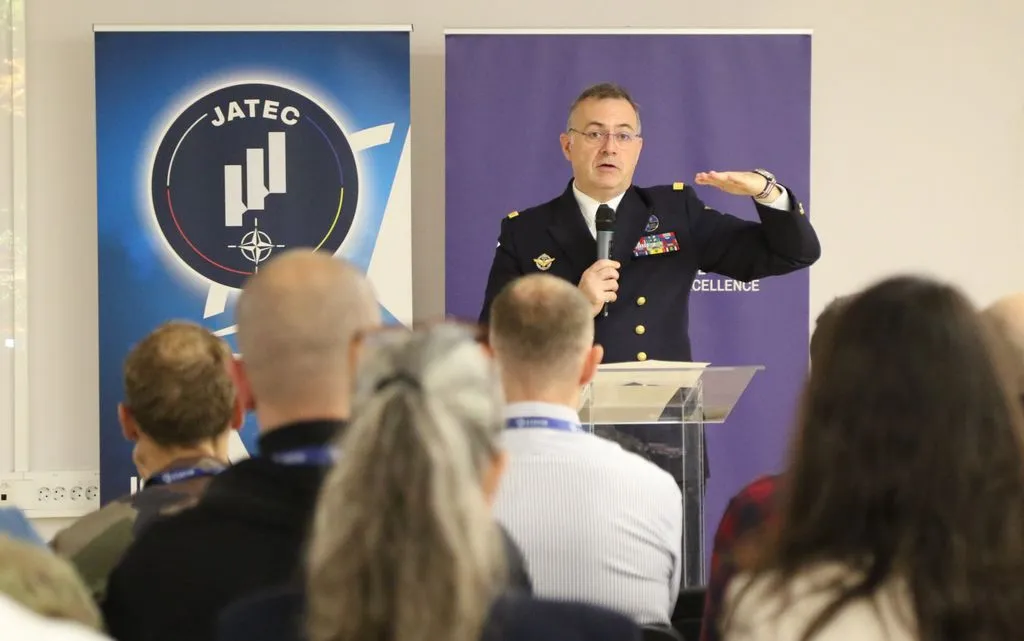
Photo provided by Ministry of Defence
The Ukrainian project DONS has secured third place in the NATO Innovation Challenge 2025-II — an international competition focused on countering fibre-optic FPV drones. The winners will now have the opportunity to further develop their solutions in collaboration with NATO’s structures, Ukraine’s Ministry of Defence reports.
The final stage of the hackathon took place in Tallinn, Estonia, with 11 teams from eight countries — Ukraine, Denmark, Italy, Canada, Lithuania, Poland, the United States and France — participating. The jury comprised experts from the Ministry of Defence of Ukraine, the Armed Forces of Ukraine, NATO, and the Joint NATO-Ukraine Analysis, Training and Education Centre (JATEC).
Challenge focus areas and technical criteria
The competition targeted three key functional areas:
- Detection and prioritisation: 360-degree scanning systems using radar, optical, acoustic, thermal or hybrid technologies;
- Guidance and tracking: rapid and precise tracking of small, high-speed aerial targets;
- Neutralisation: both kinetic and non-kinetic defeat systems, including directed energy weapons, nets or smart munitions.
Participants were required to develop systems capable of detecting small drones at a range of up to 500 metres, with reliable performance in low-visibility and adverse weather conditions. Key criteria included modular design, total system weight not exceeding 100 kg, compatibility with NATO standards and open architecture, and a unit cost between €50,000 and €100,000.
About the winners
First place was awarded to KMB Telematics Inc. (USA), a company that develops advanced 3D point cloud radar systems for detecting stationary and hovering drones — threats that have become increasingly relevant during the war in Ukraine. KMB’s radar integrates artificial intelligence and can be fused with other sensors to enhance battlefield awareness, including the detection of dark swarms and stealth UAVs.
Sentradel (USA) took second place. The company specialises in next-generation autonomous defence systems designed to neutralise drone threats swiftly and cost-effectively. Founded by veterans of leading defence manufacturers and national agencies, Sentradel’s systems focus on ease of deployment, seamless integration, and performance in real combat environments — particularly for the protection of critical infrastructure.
Information about DONS, the Ukrainian project that placed third, has not yet been made public.
The NATO Innovation Challenge hackathon was organised by the Joint NATO–Ukraine Analysis, Training and Education Centre (JATEC) in cooperation with NATO Allied Command Transformation (ACT) and the NATO Cooperative Cyber Defence Centre of Excellence (CCDCOE). This year’s hackathon set a record for the number of applications submitted — 162 in total, including 42 from Ukrainian teams.
Reading now
1

Ukrainian SkyFall’s drone wins at Pentagon’s Drone Dominance selection
2
Black Forest Systems raises $400,000. Here’s what drones the startup is building
3
Sting interceptor by Wild Hornets downs costly Russian Granat-4 reconnaissance drone
4
UForce unveils Bucha middle-strike drone with a 200 km range
5
The F10 drone becomes the second Ukrainian finalist in the Pentagon’s Drone Dominance Program
By submitting this form, you give Defender Media consent to the processing of personal data.
Надсилаючи цю форму, ви надаєте Defender Media згоду на обробку персональних даних.

Latest news
1
DPA to diversify drone and ammunition orders among multiple suppliers
2
‘Ukrainska bavovna’ and Czech company Pavetra Aerospace to produce Shuhay UAV through joint venture
3
59th Assault Brigade downs Russian Ka-52 helicopter with General Cherry OPTIX FPV drone
4
Tencore develops evacuation module for TerMIT UGV
5