Black Mirror #13. AI-Eyed Shahed, Kuklovod, Archangel, LIS-A and other new products of Russian miltech
Review of innovations of the Russian military-industrial complex for the last week of June
Source: Internet
The Ukrainian Defence Forces have uncovered further evidence of upgrades to Russian Shahed/Geran kamikaze drones, which are becoming increasingly dangerous and mass-produced. At the same time, Russian forces are learning to counter UAVs, including preparations to test AI-powered turrets capable of autonomously detecting and destroying drones. Defender Media covers this in its weekly overview of Russian military tech innovations already deployed or undergoing trials for the war against Ukraine.
Also in Black Mirror #13: a fibre-optic drone control system, drone interceptors, a remote drone identification system, and the compact LYS-A radar, which can classify target types.
Turrets for shooting down drones with AI
The Russians are going to test the Ronin-2 turret equipped with artificial intelligence and created to destroy drones, in the war against Ukraine. Thanks to AI, Ronin-2 autonomously determines the target, guides it and fires. The anti-drone turret can recognise objects at a distance of up to 50 meters. They are also working on increasing the range. Currently, only manually controlled turrets are used in Russia.
Shaheds with AI and cameras
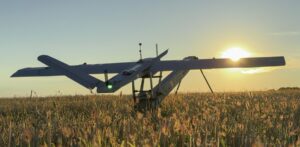
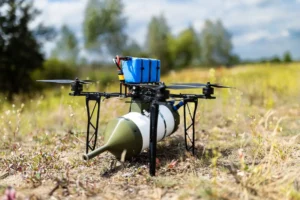
Ukraine’s Defence Intelligence has revealed details about a downed, upgraded Shahed drone in the Sumy region, suggesting that Russia and Iran are jointly developing enhanced versions of the kamikaze UAV.
The recovered Shahed contained an Nvidia Jetson Orin — a high-speed mini-computer designed for AI tasks and video processing — as well as an infrared camera. The system appears to be intended for processing footage and comparing it with pre-loaded models, allowing the drone to adjust its course or autonomously select targets during flight.

In addition, the upgraded Shahed is equipped with a radio modem and a subsystem for transmitting video, telemetry, and/or enabling swarm control. It also features an improved eight-channel version of the Nasir satellite navigation system.
“These developments indicate that the exchange of technologies between Iran and Russia is mutual. The outcomes of their cooperation could extend well beyond the Russia–Ukraine war, especially if Iran applies lessons from Russian innovations in its destabilising actions across the Middle East,” Ukraine’s Defence Intelligence stressed. “This once again underscores the urgent need for a united response from the civilised world against aggressor states.”
A system for controlling fibre-optic UAVs
Specialists from the Perm National Research Polytechnic University (PNDPU) have developed a fibre-optic drone control system called the Kuklovod, which increases the reliability of communication with the device at a distance of up to 25 km.

As part of the Kuklovod project, the authors created special software and a coil design that ensures smooth unwinding of the cable. It allows for more maneuverability at high speed when controlling drones from the first person.
Testing of drone interceptors
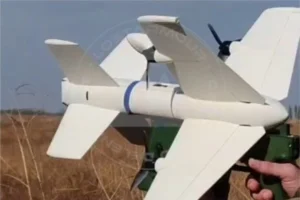
The Russian project Archangel tested the drone interceptor of the same name in the occupied Crimea.

The tests were carried out as a test drive of the communication equipment and guidance systems. They also measured the speed of movement through air defense posts with the deployment of installations on site and the compatibility of the drone with the operating air defense in stationary radars.
The tests showed that the introduction of such drones into the defense system does not require modification of the radar. Archangel is compatible with standard sky control systems, and the radar in conjunction with the UAV not only detects the target, but also guides the drone to its destruction.
Soon, meetings will be held in Moscow on the feasibility of including the Archangel in the air defense system, after which industrial production of drones is planned.
Remote identification system for UAVs
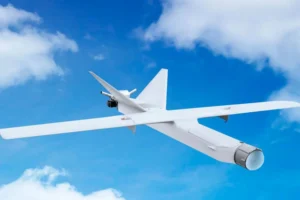
ZALA and Azimut have created a remote identification system for UAVs. It is designed for the safe integration of unmanned aircraft into the country’s general airspace and allows real-time monitoring of drone parameters.
The system was tested on the ZALA T-16 UAV, which during the flight transmitted its coordinates, speed, direction, as well as information about any deviations from the set route or potentially dangerous approaches to other objects, including infrastructure facilities and manned aircraft.
The new system provides for integration with platforms that provide access to up-to-date aeronautical and meteorological information.
Modification of Prince Vandal Novgorodsky
Now the fiber-optic FPV drone Prince Vandal Novgorodsky has received an automatic reporting system, which allows to save each flight of each drone on the server. The collected statistics allow to analyze the combat effectiveness of operators and units.

Since its first use, KVN has been constantly modernised – a version with a thermal imager has appeared, as well as a variant with an increased range of up to 23 kilometres. Many changes have also been made that allow to control not only the drone itself, but also the payload.
Compact radar has learned to recognise the type of targets
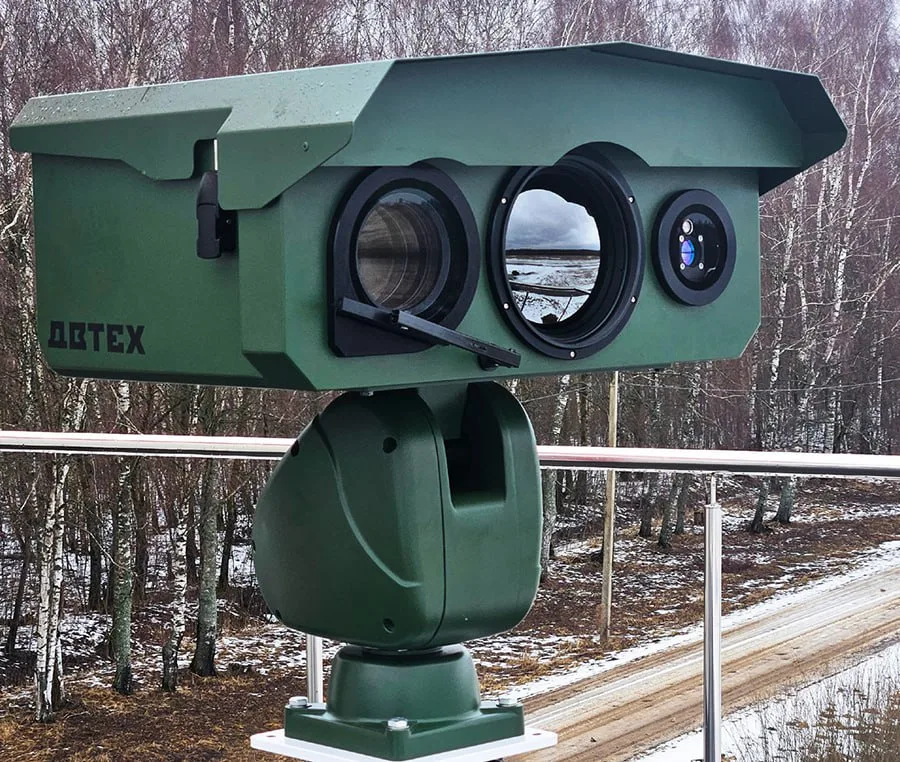
Based on the Lauri radar, the LIS-A radar-optical complex was created, which is now able to recognize the type of targets and assess the degree of their danger. This was achieved thanks to the implementation of the Sigma long-range telesurveillance system from DVTECH.
Sigma complements the capabilities of Lauri by performing target detection from video images, target type recognition, and filtering out misclassified objects – that is, it excludes accidental triggering on flocks of birds, clouds, etc.
Currently, the manufacturing company ELIARS is conducting tests and demonstrations at the test sites, and is also working on a version that can be installed on cars.
Reading now
1
Ukrainian SkyFall’s drone wins at Pentagon’s Drone Dominance selection
2
Black Forest Systems raises $400,000. Here’s what drones the startup is building
3
Sting interceptor by Wild Hornets downs costly Russian Granat-4 reconnaissance drone
4
UForce unveils Bucha middle-strike drone with a 200 km range
5
The F10 drone becomes the second Ukrainian finalist in the Pentagon’s Drone Dominance Program
By submitting this form, you give Defender Media consent to the processing of personal data.
Надсилаючи цю форму, ви надаєте Defender Media згоду на обробку персональних даних.

Latest news
1
DPA to diversify drone and ammunition orders among multiple suppliers
2
‘Ukrainska bavovna’ and Czech company Pavetra Aerospace to produce Shuhay UAV through joint venture
3
59th Assault Brigade downs Russian Ka-52 helicopter with General Cherry OPTIX FPV drone
4
Tencore develops evacuation module for TerMIT UGV
5