Dorozvidka #6: Magura V7 makes history, Aerobavovna and Nemesis vs Shaheds, Syrskyi and Khasan on drones
A weekly round-up of defence tech updates that flew under Defender’s radar
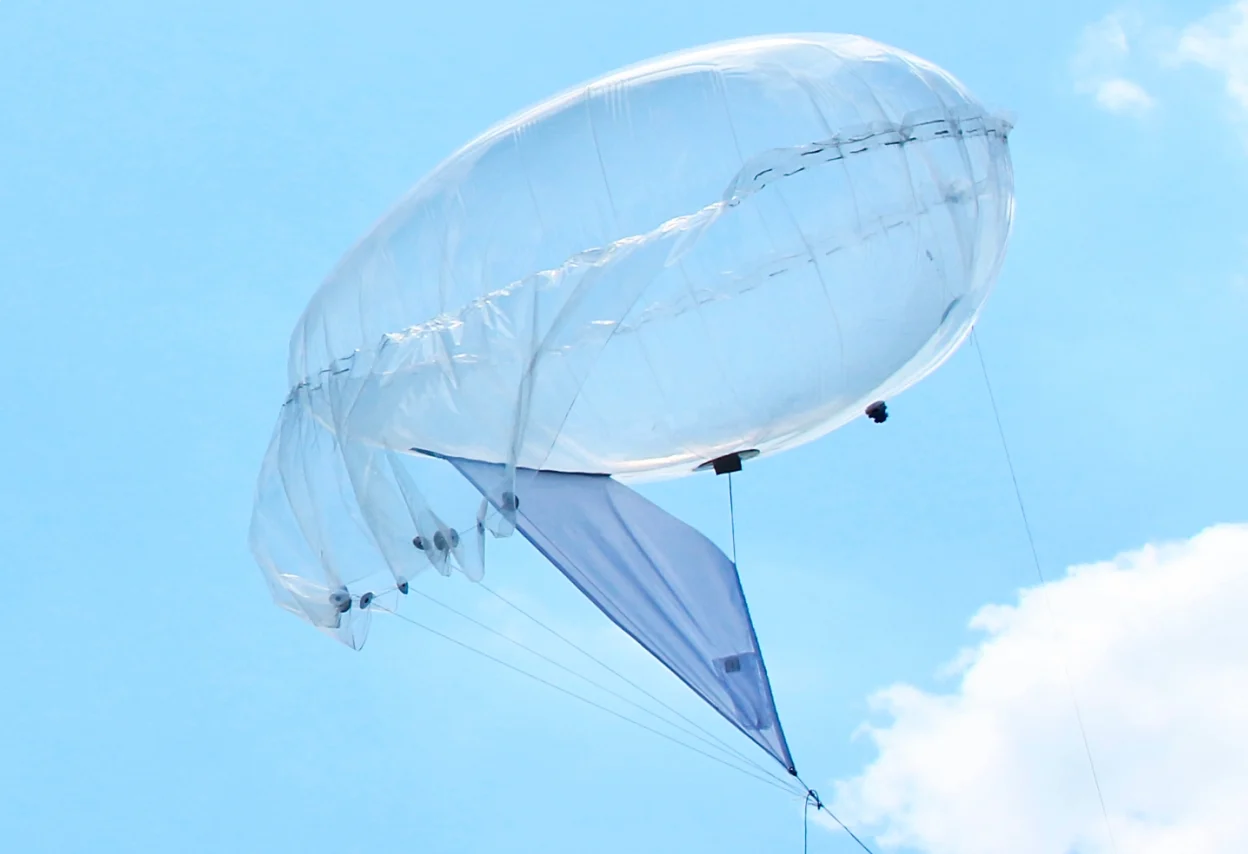
Image Credits: Aerobavovna
In “Dorozvidka” section, Defender publishes editorial backlog news from the past week, as well as notable pieces from Ukrainian and international media. While the editorial team generally focuses on the business side of defence tech during the week, today’s selection includes plenty of information directly related to the combat use of domestic defence innovations.
Dorozvidka #6 covers:
- What is known about the Ukrainian surface drone that shot down a fighter jet for the first time in history;
- How many ‘Shaheds’ and ‘Herbers’ the Nemesis regiment downed in two months;
- How Aerobavovna’s aerostats are conducting reconnaissance and extending the operational range of Ukrainian drones up to 100 km;
- How many new assets the Ministry of Defence codified in April;
- What will the presidential project “Drone Line” look like.
Magura V7’s triumphant debut
On May 2, the Ukrainian naval platform Magura shot down a Russian Su-30 fighter jet with a missile over the Black Sea, according to Ukraine’s Defence Intelligence (HUR). This marks the first-ever destruction of a combat aircraft by a surface drone.
The next day, HUR chief Kyrylo Budanov told The War Zone that three Magura V7 drones took part in the attack. These drones are an anti-aircraft version of the Magura V5 surface drone. According to Budanov, the drones attacked Russian fighter jets with AIM-9 Sidewinder short-range air-to-air missiles and shot down not one, but two Su-30s.
Budanov also stated that the American-made AIM-9 is not the only missile used on the Magura V7, but it is currently the most effective. He declined to provide further details.
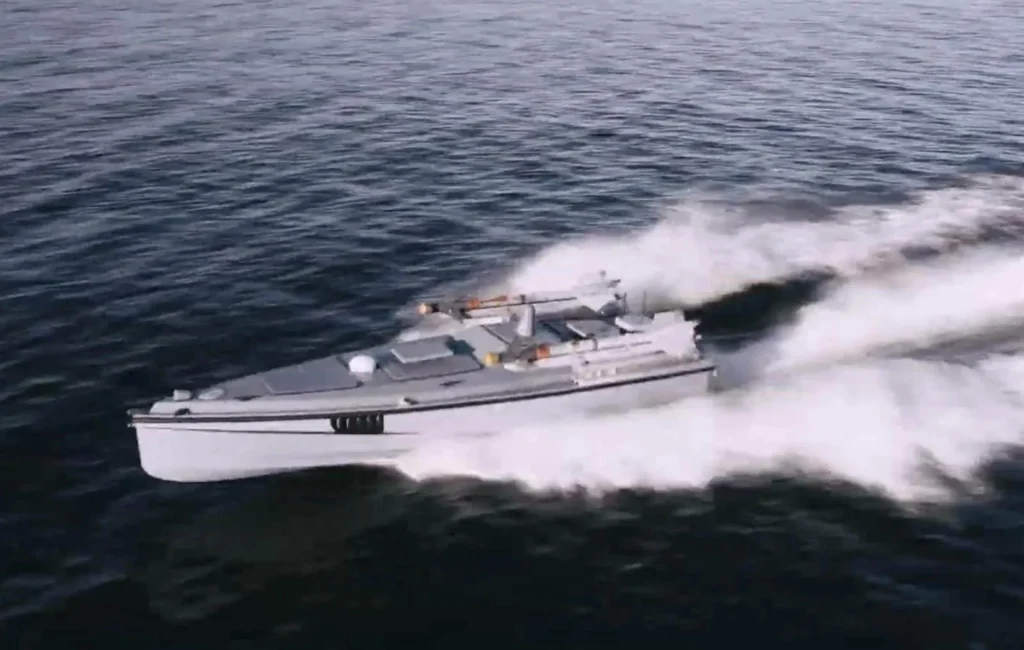
On May 4, the European outlet Naval News published the first image of the new Magura V7 platform with AIM-9 missiles.
The publication notes that the V7 is a scaled-up version of the Magura V5 kamikaze naval drone, which is typically used to ram enemy ships. The V7 measures approximately 8 meters in length (compared to 5.5 meters for the V5).
The Magura V7 has a hull design similar to that of the V5 but with a redesigned nose. Naval News writes that this feature likely improves seafaring capabilities, which is especially beneficial for winter operations. The drone also has visible communication antennas and sensors.
Magura surface drones are produced under HUR order. There is no official manufacturer information.
Over 120 new weapons codified by the Ukrainian Ministry of Defence in April
In April, the Ukrainian Ministry of Defence codified and approved over 120 new types of weaponry and equipment for use by the Defence Forces, more than 85% of which are domestically produced. Deputy Minister of Defence Valeriy Churkin announced this on May 2.
The April additions include UAV systems, munitions, electronic warfare systems, vehicles, communication equipment, and ground robotic systems. Churkin noted that over 40 fiber-optic drones have been approved since the beginning of the year. In total, more than 400 units of Ukrainian-made weapons and equipment have been codified in 2024 so far.
Aerostats for and against drones
IEEE Spectrum reports on how Ukraine is using 18th-century technology to lift drone relay systems into the air, extending UAV operating ranges by dozens of kilometers. Helium aerostats from the Ukrainian company Aerobavovna is tackling this task. In addition to maintaining communication with friendly drones, these balloons are already functioning on the eastern front as aerial reconnaissance platforms, enabling Ukrainian forces to detect enemy drones and their ground control stations from long distances.
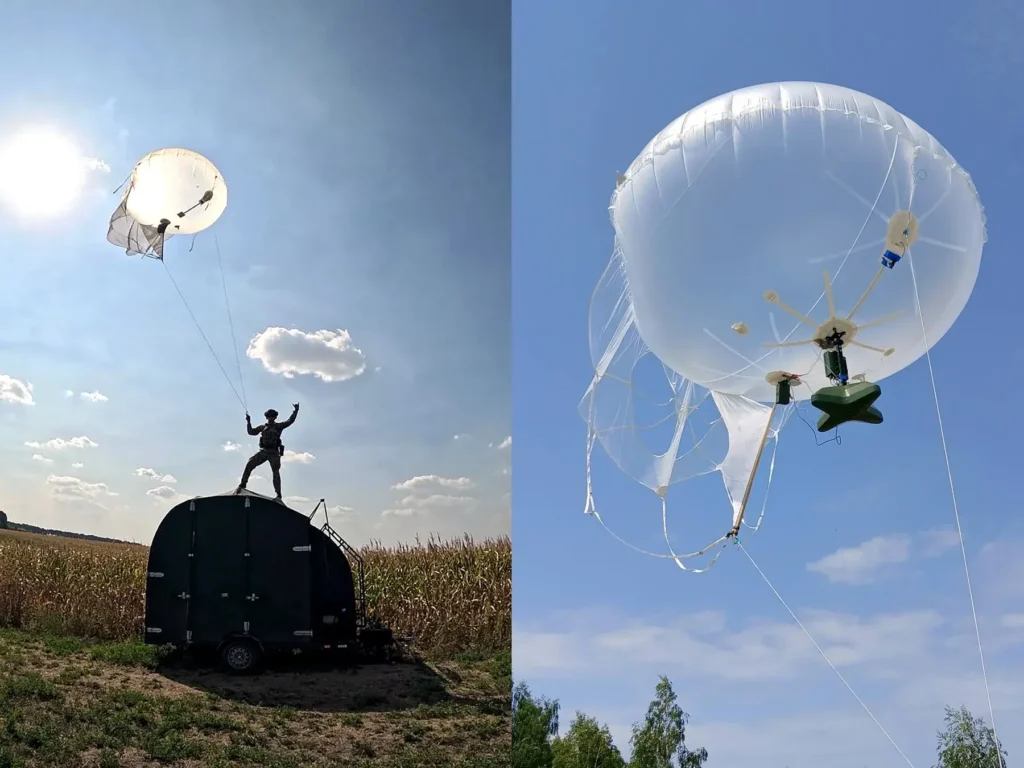
According to Aerobavovna co-founder Yuriy Vysoven, the aerostat platforms support stable connections up to 100 km between operators and allow for signal source detection within a 90 km radius. Aerobavovna is now partnering with another startup, Maxon Systems, on the next phase: equipping the aerostats with interceptor drones capable of shooting down Russian strike UAVs, including Shaheds. If tests go well, the first aerostats with interceptors could appear in Ukrainian skies by late 2025.
“Raroh” regiment commander on the ‘Drone Line’ and fiber-optic UAVs
The commander of the “Raroh” independent unmanned systems regiment, known by the callsign Khasan, appeared on a podcast hosted by well-known volunteer Serhii Sternenko, who survived an assassination attempt last week. Raroh is one of the units participating in the “Drone Line” project. In the interview, Khasan discussed various drone applications in modern warfare, the goals of the Drone Line initiative, the role of FPV drones on the front lines, fiber-optic drones, and more. He emphasized that Ukraine’s edge in this war lies in UAVs, robotics, and artificial intelligence.
Syrskyi on drone effectiveness in April
Commander-in-Chief of the Armed Forces of Ukraine, Oleksandr Syrskyi, reported that Ukrainian drones destroyed or damaged over 83,000 enemy targets in April—an 8% increase from March. Additionally, strike effectiveness rose by 5%, he wrote.

According to Syrskyi, drones are a top priority for the Ukrainian military because they enable troops to hold back the enemy and strike from a distance, preserving the lives and health of infantry soldiers.
He also emphasized that one of the main tasks for Ukrainian forces is to eliminate enemy drone operators and their command centers.
Nemesis regiment shot down 60 ‘Shaheds’ and ‘Herbers’ in two months
The Nemesis unmanned systems regiment reported that in March and April, it downed 60 kamikaze drones of the “Shahed” and “Herbera” types using its own experimental interceptor drones. The development cost of one interceptor is reportedly just $5,000.
For comparison, a single Shahed costs $150,000, and a Herber $10,000. Meanwhile, these drones are often countered with air defence missiles that cost $1 million or more.
Reading now
1

Ukrainian SkyFall’s drone wins at Pentagon’s Drone Dominance selection
2
Black Forest Systems raises $400,000. Here’s what drones the startup is building
3
Sting interceptor by Wild Hornets downs costly Russian Granat-4 reconnaissance drone
4
UForce unveils Bucha middle-strike drone with a 200 km range
5
The F10 drone becomes the second Ukrainian finalist in the Pentagon’s Drone Dominance Program
By submitting this form, you give Defender Media consent to the processing of personal data.
Надсилаючи цю форму, ви надаєте Defender Media згоду на обробку персональних даних.

Latest news
1
DPA to diversify drone and ammunition orders among multiple suppliers
2
‘Ukrainska bavovna’ and Czech company Pavetra Aerospace to produce Shuhay UAV through joint venture
3
59th Assault Brigade downs Russian Ka-52 helicopter with General Cherry OPTIX FPV drone
4
Tencore develops evacuation module for TerMIT UGV
5