Made in Germany, tested in Ukraine: what Stark OWE-V Virtus is and how it will work in combat
Defender spoke with Maksym Cherkis, Stark’s Chief Operating Officer in Ukraine
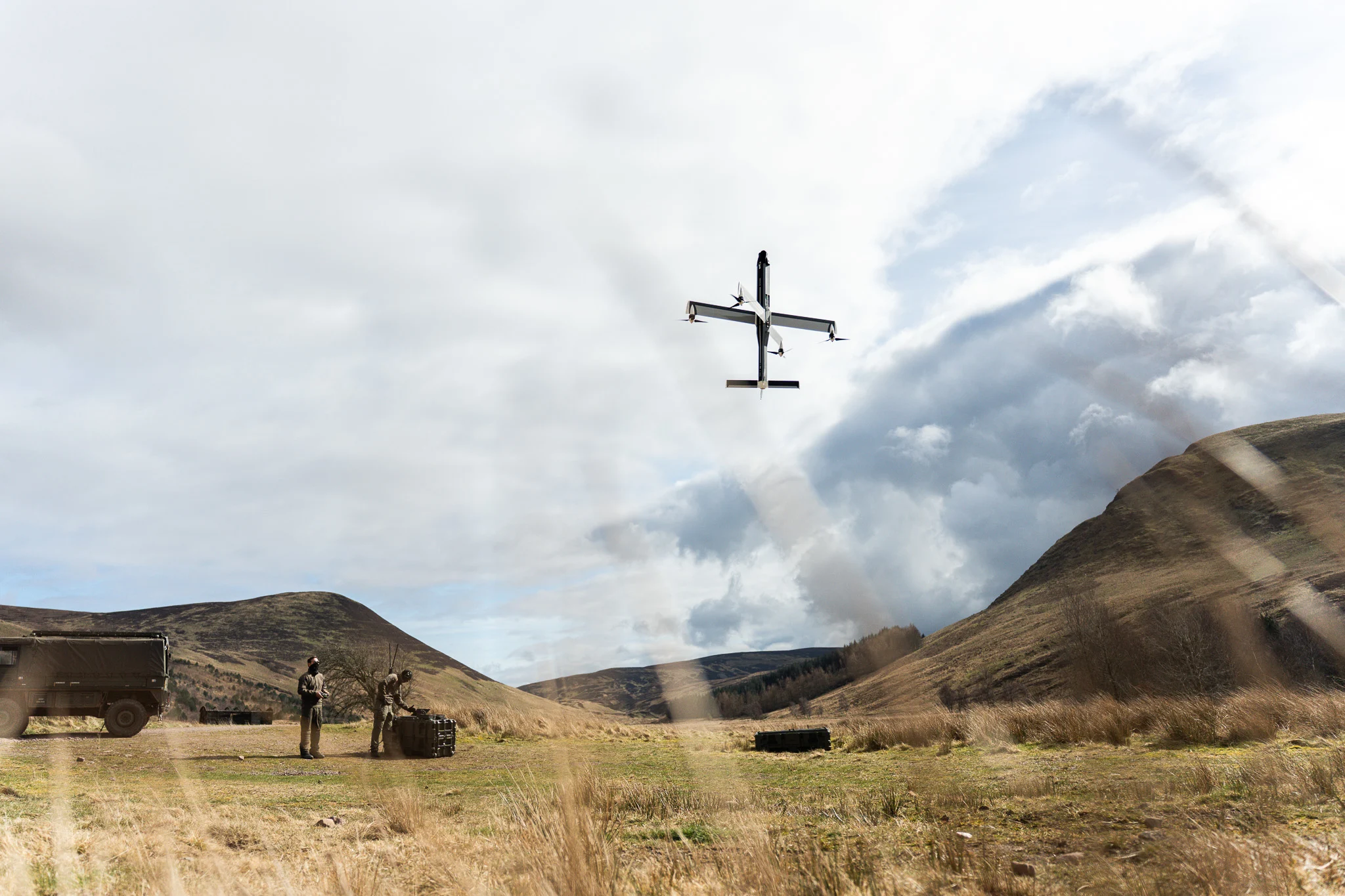
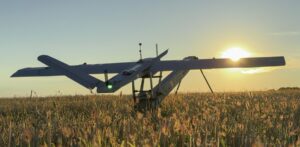
Photo from the Stark website
On April 14, the German defence tech startup Stark emerged from stealth mode, unveiling its first product: the OWE-V Virtus, a vertical take-off strike drone equipped with X-shaped wings, a 5 kg warhead, and artificial intelligence onboard.
Stark is one of the most hyped defence startups in Europe. It’s a new project by German entrepreneur Florian Seibel, who also heads the company Quantum Systems. Last year, Stark raised $15 million from Sequoia Capital.
In addition to Germany, Stark has offices in the United Kingdom and Ukraine. Defender spoke with Stark’s Chief Operating Officer in Ukraine, Maksym Cherkis, about the Ukrainian team’s role in the project and how the Virtus OWE-V could assist Ukraine’s Defence Forces.
What does Stark’s emergence from stealth mode mean?
We are beginning to officially present our products. So far, we’ve announced two. The first is the OWE-V Virtus strike drone with X-shaped wings and vertical take-off, capable of carrying a 5 kg warhead and flying 45–60 km. It features radio-protected communication resistant to electronic warfare (EW) and onboard AI technologies.
The second product is Stark CWC Minerva, a software-based equivalent of a ground control station. It’s a unified software platform that will allow operation across the entire Stark product line. This lineup will expand; we plan to release other drones. I can’t disclose details yet, but it’s clear that there will be small, medium, and large UAVs among them.
Tell us about Stark.
The company was founded in Germany last year. In Kyiv, we have a Ukrainian subsidiary primarily responsible for testing and product trials. Conducting flight tests in Germany is very challenging, and Germany is not at war. Therefore, it made sense to establish a research and testing unit here in Ukraine to provide relevant feedback on Stark’s products.
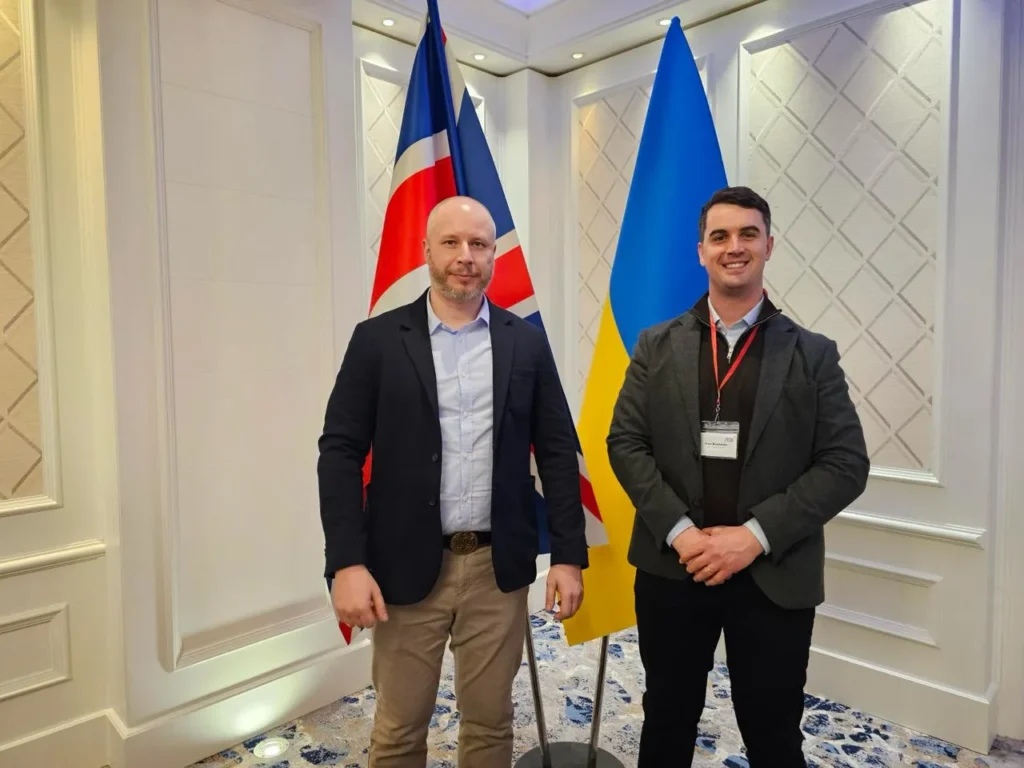
The main task of the Ukrainian unit is conducting flight tests, including with military involvement. Organizing drone tests with powerful communication and EW countermeasures in Europe is very difficult due to bureaucratic hurdles, which would slow product development.
The Ukrainian subsidiary provides feedback, indicating necessary improvements, current frontline practices, and the current Concept of Operations (ConOps).
So, the OWE-V Virtus drone and the software platform have been tested in Ukraine?
Yes, fully tested—though not yet in combat. We plan to deliver the drone for combat trials within a month.
How much will the drone cost?
The price is not yet disclosed. All I can say is that it will differ between the Ukrainian and European models. The Ukrainian version will be cheaper.
Which units will receive the drone for battlefield testing?
I won’t name specific units, but we’ve already reached agreements with several. The Command of Unmanned Systems will also be involved, as this falls under their responsibility.
What are the main advantages of the OWE-V Virtus?
These are strike drones operating at the tactical to operational level. With a full warhead, they can fly 40–45 km. The drone’s communication system allows it to fly up to 80 km.
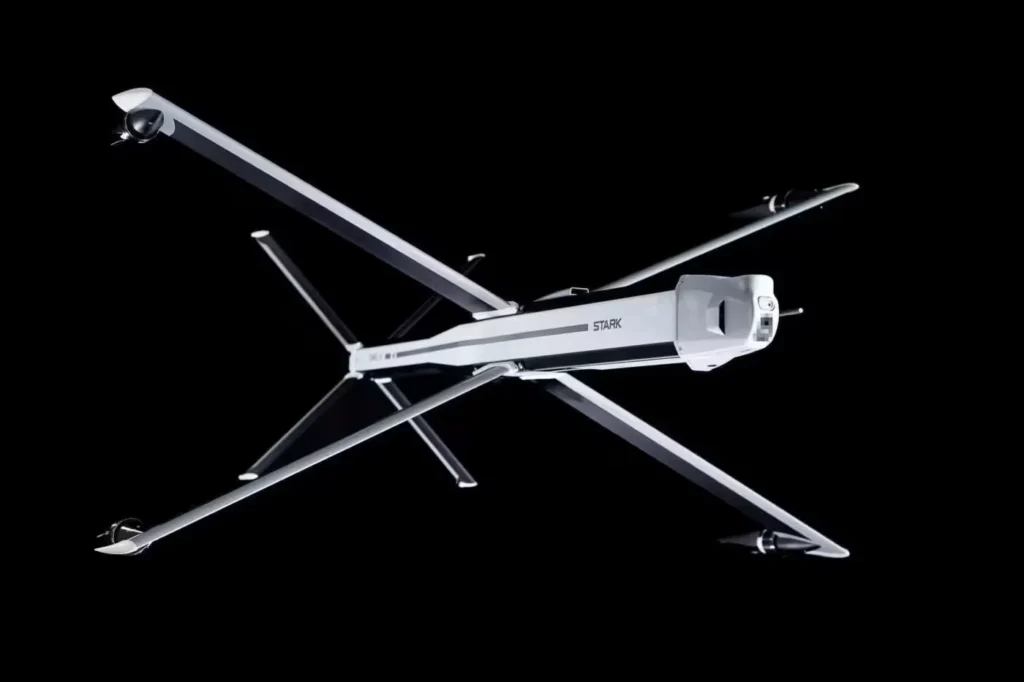
Virtus is a VTOL (Vertical Take-Off and Landing) drone, so it doesn’t require a catapult for launch, unlike other drones of similar range and capability. Launch takes about 15 minutes: unpack from the vehicle, attach wings, perform pre-flight checks, and it’s ready. This allows deployment close to the frontline.
What kind of communication does the drone use?
I can’t disclose all details, but it supports Mesh functionality and can use most reconnaissance drones operated by the Defence Forces as relays.
What is the intended use of the OWE-V Virtus? What targets can it engage?
Strike drones with a 5 kg warhead are primarily used against protected MLRS and air defence systems, such as Russian TOS and Tor systems, which have some armor.
The second category is logistics: vehicles transporting ammunition and fuel. Hitting one vehicle in a convoy can cause shrapnel damage to others.
How many of these drones does Stark plan to produce monthly or annually?
We don’t want to get ahead of ourselves. First, the product will undergo combat trials; then, units will specify their needs, and we’ll determine production quantities accordingly.
Given the distinction between Ukrainian and European versions, the German headquarters understands that if there’s significant demand from Ukrainian forces, local production will be established in Ukraine. Components will be supplied from Europe, and everything that can be produced in Ukraine will be made here—creating jobs, taxes, etc.
Why is such a drone needed on the frontline?
The number of enemy targets—MLRS and air defence systems—is steadily increasing. Currently, there’s no equivalent to the OWE-V Virtus in Ukraine or Europe: a VTOL drone with a 5 kg explosive warhead.

Yes, there are glider-type drones with similar warheads, but they have limitations in take-off and maneuverability. As mentioned, the OWE-V Virtus launches vertically without a catapult in 15 minutes, has X-shaped wings, making it highly maneuverable. Onboard AI enables it to autonomously identify and lock onto targets, even if communication is lost or under active enemy EW interference.
Is this the drone’s “killer feature”?
Yes, but not the only one. There are similarly maneuverable drones from Ukrainian manufacturers, like DeViRo’s “Bulava,” but they have significantly lower cruising speeds. The OWE-V Virtus cruises at about 120 km/h (30 m/s), and during target approach, it can reach over 60 m/s—more than 200 km/h.
Reading now
1
Ukrainian SkyFall’s drone wins at Pentagon’s Drone Dominance selection
2
Black Forest Systems raises $400,000. Here’s what drones the startup is building
3
Sting interceptor by Wild Hornets downs costly Russian Granat-4 reconnaissance drone
4
UForce unveils Bucha middle-strike drone with a 200 km range
5
The F10 drone becomes the second Ukrainian finalist in the Pentagon’s Drone Dominance Program
By submitting this form, you give Defender Media consent to the processing of personal data.
Надсилаючи цю форму, ви надаєте Defender Media згоду на обробку персональних даних.

Latest news
1
DPA to diversify drone and ammunition orders among multiple suppliers
2
‘Ukrainska bavovna’ and Czech company Pavetra Aerospace to produce Shuhay UAV through joint venture
3
59th Assault Brigade downs Russian Ka-52 helicopter with General Cherry OPTIX FPV drone
4
Tencore develops evacuation module for TerMIT UGV
5