Threads of war: how fibre-optic drones are changing the battlefield
At least 15 Ukrainian manufacturers are ready to send fibre-optic drones to the battlefield

Фото: Tech Ex, Brave1
Recent tests conducted by Ukraine’s Brave1 defence tech cluster have demonstrated that fibre-optic drones can operate effectively over distances of up to 20 kilometers. These drones, which are tethered to their operators via fibre-optic cables, are immune to electronic warfare tactics that typically disrupt radio-controlled UAVs. Ukraine’s Commander-in-Chief Oleksandr Syrskyi has confirmed that such drones are already being deployed on the front lines. The adoption of these unjammable drones is expanding, and currently, there are no widely effective countermeasures against them.
Defender explores which Ukrainian companies are producing fibre-optic drones, the advantages and limitations of this weapon, and how exactly these systems are used on the battlefield.
The evolution of Ukrainian fibre-optic drones
Ukrainian developers publicly presented the first concepts for fibre-optic UAVs in 2023, yet it was Russian forces who were the first to put them to practical use. In late summer 2024, drones resistant to electronic warfare attacked Ukrainian assets in the Kursk region and later appeared in temporarily occupied territories. Ukrainian prototypes underwent testing starting in November, with the Ministry of Defence showcasing domestic solutions in early 2025.

At the end of March this year, Brave1 conducted the first test flights of fibre-optic FPV drones in Ukraine with a flight range exceeding 20 km. More than 15 manufacturers participated at a single training ground, where their drones successfully navigated obstacles and simulated target engagement.
Brave1 also published a one-page catalogue of drone manufacturers (featuring only those who agreed to limited publicity). The catalogue lists 20 available models, alongside key tactical and technical specifications. It also provides contact details for manufacturers, enabling procurement for defence units or facilitating cooperation.
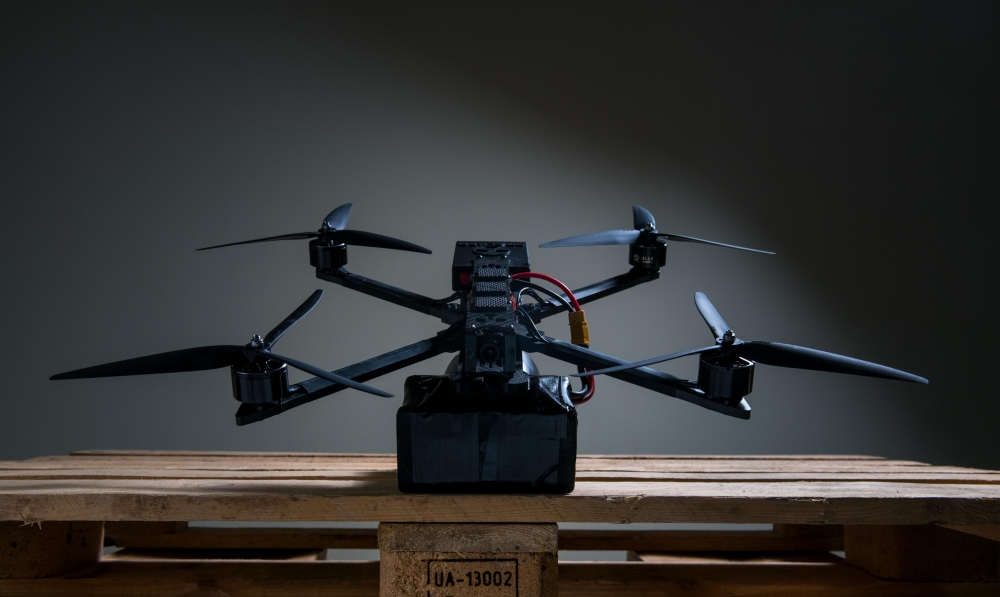
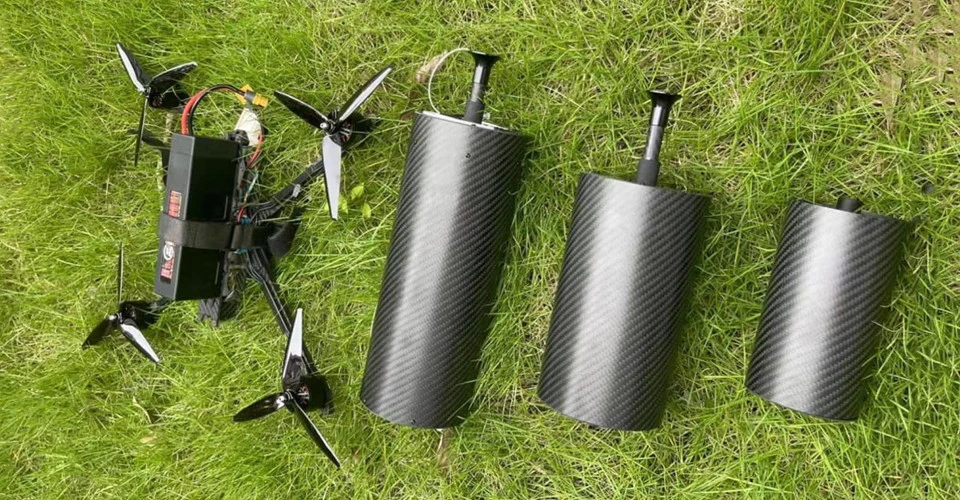
According to the catalogue, the average cost of an FPV drone equipped with a 10 km fibre-optic coil is around 42,000 UAH. Prices range from 29,000 to 61,000 UAH depending on configuration and component origin. Notable entries include a coil with integrated munitions from OWAD and fibre-optic-controlled ground robots developed by Firebox and Ratel.
Advantages, limitations, and considerations
The clearest advantage of fibre-optic drones is their immunity to electronic warfare. As control signals are transmitted via a thin fibre-optic cable rather than radio frequencies, these drones cannot be jammed or hijacked unless the cable itself is damaged. Furthermore, fibre optics enable high-resolution, real-time video transmission. This allows the FPV operator to receive an interference-free image and distinguish between real targets and decoys — critical for both reconnaissance and strike missions.
Equally important is the independence from terrain: drones connected via fibre optic can fly at ultra-low altitudes, navigate through complex environments, and even operate indoors without losing signal.
Another major benefit is that the drone operator and ground control station can remain in fortified shelters without compromising communication or mission performance.
However, fibre-optic drones do face limitations. Chief among them is the limited range, constrained by the size and weight of the fibre-optic coil. Though this is being actively addressed — some of the latest models now exceed 20 km — Russia has claimed their “Gortensia 10” drone can achieve up to 30 km.
The second drawback is reduced manoeuvrability and speed, linked to the mechanics of cable unwinding. While the cable is resistant to tension, it is vulnerable to snapping when bent. This necessitates smoother flight paths, limits potential targets, and demands extra pilot training.
The third issue concerns payload. A larger coil extends flight range but reduces the payload capacity of the drone. A 10 km fibre-optic coil weighs roughly 1.4 kg, depending on the material, winding technique, and country of manufacture — Ukrainian coils are typically lighter, while Chinese variants may be heavier due to less efficient winding.
To help operators adapt, Brave1 has published a concise guide. The main rule: follow the manufacturer’s manual, maintain proper tension in the fibre, avoid sagging or bends, manage flight angles carefully, and take extra caution when crossing bodies of water.
Delivery or localisation?
Ukrainian manufacturers are taking different strategic approaches. While some rely on imported fibre-optic coils from China, others are working to localise production, including the coils themselves — a step towards self-sufficiency and technological resilience. Deliveries of fibre-optic cable from abroad can take up to two months, while Ukrainian production has not yet reached industrial scale.
“There are a lot of misconceptions about Chinese coils — particularly the assumption that stable supply cannot be guaranteed,” says Yevhen, developer of the Raptor drone. “But at the same time, Chinese coils are affordable, which helps reduce the cost of retrofitting drones and speeds up their deployment to frontline units.”
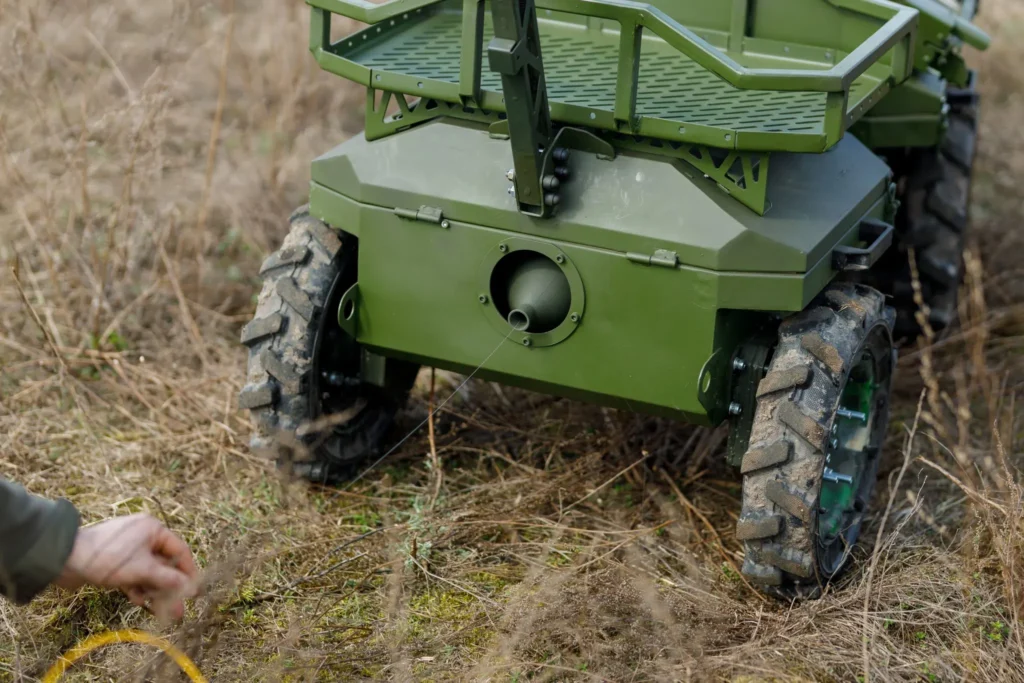
Chinese coils of 5, 10, 15 and 20 km in length are currently imported. Shorter coils are considered impractical, as drone pilots must avoid finding themselves in the so-called “grey zone”.
Another cost-saving approach involves importing only the fibre-optic thread and winding it into coils in Ukraine, according to specific orders and technical requirements. This significantly lowers material costs but increases production time.
According to “Adonis”, the call sign of the head of the Stalker fibre-optic drone project, localising production greatly reduces overall costs. “While the initial cost of a coil was around $1,000, local production can cut that by up to two-thirds without compromising quality or technical specifications,” he explains. To adapt winding technology for fibre optics, developers even consulted with specialists from the light industry.
Fibre-optic drones in combat
The first Ukrainian trials of fibre-optic drones took place in late autumn and early winter 2024. Since then, dozens of teams have successfully passed the R&D stage. Most Ukrainian-made drones now have a flight range of at least 20 km. Developers optimised the internal layout by repositioning the coil and battery for improved manoeuvrability and control.
“It was clear from the start that mounting the coil on top of the drone would cause the propellers to cut the cable. But when we mounted it underneath, the drone became difficult to handle. We had to make design changes — raise the landing legs and adjust the take-off mechanics,” Adonis recalls.
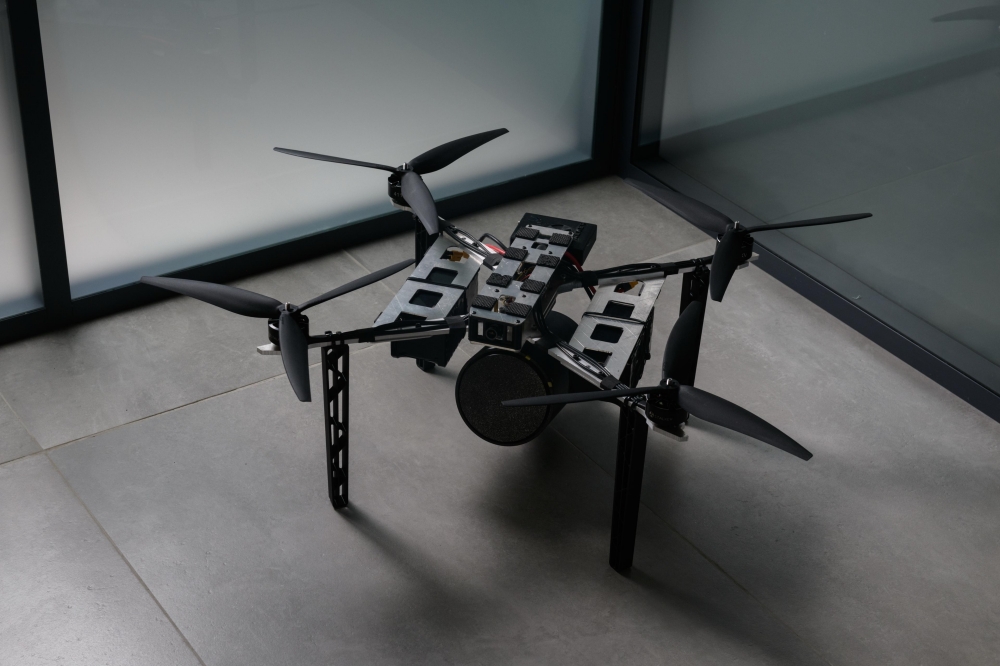
Today, the most common application for fibre optics remains in FPV strike drones.
“It’s important to remember that communication with the drone only lasts as long as the cable remains intact,” Adonis says. “Once it’s severed, the operator loses all control — you can’t steer or turn. You can use this system for observation or surveillance if the drone hovers motionless over a target. But it’s unsuitable for deep reconnaissance. For instance, at 20 km distance and 1 km per minute speed, the cable must remain unbroken for at least 20 minutes.”
Additional cable reinforcement is not a viable solution. “We could make a cable that no one could break — but then the drone wouldn’t be able to carry any payload,” Adonis laughs. He adds that reinforced fibre is four to five times more expensive. “We argue that this is too costly for mass deployment. Of course, for high-value targets we’re ready to produce a premium drone, but not for general use.”
Beyond the war
Manufacturers believe that fibre-optic drones currently used in combat missions could have a second life in the civilian sector once the war ends.
“If you replace the warhead with a chemical or fertiliser tank, the drone could precisely treat agricultural fields — without trampling the soil with heavy equipment,” says Adonis. He explains that the technology is almost ready for repurposing, with platforms, motors, and control systems already in place.
Another promising application is in hard-to-access environments, including underwater and underground locations. Fibre-optic drones can navigate through wells, pipes, tunnels, and mines — areas with no other communication options. This opens new opportunities for both aerial and ground drones in industries such as construction, mining, and logistics in environments hazardous or inaccessible to humans.
Fibre-optic drones truly excel in reaching places no other equipment can. According to Adonis, one Stalker drone struck a Russian sabotage group in a gas pipeline in the Sudzha area in March.
Reading now
1

Ukrainian SkyFall’s drone wins at Pentagon’s Drone Dominance selection
2
Black Forest Systems raises $400,000. Here’s what drones the startup is building
3
Sting interceptor by Wild Hornets downs costly Russian Granat-4 reconnaissance drone
4
UForce unveils Bucha middle-strike drone with a 200 km range
5
The F10 drone becomes the second Ukrainian finalist in the Pentagon’s Drone Dominance Program
By submitting this form, you give Defender Media consent to the processing of personal data.
Надсилаючи цю форму, ви надаєте Defender Media згоду на обробку персональних даних.

Latest news
1
DPA to diversify drone and ammunition orders among multiple suppliers
2
‘Ukrainska bavovna’ and Czech company Pavetra Aerospace to produce Shuhay UAV through joint venture
3
59th Assault Brigade downs Russian Ka-52 helicopter with General Cherry OPTIX FPV drone
4
Tencore develops evacuation module for TerMIT UGV
5