Dorozvidka: Oppenheimer, Buntar, gamechanger sea drone, and ‘Gentle Israelization’
A roundup of last week’s defence tech news that slipped under Defender’s radar
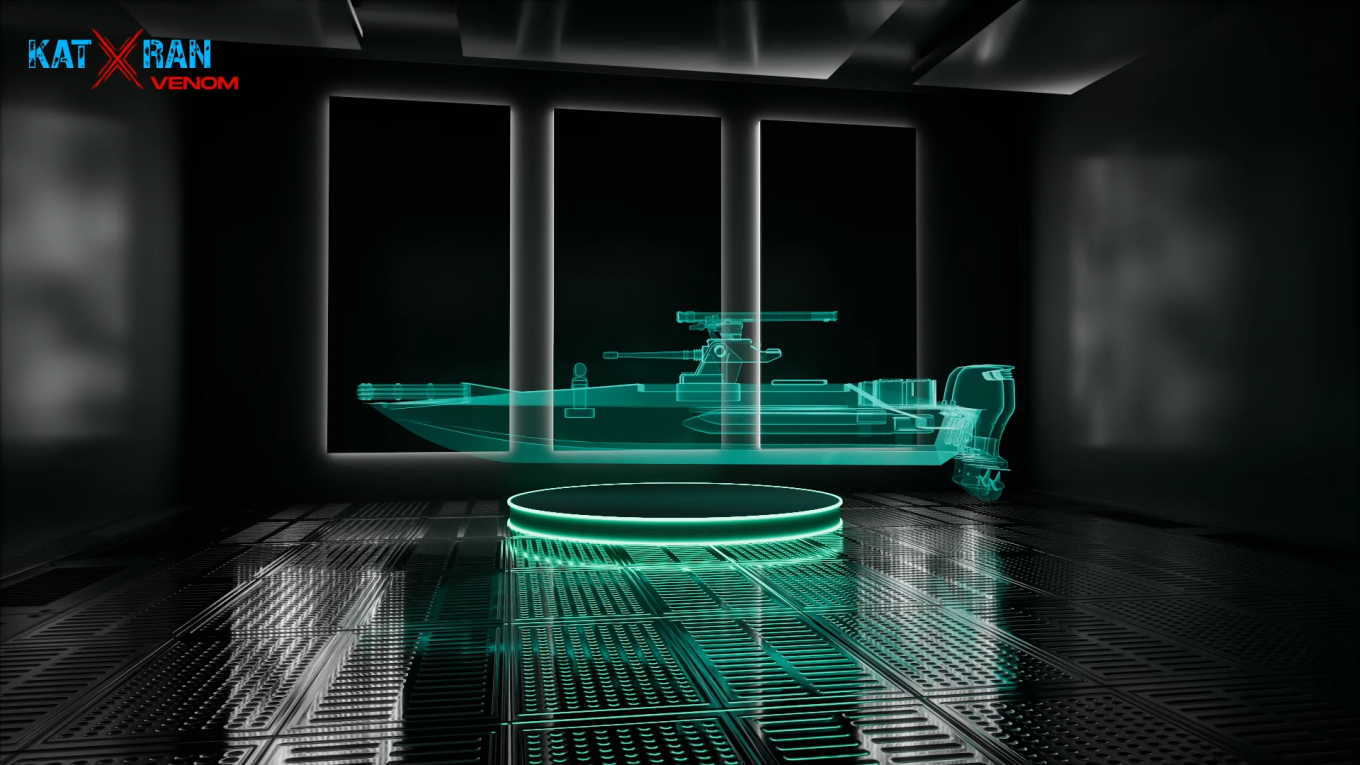
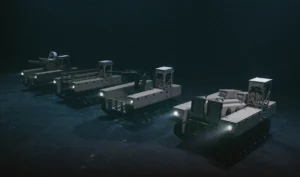
3D model Katran VENOM
In ‘Dorozvidka’, Defender publishes a brief overview of interesting news and materials that made it into the editorial backlog throughout the week but did not become separate publications.
- The Ukrainian company Military Armored Company HUB has unveiled a new multipurpose combat maritime drone, “Katran”, capable of striking targets at sea, on land, and in the air. The drone is equipped with torpedoes, a multi-barrel machine gun, and anti-aircraft missile systems. It can cover over 1,000 kilometers and reach speeds of up to 130 km/h. “Katran” features an integrated automatic threat recognition and decoy deployment system, eliminating the need for a separate electronic warfare (EW) system. Minister of Digital Transformation Mykhailo Fedorov called the drone “a true game-changer at sea.”
- Oleksandr Kamyshin, the strategic advisor to the President of Ukraine, gave an interview to Radio Khartia. Kamyshin stated that Ukrainian defense enterprises could produce up to 5 million FPV drones annually, but in 2024, only 2 million were manufactured due to insufficient funding. According to Kamyshin, a single Ukrainian manufacturer is capable of producing 4,000 FPV drones per day, and there are over 150 such companies in Ukraine. As for long-range drones, Ukraine plans to produce 30,000 UAVs in 2025, Kamyshin announced.
- Oppenheimer Acceleration invested in Anvarix Limited and Aetos Space Labs, two Ukrainian defence tech startups that are using deep tech to solve combat challenges. Anvarix Limited is developing AI-powered UAV guidance and secure video protocols built to perform under electronic warfare.Aetos Space Labs is building a next-gen drone interceptor with an AI-driven identification system — bringing autonomous detection and engagement to short-range air defence.
- A video featuring Deputy Minister Valerii Churkin was released on the Ukrainian Ministry of Defense’s YouTube channel. In it, he stated that his main goal in office is to accelerate the deployment of defense innovations to the battlefield. Churkin emphasized that the top development priority is the creation of fully autonomous systems.
- The Ukrainian Ministry of Defense has codified and approved the “Khyzhyi Ptakh” (“Predator Bird”) unmanned aerial system for use by Ukraine’s Defence Forces. It has reportedly proven its effectiveness in destroying armored vehicles and fortified enemy positions. Additionally, the drones in this system feature enhanced resistance to enemy electronic warfare (EW) measures.
- The Ukrainian company Logika has produced heavy machine gun simulators for the Ukrainian Defense Forces. This was reported in a segment released on the YouTube channel of the Ukrainian Ground Forces.
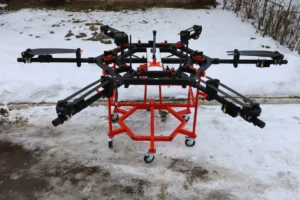
- Buntar Aerospace has released a major update to its drone software, Copilot. The key feature of this update is the Mesh function, which the company calls a game-changer for drone reconnaissance operations. Mesh allows a single operator to control multiple reconnaissance drones using just one antenna. According to Buntar Aerospace co-founder Bogdan Sas, this significantly automates management and reduces the number of personnel required to operate the drones.
- Denys Dovhopolyi, a well-known Ukrainian entrepreneur and volunteer, published a post on his LinkedIn page about how, during the three years of full-scale war, a new generation of entrepreneurs has emerged in Ukraine’s defence tech sector, characterized by unique traits. Dovhopolyi referred to this phenomenon as “gentle Israelization.” This group of entrepreneurs is distinguished by their quick thinking and action, their willingness to acknowledge and fix mistakes in products (because the cost of mistakes is human lives), their ability to quickly assemble teams with the right skills, their high motivation, their focus on practical solutions rather than billion-dollar valuations, and their readiness to share knowledge, technologies, and even teammates with other market participants. According to Dovhopolyi, this mindset has become second nature over the past three years. He predicts that, after the war, many of these entrepreneurs will transition to the civilian sector, bringing with them unique experiences and approaches. In a comment on Dovhopolyi’s post, Serhiy Stupak, co-founder of Genesis Tech, noted that, despite similarities to the Israeli model, this trend reminds him more of the American approach, where having a veteran in a key position within a technology company is often seen as a competitive advantage.
Reading now
1

Ukrainian SkyFall’s drone wins at Pentagon’s Drone Dominance selection
2

Black Forest Systems raises $400,000. Here’s what drones the startup is building
3
Sting interceptor by Wild Hornets downs costly Russian Granat-4 reconnaissance drone
4
UForce unveils Bucha middle-strike drone with a 200 km range
5
The F10 drone becomes the second Ukrainian finalist in the Pentagon’s Drone Dominance Program
By submitting this form, you give Defender Media consent to the processing of personal data.
Надсилаючи цю форму, ви надаєте Defender Media згоду на обробку персональних даних.

Latest news
1
DPA to diversify drone and ammunition orders among multiple suppliers
2
‘Ukrainska bavovna’ and Czech company Pavetra Aerospace to produce Shuhay UAV through joint venture
3
59th Assault Brigade downs Russian Ka-52 helicopter with General Cherry OPTIX FPV drone
4
Tencore develops evacuation module for TerMIT UGV
5