Where’s the money? Brave1, Double Tap Investments, UVCA, and Promavtomatika on funding for Ukrainian defence startups
DEF.Talks speakers break down the wins and challenges in Ukrainian Defence Tech
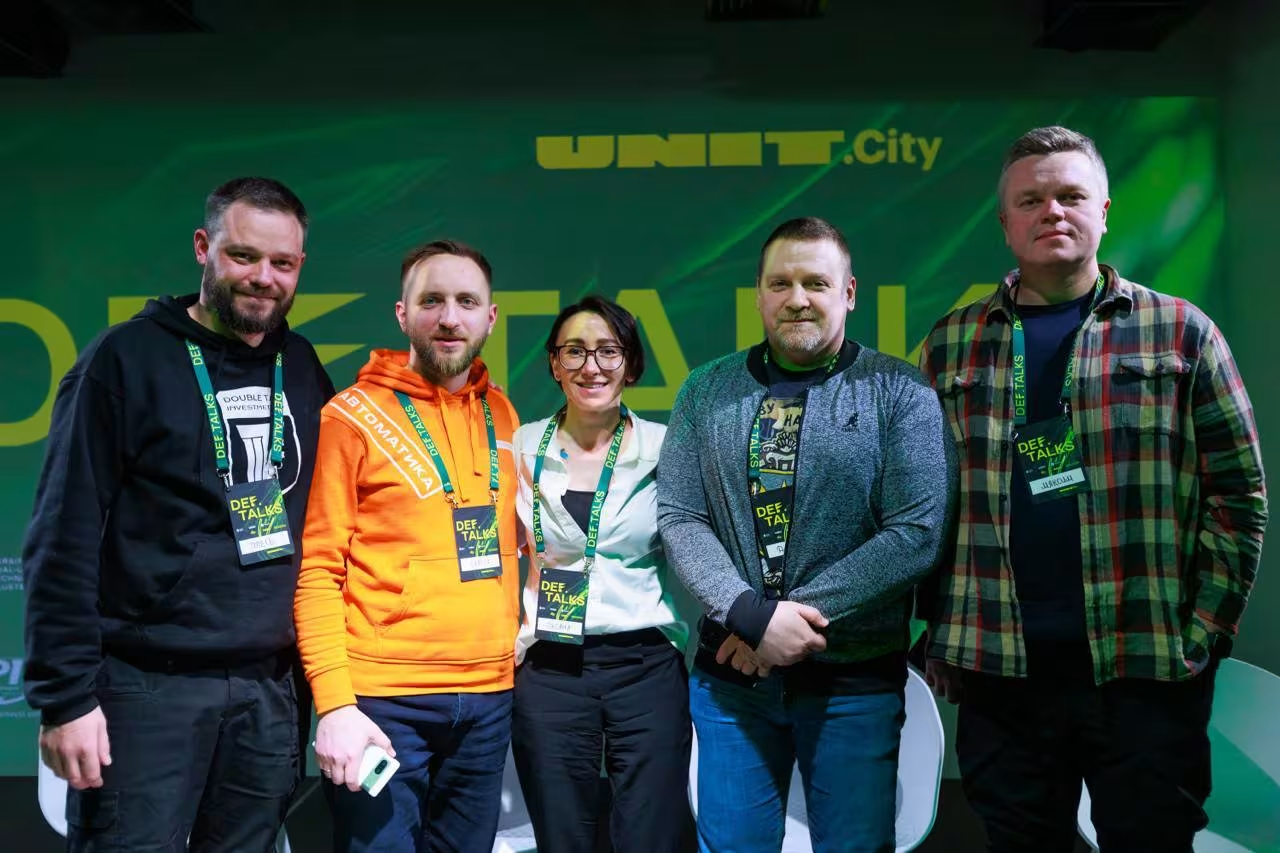
Світлина: UNIT.City
On March 19, UNIT.City innovation park hosted DEF.Talks, bringing together top experts to tackle the future of investing in Ukrainian defence tech. The panel featured Oles Khudoba (co-founder, Double Tap Investments), Max Makarchuk (Head of AI/ML Products, Brave1), Dmytro Kuzmenko (CEO, UVCA), and Serhiy Androshchuk (Director of Strategic Development, Promavtomatika). They dove into the biggest investment hurdles, high-potential opportunities, and how state support and private capital can fuel the sector’s growth. Defender rounded up the most compelling insights from the discussion.
Oles Khudoba, Double Tap Investments
Ukrainian defence tech reports often boast eye-popping numbers about investor interest, but the reality tells a different story. At industry events, it’s the same familiar faces, and the actual investment volumes remain far from impressive. As Yaroslav Azhniuk pointed out, the total investment in Ukrainian defence tech for 2024 (excluding Brave1 grants) is actually less than what’s been poured into Petcube, a company creating pet products.
That said, the tides are turning. Double Tap Investment plans to close a significant portion of this year’s investments in the sector, and Europe is finally waking up.
Bringing money into Ukraine remains a challenge. To fund a single R&D project, you need at least half a million dollars. Ukrainian defence tech projects require European or American structuring to succeed. An ideal model would be a ‘dual-use approach’:
- Set up an LLC in Ukraine to access grants from Brave1 and supply the Ministry of Defence.
- Register a company abroad, especially in EU or NATO countries, to tap into additional funding programs.
Unfortunately, the government still restricts the export of our defence startup products, and we lack a strategy to promote Ukrainian defence tech abroad. European and NATO programs should be available to all startups.
Ukraine currently boasts the fastest codification process globally, but resources remain scarce. Lessons learned and real experience on the battlefield is what everyone needs. Real battlefield experience is crucial, and foreign partners have already realised they can buy this expertise from Ukraine — but we’re selling it poorly.

“For those who succeed in developing a defense solution and securing investment in a Ukrainian LLC, you can consider yourselves godlike heroes”
Oles Khudoba, Double Tap Investments
Each partner country has unique needs, and we must approach each one individually. Ideally, we should have a designated person for each country — essentially, a hub for foreign investor collaboration, which should have been established yesterday.
Despite the challenges, I’m optimistic about the future of Ukrainian teams. They’ve gained invaluable frontline experience and can adapt quickly. However, after the conflict ends, I’m concerned many will leave for opportunities abroad. We must work hard to keep them here. Collaboration between Ukrainian defence startups is key to long-term success.
Max Makarchuk, Brave1
Fundraising is a battlefield in its own right. The reality of securing funding isn’t as smooth as we’d like, but this can only change through collaboration.
A key indicator of market maturity is when investment flows from almost every direction. When everyone owns shares in Ukrainian defence tech companies, it creates a powerful momentum for the industry, unlocking significant opportunities for dividends.
The core mission of the Brave1 state cluster is to provide a technological solution to every challenge faced by our military at the frontlines. The cluster’s role is to support startups in developing specific technologies and bringing them to the frontline.

For startups to secure certification, codification, and registration, they must go to the frontline and prove their products work in actual combat situations. Once they demonstrate this, we help them navigate the certification process, secure government contracts, and scale their solutions.
The Ukrainian defence tech sector is home to countless teams, mostly off the radar, that have rapidly scaled to impressive sizes without venture funding. These teams have mastered creating high-quality products that solve real problems for their ultimate client—the Ukrainian military. Despite bureaucratic hurdles, their products are being bought and put to use.
However, many companies remain hesitant to scale and take their businesses to the next level.
Foreign investors are increasingly looking to Ukrainian teams to learn how to solve the challenges we’re currently facing. They invest not to buy a product or a team, but to acquire the invaluable experience we’ve gained. Without this kind of expertise, securing funding becomes incredibly difficult.
Serhiy Androshchuk, Promavtomatika
Our strategy has been to grow organically, without relying on external investment. We’ve navigated our own challenging scaling journey. Today, we employ over 300 people, including 26 specialists in our development department focused on hardware.
Promavtomatika’s military division was launched in 2022, starting with Bandera Power charging stations. Initially assembled from Chinese components, we’ve now reached a point where we’re producing our own modules. The market—and the front line — are in dire need of this product.
While we’re now ready to explore foreign investment, Europe is still grappling with the complexities of understanding the unique challenges we face, such as the lack of power supply to assembly plants and the impact this has on military operations. We’re actively exploring opportunities to scale and export our solutions.
Currently, the primary customer for Promavtomatika’s products is the state — and our entire business relies on this customer.
Dmytro Kuzmenko, UVCA
Ukrainian defence tech startups are facing a mix of good and bad news. The bad news is well-known — the new administration in the White House has scaled back many joint programs with Ukraine.
On the brighter side, Europe is starting to take action. Notably, Germany has made significant changes in its federal budgeting. The Bundestag recently approved a bill to ease debt constraints, paving the way for billions of euros to flow into defence and infrastructure, including intelligence services and Ukraine-related support, exceeding 1% of GDP. Additionally, there are promising new programs on the horizon, such as the Danish model and the upcoming Czech-Ukrainian Fund of Funds.

How can a Ukrainian startup become attractive to investors? The quickest route is to set up a legal entity in Europe and structure the deal under European law. Unfortunately, Ukrainian legislation remains a hurdle, especially with strict restrictions from the National Bank, making it tough to deposit, withdraw, and carry out transactions.
Another challenge is that many investors are morally hesitant to fund defence projects, reluctant to be associated with violence and war. While the capital is available, accessing it remains a significant challenge.
Generally speaking, not all Ukrainian defence startups need to target the global market. It’s well-known that the best investor is the customer, and some projects can thrive domestically by meeting the specific needs of the Defence Forces.
“The Ukrainian defense tech sector is moving towards cost-effective solutions, remote warfare, and automation”
Dmytro Kuzmenko, UVCA

Foreign partners are only beginning to understand that a powerful analogue of World War II is playing out right on their doorstep. However, they continue to compete over building bigger tanks, missing the point that, for example, a helicopter today is just a logistical asset that should never get closer than 15-20 km from the front line. The future lies in cost-effective solutions, remote warfare, and automation.
One persistent issue remains: choosing the right business model for a startup. Without a stock exchange in Ukraine, the traditional joint-stock company structure doesn’t work. This isn’t a result of the war — it’s an ongoing challenge.
Investing in a Ukrainian LLC is a significant challenge for investors. This business structure doesn’t offer an easy entry or exit, which complicates things. Add to that the National Bank of Ukraine’s restrictions, which, while not critical, remain an obstacle. The third issue is the need to educate investors about the unique challenges of national investment and doing business in Ukraine.
Unfortunately, the system’s resistance is strong. If the business environment were more accommodating, the country would likely see more investment.
Aside from the ongoing conflict, the Ukrainian defence market is relatively small. If hostilities ceased tomorrow, the General Staff would begin reducing orders over time. Competition among manufacturers would ramp up, and if supply outpaces demand, a collapse could occur — one that can’t be remedied without open exports.
Ukrainian defence startups need to diversify their customer base, as relying on a single client is a major risk.
This event was organised by BazaIT, together with UNIT.City, UADUT Cluster, and UNBAI. The event opened a series of DEF.Talks events to discuss the development of Ukrainian defence tech.
Reading now
1
Ukrainian SkyFall’s drone wins at Pentagon’s Drone Dominance selection
2
Black Forest Systems raises $400,000. Here’s what drones the startup is building
3
Sting interceptor by Wild Hornets downs costly Russian Granat-4 reconnaissance drone
4
UForce unveils Bucha middle-strike drone with a 200 km range
5
The F10 drone becomes the second Ukrainian finalist in the Pentagon’s Drone Dominance Program
By submitting this form, you give Defender Media consent to the processing of personal data.
Надсилаючи цю форму, ви надаєте Defender Media згоду на обробку персональних даних.

Latest news
1
DPA to diversify drone and ammunition orders among multiple suppliers
2
‘Ukrainska bavovna’ and Czech company Pavetra Aerospace to produce Shuhay UAV through joint venture
3
59th Assault Brigade downs Russian Ka-52 helicopter with General Cherry OPTIX FPV drone
4
Tencore develops evacuation module for TerMIT UGV
5